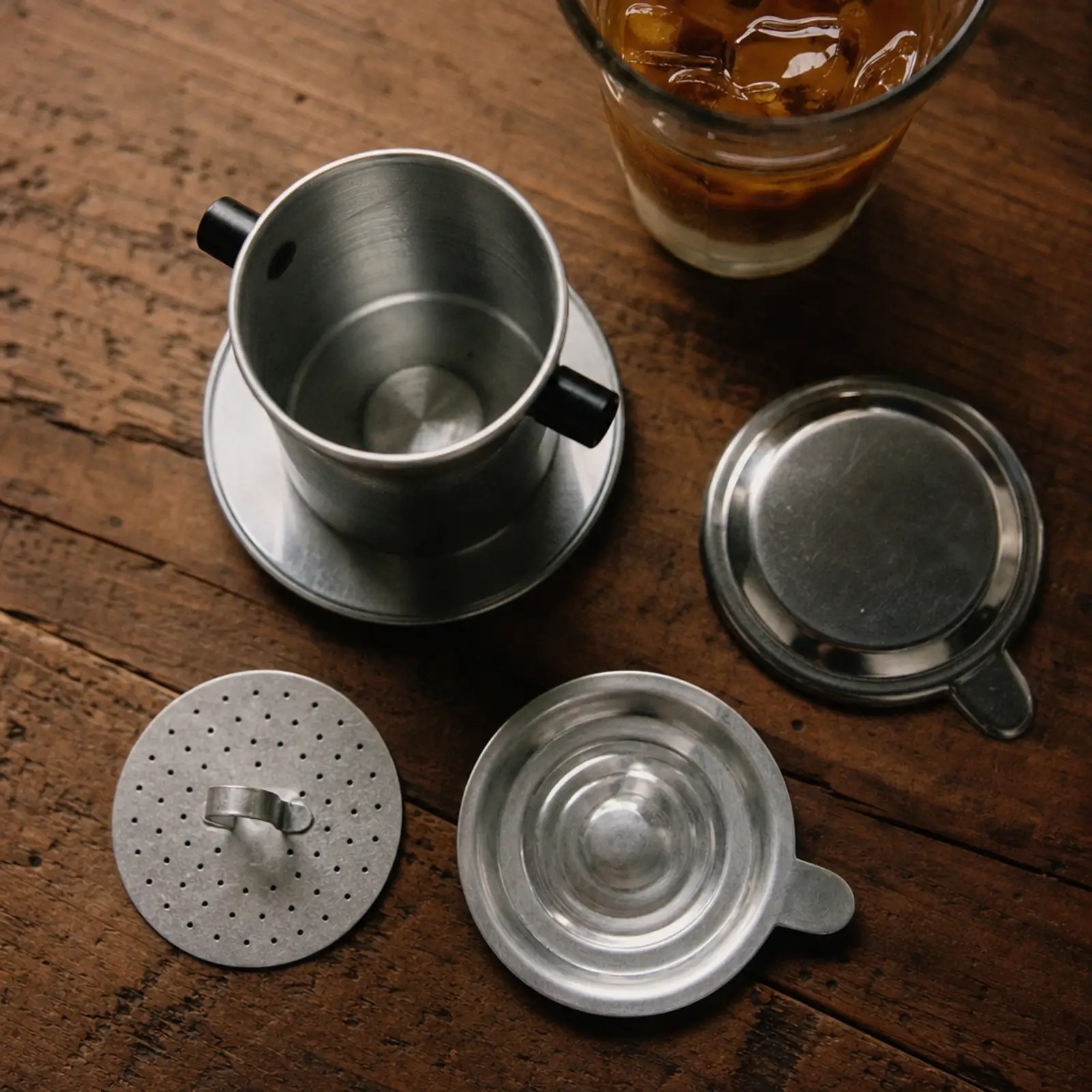
AI-generated: a disassembled stainless-steel phin shown from above on a wooden tableAI image

Buying guide

Best Phin Filter: What to Look For Before You Buy

A phin costs very little and ruins a lot of coffee if you pick badly. Here is what actually matters.

7 min readUpdated October 27, 2026

Chapters

Key takeaways

  • Choose by three things: capacity (single-cup 8 oz class vs larger 12–13 oz), insert type (gravity vs screw-down) and build quality (flat plate, snug insert, no sharp edges).
  • Gravity inserts are forgiving for beginners. Screw-down inserts give you more control but demand a bit of practice.
  • Stainless steel is the standard. Look for even holes in the chamber and a plate that sits flat on your glass.
  • Our default recommendation: a classic stainless single-cup phin, then add a larger one if you brew for two.

How to choose the best phin filter

The search for the best phin filter usually ends in one of two bad places: a listicle copy-pasted from other listicles, or a cheap import that drips unevenly and rusts. This guide is a list of criteria first and picks second, so you can judge any phin you find, not only the ones below.

As a reminder of what a phin does, our how-to guide walks you through the standard method: 20 g of coffee, 90–96 Β°C water, a 30-second bloom, and a 4–5 minute drip. A good phin makes that repeatable.

Comparison

CriterionWhat to look forWhy it matters
CapacitySingle-cup (8 oz class) for one drink; 12–13 oz if you brew bigger or want to shareThe chamber depth sets how much coffee you can use. Our 20 g recipe fits the single-cup size.
Insert typeGravity (rests on the grounds) or screw-down (adjustable)Controls how compact the bed is, and thus drip speed.
MaterialStainless steel throughoutNo metallic taste, easy to clean, durable.
Plate and holesFlat plate, evenly punched small holesUneven holes mean uneven drips and weak spots in the extraction.
FitPlate sits flat on the rim of your glass; insert moves smoothlyA wobbly phin on a glass is a spill waiting to happen.
LidFits tightlyKeeps heat in during a 4–5 minute drip.

No prices shown, they change daily on Amazon.

Gravity insert or screw-down?

This is the real decision.

Gravity insert (also called a press-style or sitting insert): a perforated disc rests on top of the grounds. You set it, pour, and its own weight does the work. It is simple and hard to get wrong. If your drip is slightly fast or slow, you correct the grind.

Screw-down insert: a threaded disc that you turn to compress the grounds. You can tighten it for a slower drip, or loosen it if the coffee stalls. More control, a little more fiddling. It is also the traditional design.

If you are new to phin brewing, start with gravity. If you already know your grind well and like to tweak, screw-down rewards you.

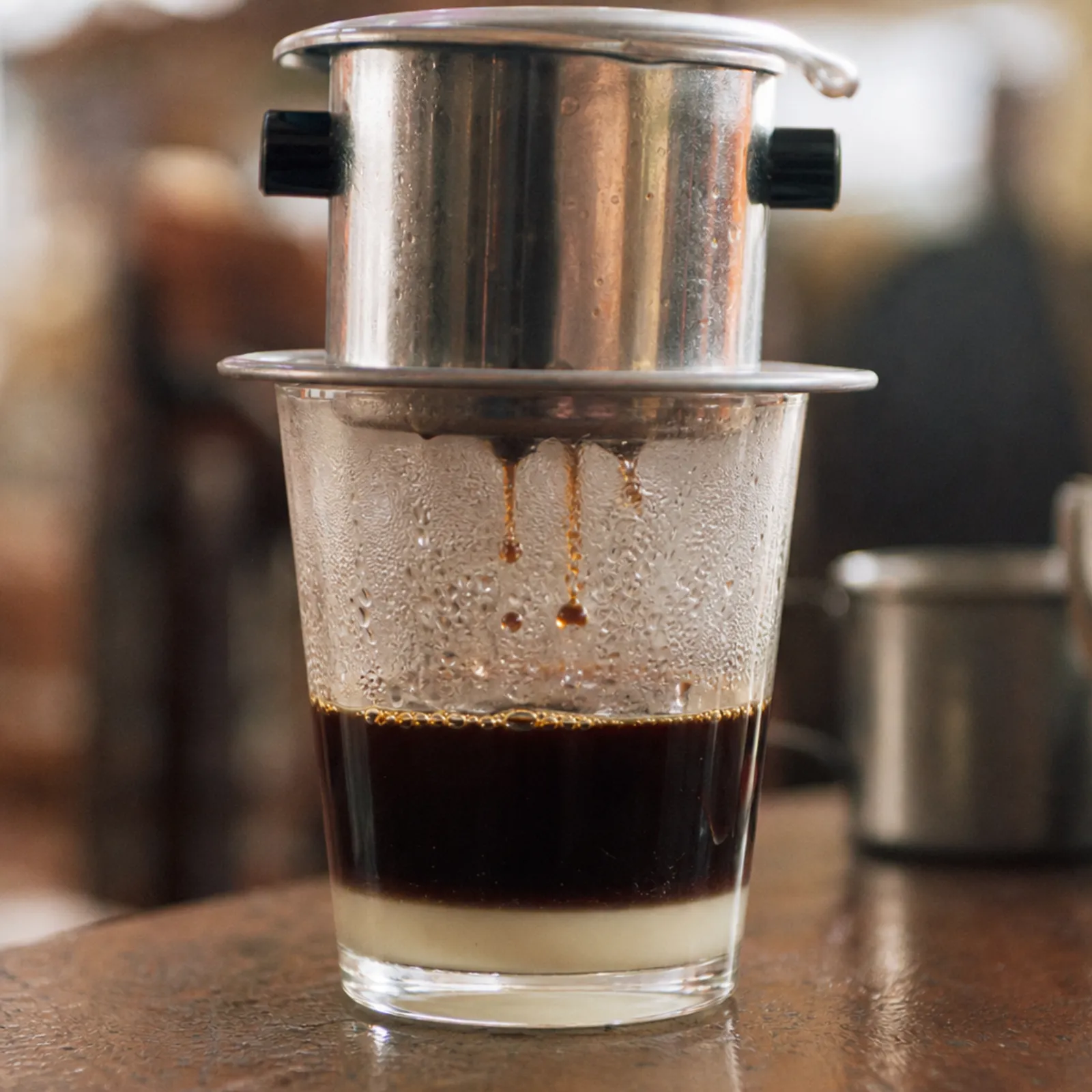
AI-generated: coffee dripping from a steel phin into a glass with condensed milkAI image
The drip tells you everything. Aim for 4–5 minutes.

The picks

Phin filters worth considering

This page contains affiliate links. As an Amazon Associate we earn from qualifying purchases. The price for you stays the same.

Our pick

Phin-Filter Edelstahl (klassisch, 8 oz)

The classic stainless single-cup phin, the size our recipes assume. If you buy only one, buy this type.

Pros
  • Right size for a standard 20 g dose
  • Simple, familiar design
  • Easy to clean and replace
Cons
  • Quality differs between makers, so inspect the plate and insert on arrival
  • Screw-down models need a few brews to dial in
View on Amazon
For beginners

Phin-Filter mit Schwerkraft-Einsatz

A gravity-insert phin is the forgiving option. You sacrifice some control but remove a variable.

Pros
  • Easy to get a consistent drip
  • Less fiddling with the insert
  • Good first phin
Cons
  • Less adjustable if your grind is off
  • Slightly different feel from a traditional screw-down
View on Amazon
Bigger batches

Phin-Filter groß (12–13 oz)

A larger 12–13 oz phin suits a bigger glass or a more generous cup. Not necessary for a single sua da.

Pros
  • More room in the chamber
  • Handles bigger glasses and mugs
Cons
  • Easy to over-dose and end up with a slower drip
  • Takes more shelf space
View on Amazon

Comparison

PhinBest forInsertWatch out forView on Amazon
Classic stainlessFirst phin, one cupUsually screw-downCheck plate flatness and insert fitView on Amazon
Gravity insertBeginners, consistent dripGravityLess adjustment if your grind is offView on Amazon
Large 12–13 ozBigger glass, sharingVariesDon't over-dose; keep 20 g per standard cup logicView on Amazon

No prices shown, they change daily on Amazon.

Care and common mistakes

A phin is simple to look after. Rinse it straight after use, because old coffee oils turn rancid, then wash with warm water and a little soap, and dry thoroughly. Do not soak steel for days in a cleaning solution, and check the holes are clear every few weeks.

Three mistakes to avoid:

  • Buying the biggest size for a single drink. Size means more room to over-pack and slow the drip.
  • Grinding espresso-fine. A phin is not an espresso machine. Use medium. If your drip takes much longer than five minutes, go coarser.
  • Blaming the phin for the beans. A good phin cannot rescue stale light-roast arabica. Match it with a dark robusta, as covered in our brand guide.

Frequently asked questions

What is a phin filter?

A small stainless-steel drip filter for Vietnamese coffee, made of a plate, a chamber, an insert and a lid. It sits on top of a glass and brews slowly through gravity.

What size phin should I buy?

A single-cup phin (8 oz class) suits our 20 g standard recipe. A 12–13 oz model makes sense for a larger glass or for sharing.

Gravity or screw-down phin?

Gravity inserts are easier for beginners and give a consistent drip. Screw-down inserts give you more control if you like to adjust.

How much coffee per phin?

20 g of medium-ground coffee in a standard single-cup phin, with about 80–100 ml of water in total.

How do I clean a phin?

Rinse right after brewing, wash with warm water and a little soap, check the holes are clear and let it dry fully before storing.

Can I use a phin with espresso-ground coffee?

It is a bad idea. Fine powder clogs the holes and the drip takes far longer than five minutes. Use a medium grind.

Does the phin material affect taste?

Stainless steel is neutral. Look for solid stainless and avoid anything that smells of chemicals or leaves a metallic taste.

Continue the journey

Keep exploring

As an Amazon Associate we earn from qualifying purchases.