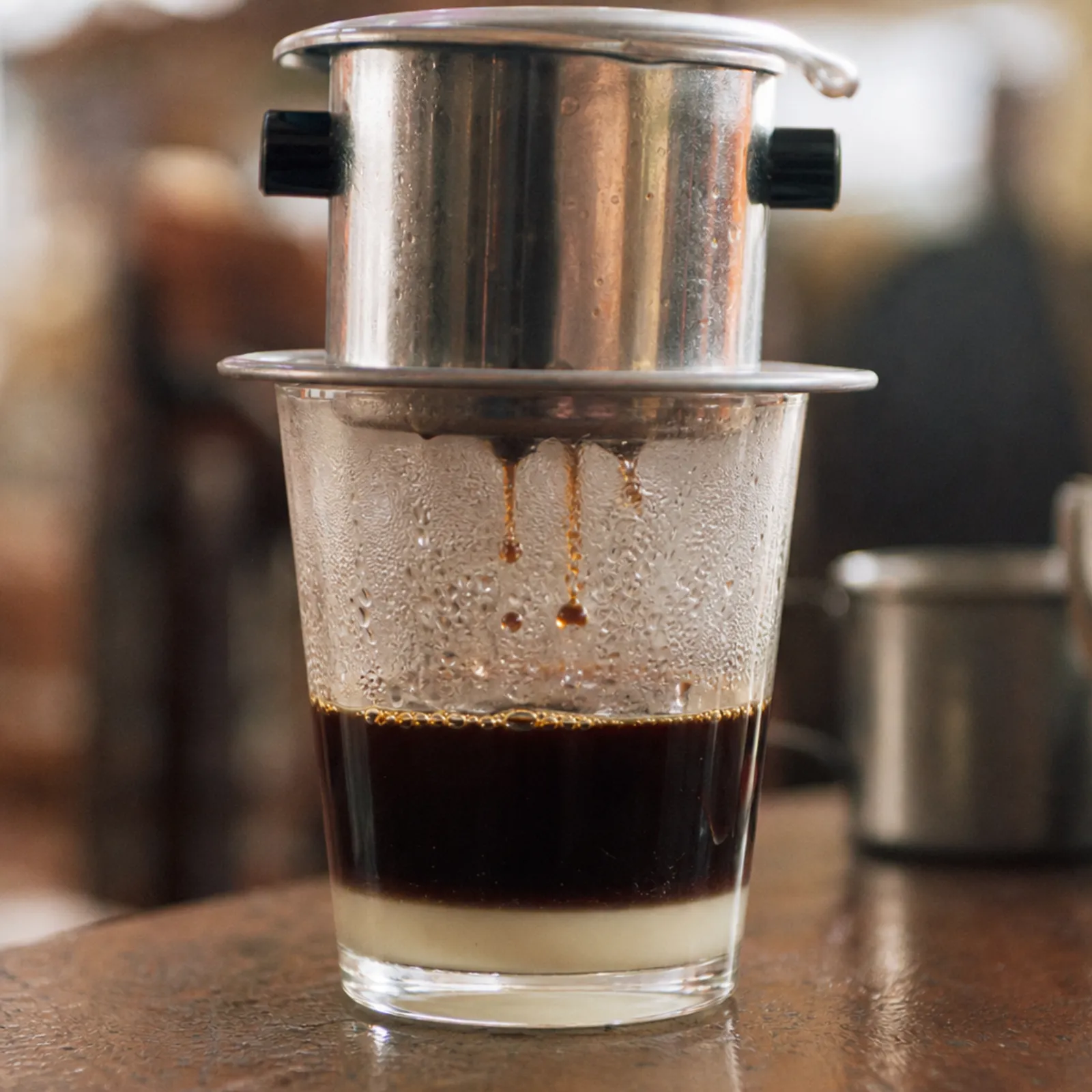
AI-generated: macro of coffee dripping from a steel phin into a glass lined with condensed milkAI image

Brewing

How to Make Vietnamese Coffee: The Phin Method, Done Properly

One dose, one temperature, one drip time. No contradicting recipes, plus a fix for every common mistake.

8 min readUpdated October 27, 2026

Chapters

Key takeaways

  • The standard phin recipe: 20 g medium-ground coffee, water at 90–96 °C, 20 ml for a 30-second bloom, then top up to about 80–100 ml.
  • Drip time should land at 4–5 minutes. Faster means grind finer or press the insert more firmly; slower means grind coarser or loosen the insert.
  • For cà phê sữa đá, put 1–2 tablespoons of sweetened condensed milk in the glass first, then pour the hot coffee over ice.
  • No phin? A strong dark robusta brewed in a French press or moka pot with condensed milk gets you close.

What you need to make Vietnamese coffee

If you want to know how to make Vietnamese coffee that tastes like the glass you remember from a pavement café, the kit is short: a phin, a dark-roasted robusta blend, hot water and sweetened condensed milk. That is it.

The beans matter more than the gadget. Vietnamese coffee is mostly robusta, roasted dark, sometimes with butter and sugar, which gives the chocolate-caramel profile you are after. If you are still choosing, read our Vietnamese coffee brands guide. Not sure which filter to get? See the best phin filters.

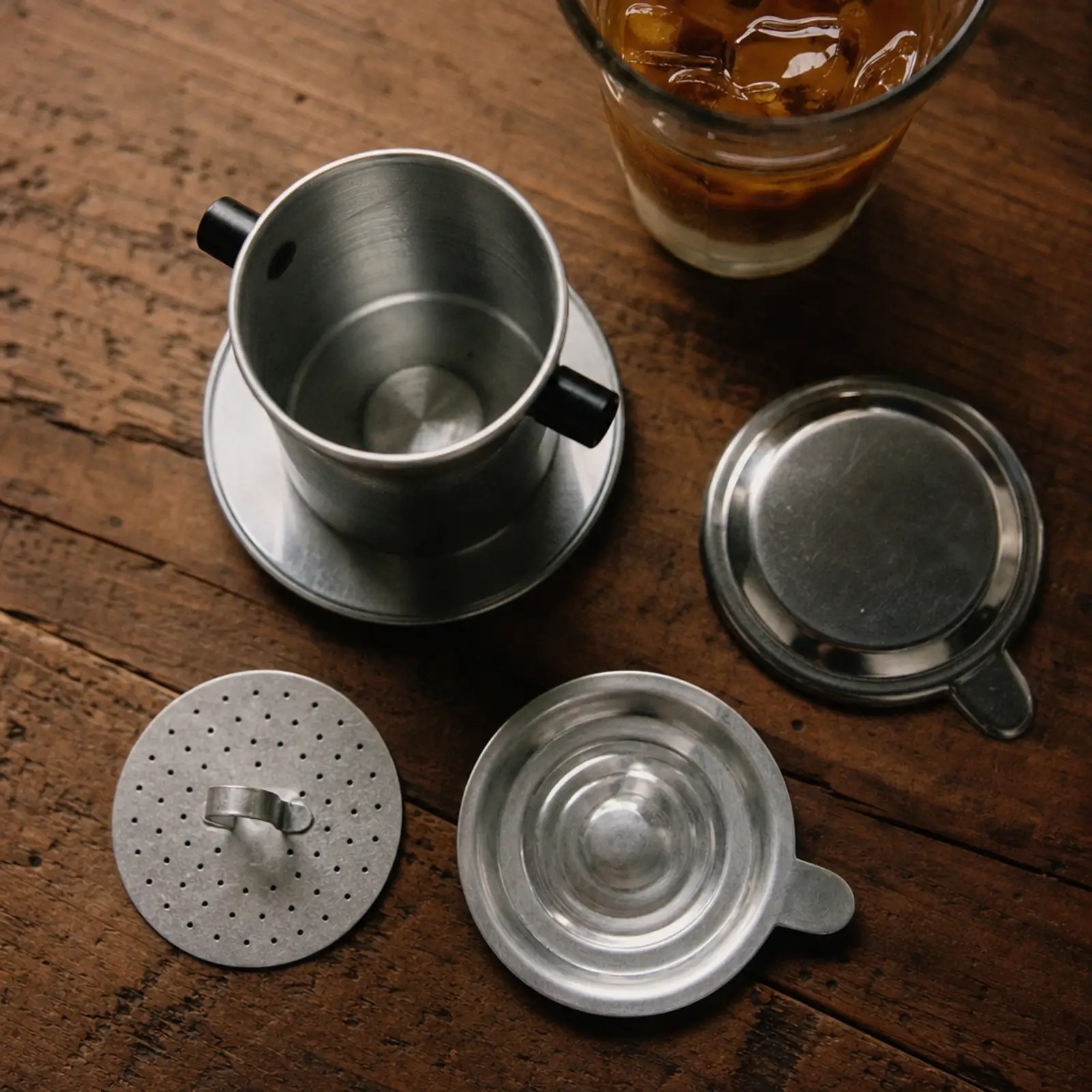
AI-generated: stainless-steel phin taken apart: plate, chamber, insert and lid on a wooden tableAI image
Plate, chamber, insert, lid. The plate sits on your glass.

How to use a phin, step by step

How to make Vietnamese coffee with a phin

Total time: 8 min

  1. Warm everything up

    Rinse the phin and glass with hot water. A cold filter drops the brew temperature and slows the drip.

    30 s
  2. Add the coffee

    Put 20 g of medium-ground coffee in the chamber. Tap the side to level it.

  3. Press the insert on lightly

    Screw-down or gravity: either way, set it so the coffee is evenly compacted but not packed hard. This is your drip-time control.

  4. Bloom

    Pour 20 ml of water at 90–96 °C over the insert and wait 30 seconds. The grounds swell and degas.

    30 s
  5. Fill up

    Top up to a total of about 80–100 ml and put the lid on to hold the heat.

  6. Wait

    The drip should take 4–5 minutes. Do not stir, do not lift the lid every thirty seconds.

    270 s
  7. Finish

    Lift the phin onto its lid. For black coffee, stir in sugar if you like. For a milk coffee, see the next chapter.

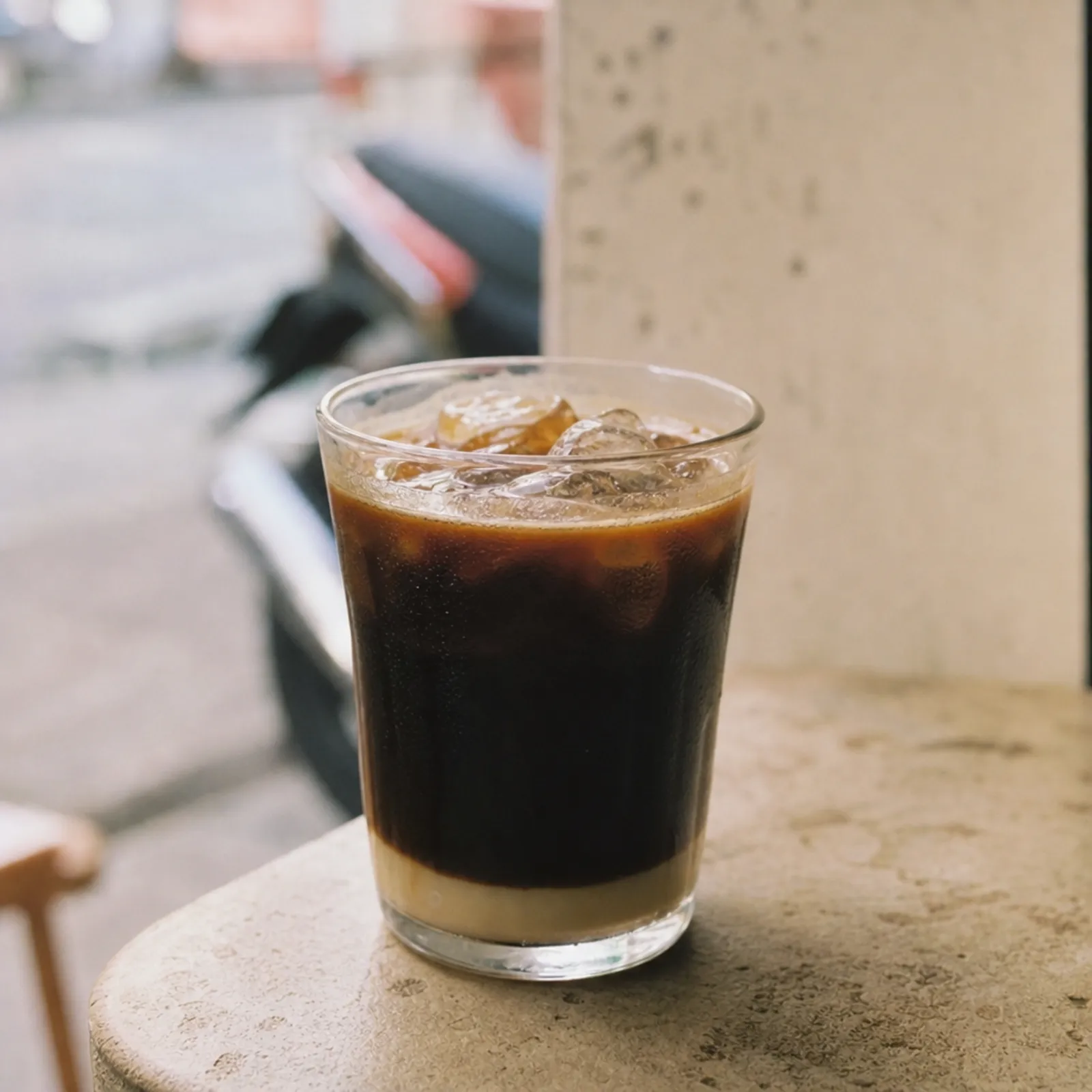
AI-generated: minimalist black iced coffee in a glassAI image
Cà phê đen đá: the same brew over ice, no milk.

The ratio table (one standard, no guessing)

Recipes online contradict each other. One says 25 g in 80 ml, another says two tablespoons in 4 oz, a third a drip time of three minutes. Here is a single set of numbers to work from. Change one variable at a time.

Comparison

DrinkCoffeeWaterExtrasDrip time
Hot black (cà phê đen nóng)20 g, medium grind20 ml bloom, then to ~80–100 ml at 90–96 °CSugar to taste4–5 min
Hot with milk (cà phê sữa nóng)20 g, medium grind20 ml bloom, then to ~80–100 ml at 90–96 °C1–2 tbsp condensed milk in the glass first4–5 min
Iced with milk (cà phê sữa đá)20 g, medium grind20 ml bloom, then to ~80–100 ml at 90–96 °C1–2 tbsp condensed milk first, then pour over ice4–5 min
Iced black (cà phê đen đá)20 g, medium grind20 ml bloom, then to ~80–100 ml at 90–96 °CSugar dissolved in hot coffee, then pour over ice4–5 min
Two cupsUse two phins, 20 g eachSame per phinSame per glass4–5 min

No prices shown, they change daily on Amazon.

Cà phê sữa đá: the iced classic

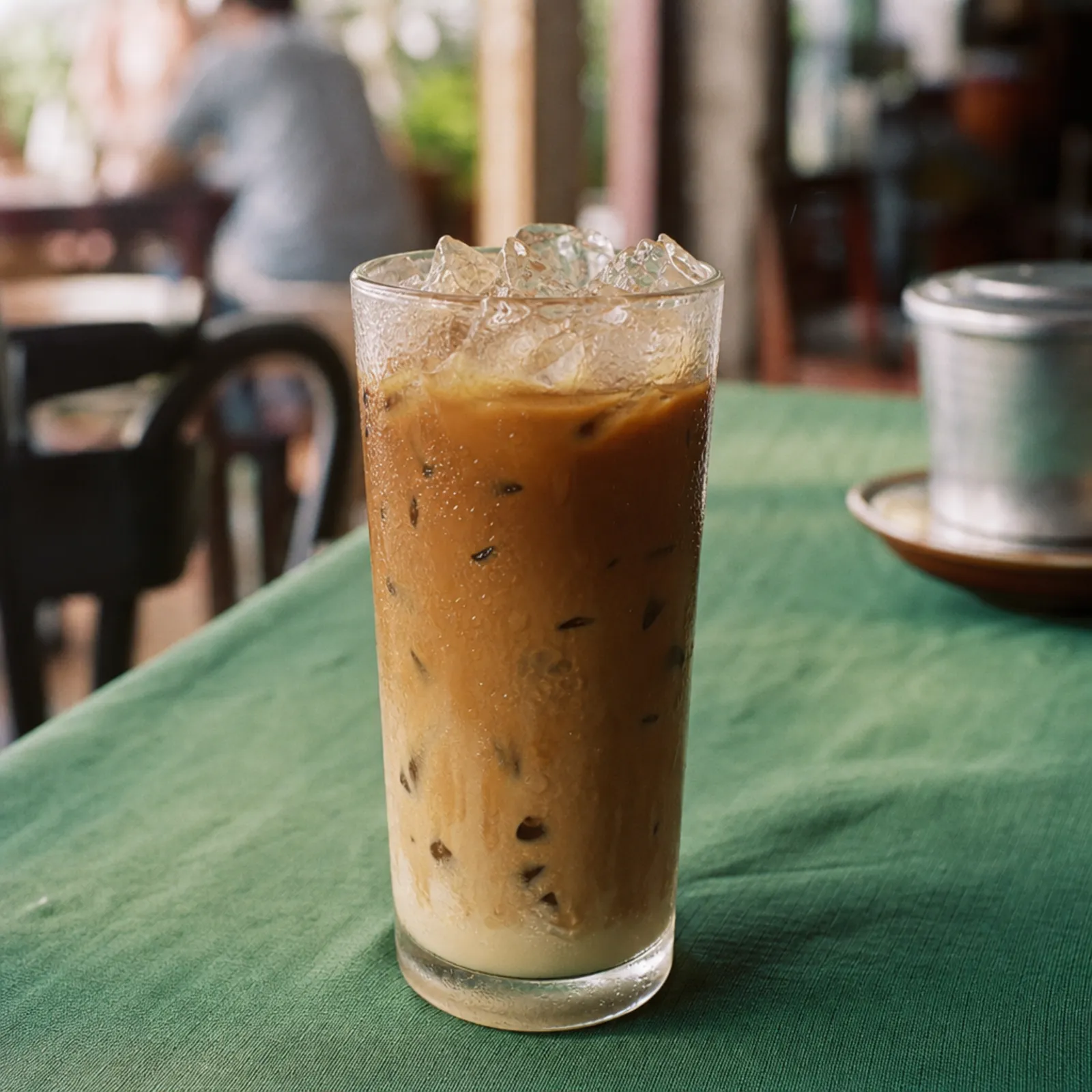
AI-generated: cà phê sữa đá in a tall glass with ice and condensationAI image
Condensed milk first, ice last.

Iced milk coffee is the drink most people mean when they say Vietnamese coffee. The order of operations is what separates a good one from a muddy one:

  1. Spoon 1–2 tablespoons of sweetened condensed milk into the glass first, before you start the phin.
  2. Drip the hot coffee straight onto the milk.
  3. Stir until the milk is dissolved into a uniform amber colour.
  4. Pour over a glass of ice.

Skip the stirring and the condensed milk stays in a sticky layer at the bottom instead of sweetening the whole glass. Stir it into the hot coffee first. For a gentler, milkier drink, look at bạc xỉu: lots of milk and just a little coffee.

Condensed milk matters more than you think. A can of sweetened condensed milk is not the same everywhere. See our home-café picks in Vietnamese Coffee at Home.
Kit for a good iced coffee

This page contains affiliate links. As an Amazon Associate we earn from qualifying purchases. The price for you stays the same.

Phin

Phin-Filter Edelstahl (klassisch, 8 oz)

The standard single-cup stainless phin. Everything in this guide assumes this size.

Pros
  • Cheap to replace
  • Works hot or iced
Cons
  • Fit and finish vary by manufacturer
View on Amazon
Milk

Gezuckerte Kondensmilch

Sweetened condensed milk gives sua da its caramel sweetness. Any standard can works.

Pros
  • Keeps well in the fridge once opened and decanted
  • Easy to find
Cons
  • Sugar-heavy, so start with one spoonful
View on Amazon
Glass

Hitzebeständige Gläser (doppelwandig)

A double-walled glass handles hot coffee and holds ice without sweating on the table.

Pros
  • Safe for hot coffee
  • Insulates well
Cons
  • Check that the phin plate fits the rim
View on Amazon

Troubleshooting: when your phin goes wrong

Comparison

ProblemLikely causeFix
Drips through in under 3 minutes, thin and sourGrind too coarse or insert too looseGrind finer or press the insert in more firmly
Barely drips, over 6 minutes, harsh and bitterGrind too fine or insert screwed down too hardGrind coarser or loosen the insert
Weak, watery cupDose too low or too much waterStay at 20 g and about 80–100 ml total; make sure you bloomed
Flat, lukewarm cupWater too cool or cold phinUse 90–96 °C water, preheat the phin, keep the lid on
Muddy grounds in the glassVery fine powder or loose insertUse a slightly coarser grind and seat the insert evenly

No prices shown, they change daily on Amazon.

The golden rule: too fast, go finer or press firmer; too slow, go coarser or loosen. Change one thing per brew, taste, repeat. Four or five cups in, your hand knows.

How to make Vietnamese coffee without a phin

No phin? You can still get close. The recipe is not the slow drip, it is the flavour: strong, dark robusta plus condensed milk.

  • French press: brew a concentrated cup with a dark-roast robusta, press, and pour onto condensed milk.
  • Moka pot: gives a strong, concentrated base that behaves like phin coffee in a sua da.
  • Pour-over or AeroPress: use a darker roast, brew slightly stronger than usual.

Add the condensed milk at the start, over ice if you like. You will miss the ritual, which is a reason to buy a phin eventually: the best phin filters cost very little compared with most coffee gear.

Frequently asked questions

How much coffee do you put in a phin?

20 g of medium-ground coffee for a standard single-cup phin, with about 80–100 ml of water in total.

What temperature should the water be?

90–96 °C. Pour 20 ml first for a 30-second bloom, then top up.

How long should a phin take to drip?

Four to five minutes. If it is much faster, grind finer or press the insert more firmly. If it is much slower, grind coarser or loosen the insert.

What grind is right for a phin?

Medium to medium-coarse, a little finer than for a French press. It is the speed of the drip that tells you whether it is right.

Can you make Vietnamese coffee without a phin?

Yes. A strong dark robusta in a French press or moka pot, plus sweetened condensed milk, gets you close to the flavour.

How do you make cà phê sữa đá?

Put 1–2 tablespoons of sweetened condensed milk in the glass, drip hot phin coffee onto it, stir until dissolved, then pour over ice.

Why is my Vietnamese coffee bitter?

Usually the grind is too fine or the insert is too tight, so the drip takes far longer than five minutes. Loosen the insert or grind a bit coarser.

Is a bloom really necessary?

It is part of the standard method: 20 ml of hot water for 30 seconds wets the grounds evenly and helps a consistent drip.

Continue the journey

Keep exploring

As an Amazon Associate we earn from qualifying purchases.