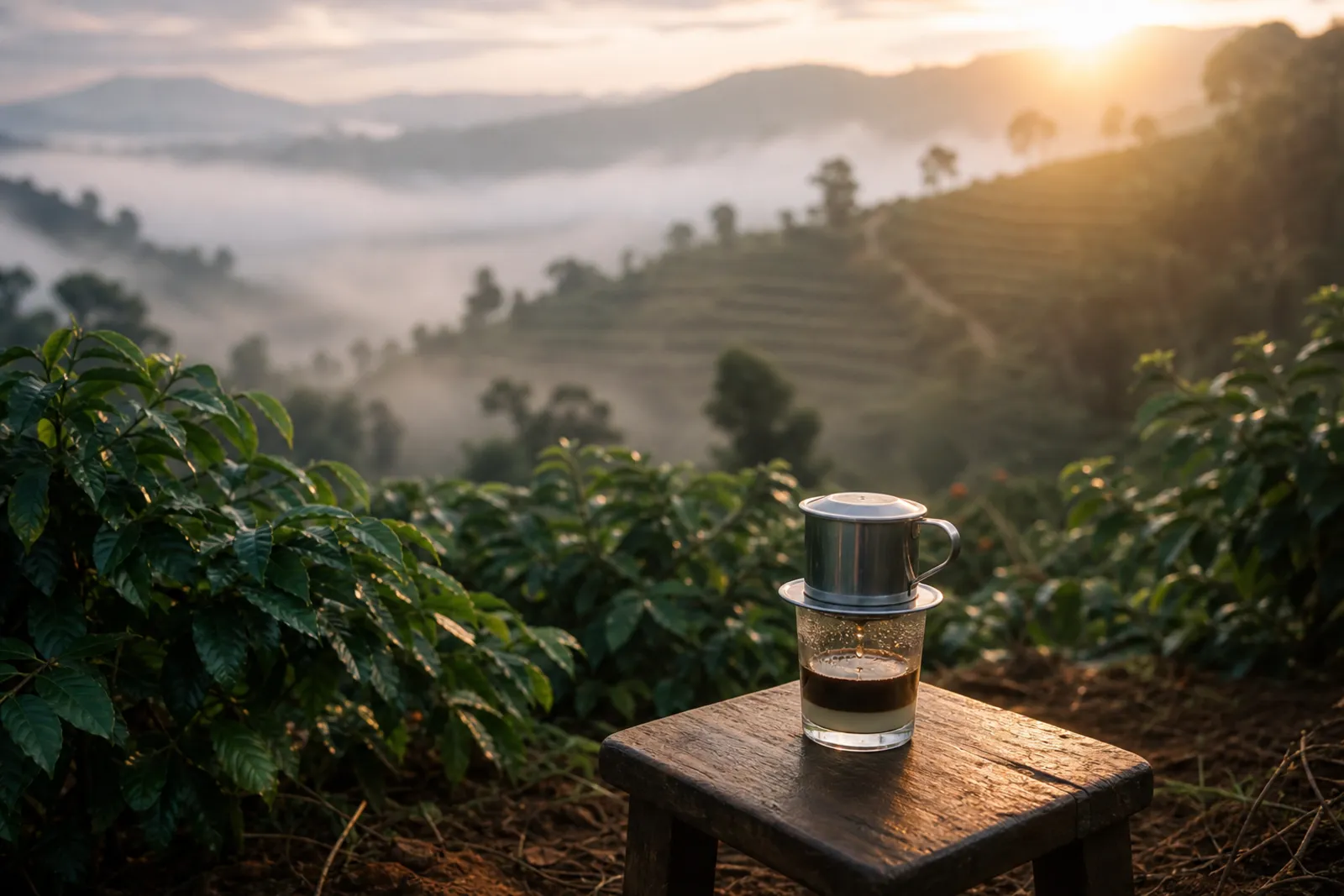
AI-generated: dawn mist over coffee terraces in the Vietnamese highlands, a steel phin on a glass in the foregroundAI image

The journey

Vietnamese Coffee: From Highland Slope to Your Glass

Why a tiny steel filter and a spoonful of condensed milk make one of the world's most distinctive cups.

12 min readUpdated October 27, 2026

The journey of a cup

From the highlands to your kitchen. Tap a station.

  1. Plant
  2. Harvest
  3. Roast
  4. History
  5. Phin
  6. Recipes
  7. At home

Chapters

Key takeaways

  • Vietnamese coffee is mostly robusta: about 95 % of the harvest, grown above all in the Central Highlands around Buôn Ma Thuột.
  • The classic cup is brewed slowly through a phin, a small steel drip filter, and sweetened with condensed milk. Strong, dark, chocolatey, no sourness.
  • Coffee arrived with French missionaries in 1857. Egg coffee was invented in Hà Nội in 1946 because milk was scarce.
  • The reliable phin recipe: 20 g medium-ground coffee, water at 90–96 °C, 30 s bloom, then a 4–5 minute drip.
  • You can build the whole experience at home with a phin, a robusta blend and a can of condensed milk.

Where Vietnamese coffee begins: the highland plant

Vietnamese coffee is not a mystery blend. It is, first of all, a plant, and the plant is mostly robusta. About 95 % of Vietnam's harvest is robusta, which makes the country the largest robusta producer in the world and, since the 1990s, the second-largest coffee producer overall, behind Brazil.

If your picture of coffee is a fruity, tea-like pour-over from a specialty roaster, adjust your expectations now. Robusta tastes of cocoa, toasted grain and bitter chocolate. It is sturdy, it carries roughly twice the caffeine of arabica (around 2.2–2.7 % against 1.2–1.5 %), and it stands up to milk and sugar like nothing else. The whole Vietnamese cup was built around those traits.

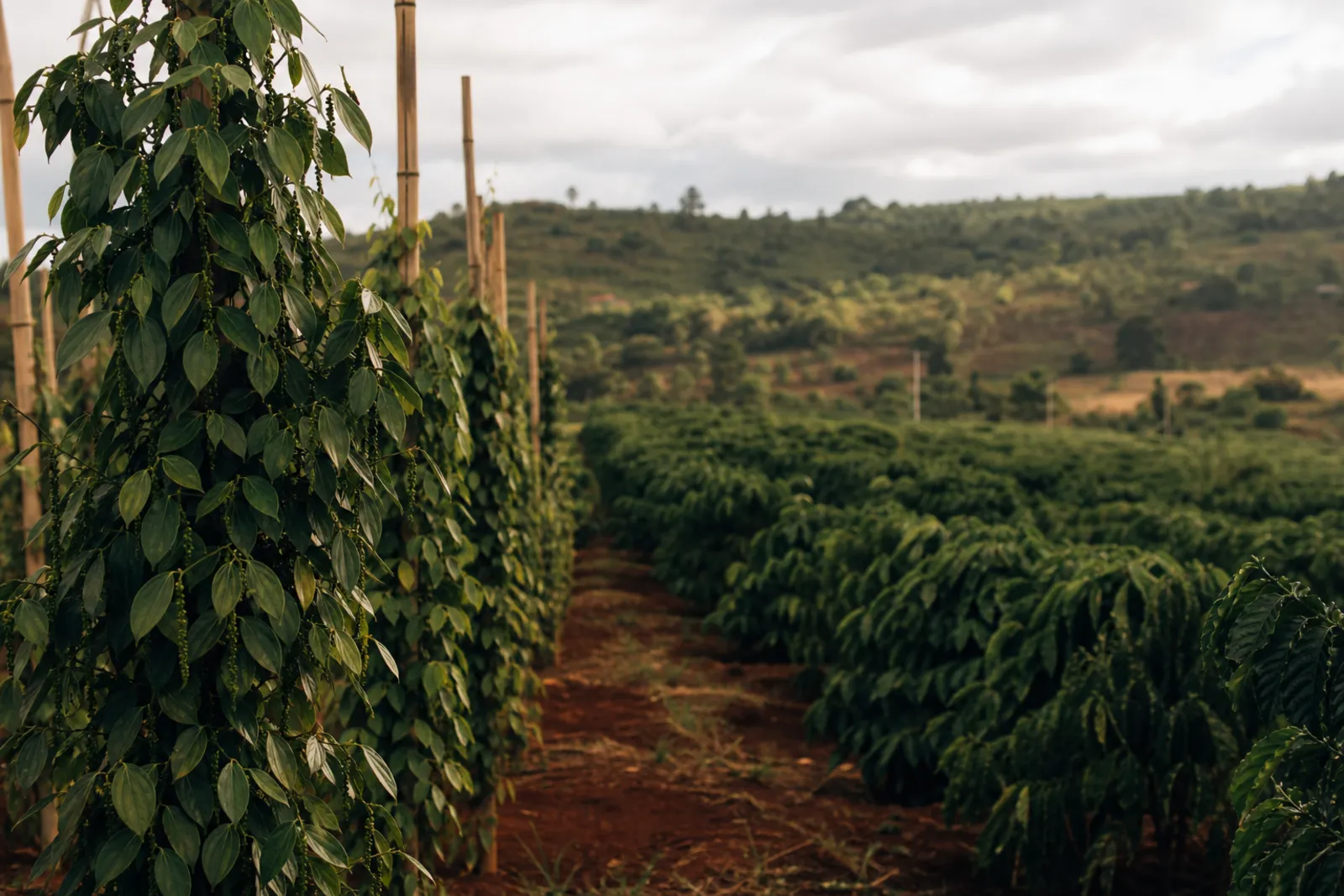
AI-generated: wide landscape near Buôn Ma Thuột with red earth, coffee fields and pepper polesAI image
Red basalt soil and coffee fields stretch across the Central Highlands (Tây Nguyên).

Most of it grows in Tây Nguyên, the Central Highlands: the provinces of Đắk Lắk, Lâm Đồng, Gia Lai and Đắk Nông. Đắk Lắk's capital, Buôn Ma Thuột, calls itself the coffee capital of Vietnam and you feel it. Coffee fields run right up to the edge of town.

The small share of arabica sits higher and cooler: Cầu Đất near Đà Lạt in Lâm Đồng, Sơn La in the north-west, and Khe Sanh in Quảng Trị. We dig into the differences, region by region, in Robusta vs Arabica: Inside Vietnam's Coffee Country.

of Vietnam's harvest is robusta
~95 %
of Vietnam's harvest is robusta
coffee producer worldwide, after Brazil
#2
coffee producer worldwide, after Brazil
robusta producer in the world
#1
robusta producer in the world
caffeine in robusta, vs 1.2–1.5 % in arabica
2.2–2.7 %
caffeine in robusta, vs 1.2–1.5 % in arabica

From cherry to dark roast

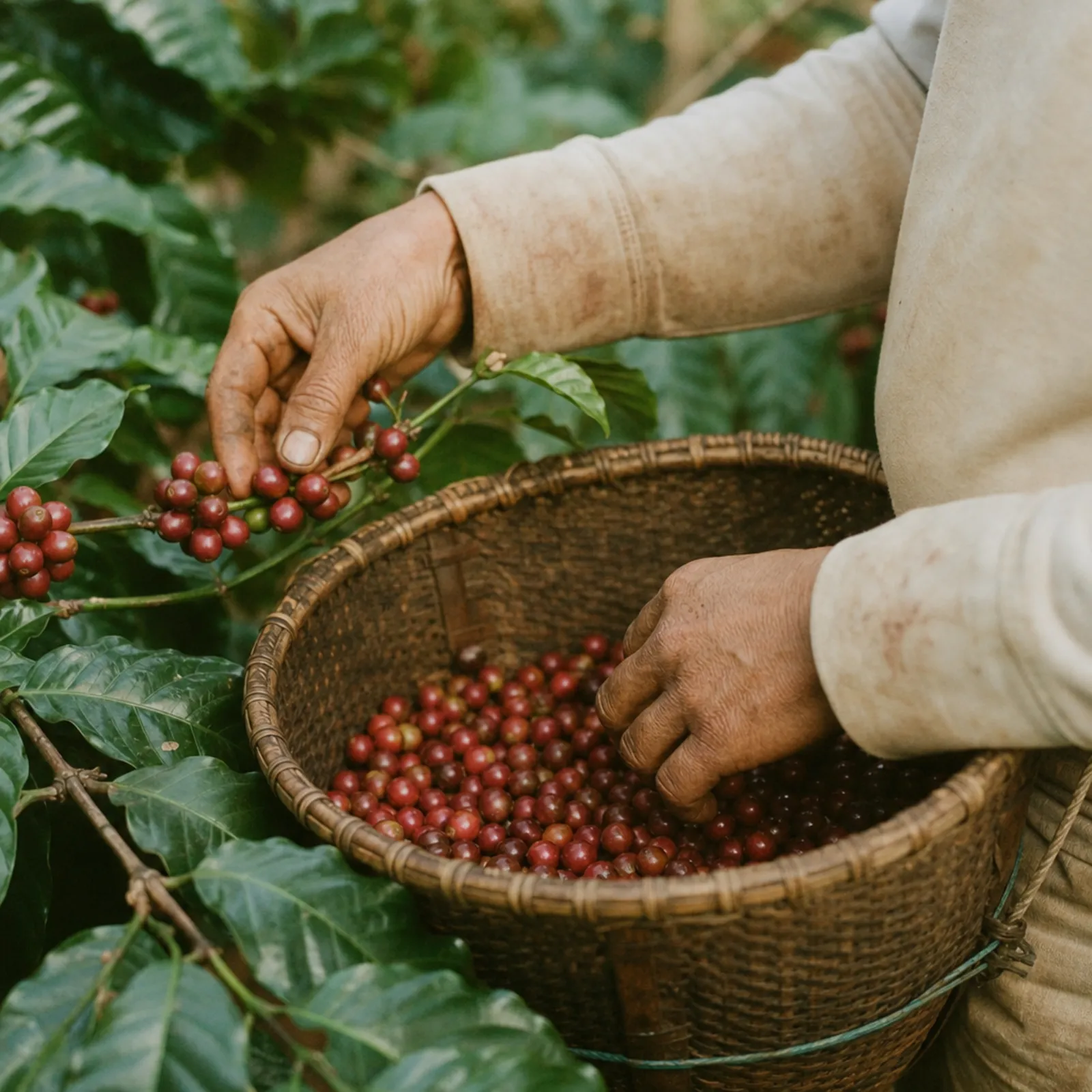
Robusta cherries ripen from roughly October or November and the picking runs through January. Pickers work the rows with baskets, then the cherries are laid out to dry in sunny yards, raked over by hand until they are ready to be hulled.

Then comes the step that defines the Vietnamese cup: the roast.

AI-generated: a farmer's hands picking ripe coffee cherries into a bamboo basketAI image
Harvest season starts around October or November and runs to January.

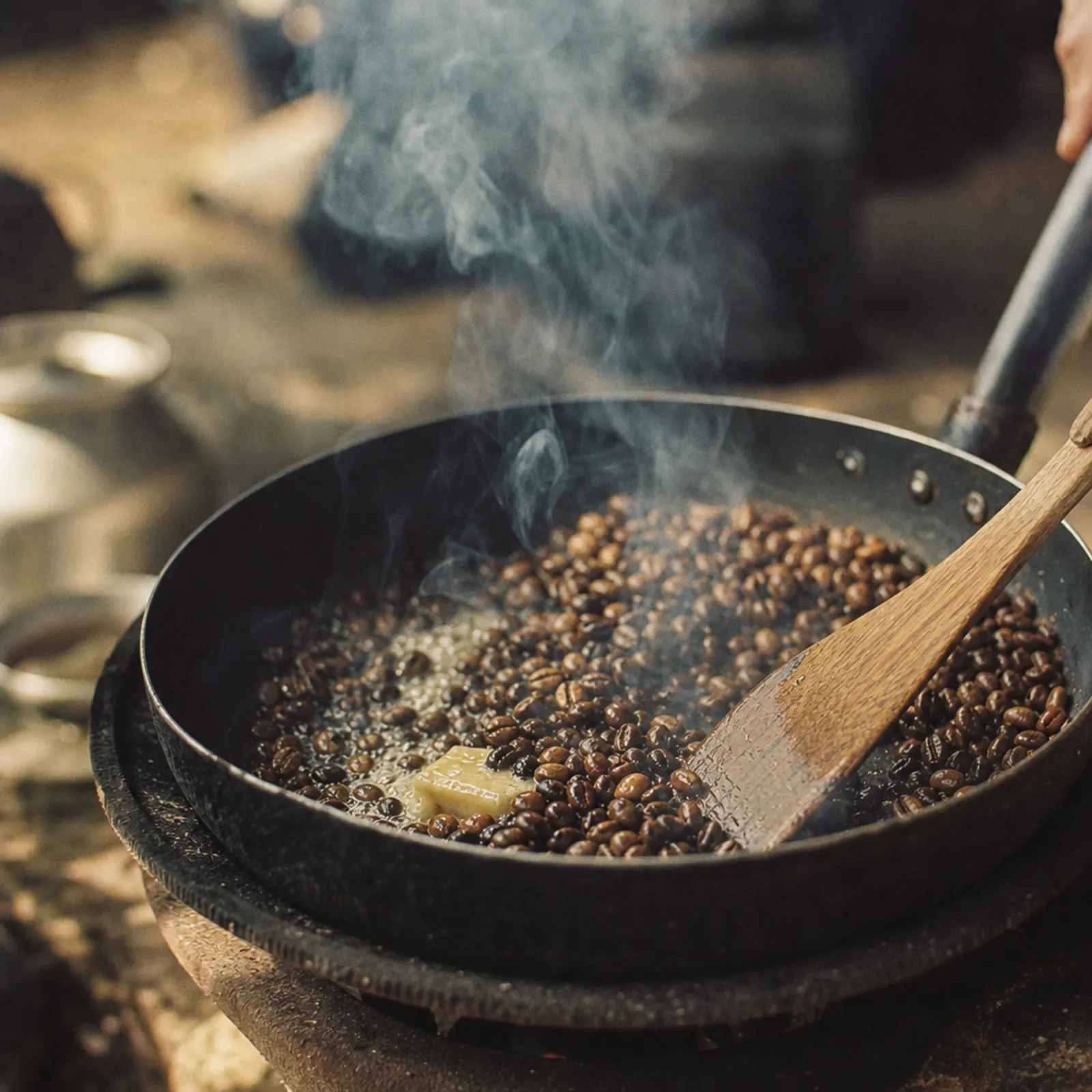
Traditional Vietnamese roasting is dark, and often goes further than that. Beans may be roasted with butter or fat, sugar and flavourings, a style called rang bơ. The result is the chocolate and caramel character you taste in a good ca phe sua da, plus a deep, almost smoky bitterness that condensed milk is there to tame.

One word you will see on packs is culi: peaberry. Instead of two flat-faced beans per cherry, a culi cherry holds one small round bean. Many Vietnamese drinkers swear by it for a punchier cup.

AI-generated: coffee beans roasting in a large pan with butter, smoke rising, a wooden spatulaAI image
Dark, sometimes buttery roasts give Vietnamese coffee its cocoa-caramel edge.

How coffee conquered Vietnam

  1. 1857

    Missionaries plant the first coffee

    French Catholic missionaries bring coffee to northern Vietnam. Sources disagree on exact places, so treat any single village claim with caution.

  2. 1900s–1920s

    Colonial plantations

    French planters set up plantations at the turn of the 20th century. From the 1920s, growing expands into the highlands (Tây Nguyên), where the soil and climate suit coffee.

  3. 1946

    Egg coffee is born in Hà Nội

    Bartender Nguyễn Văn Giảng at Hotel Métropole has no fresh milk to spare and whips egg yolk into a creamy substitute. His family still runs Café Giảng.

  4. 1986

    Đổi Mới opens the economy

    Economic reform triggers a coffee boom across the highlands.

  5. 1990s

    Vietnam becomes a coffee giant

    The country rises to second-largest producer in the world, after Brazil, and the largest producer of robusta.

  6. 1996

    Trung Nguyên opens in Buôn Ma Thuột

    Đặng Lê Nguyên Vũ founds the brand that would define Vietnamese coffee for a generation. Its G7 instant range follows in 2003.

The long version, with etiquette, vocabulary and the stories behind the stools, lives in Vietnamese Coffee Culture: History, Etiquette and How to Order.

The phin: why slow is the point

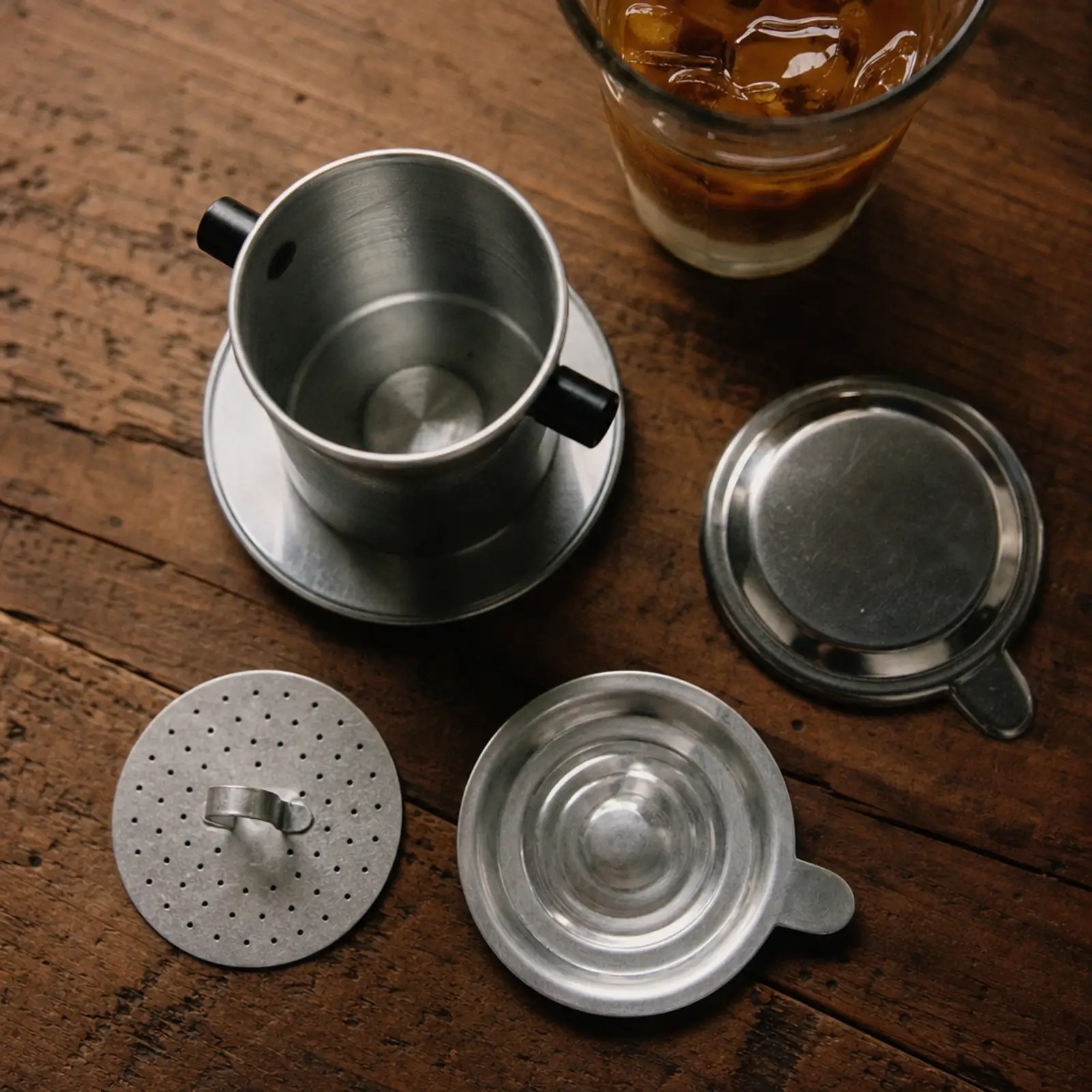
AI-generated: a disassembled stainless-steel phin, top-down on wood: plate, chamber, insert and lidAI image
A phin has four parts: the plate, the chamber, the insert and the lid.

The phin is a small steel drip filter that sits on top of your glass. You add ground coffee, press the insert on top, pour hot water, put the lid on and wait. No paper, no electricity, no pressure. Gravity does the work.

What comes out is concentrated, not quite espresso and not quite filter. It is also the reason Vietnamese coffee tastes the way it does: a long, slow extraction of a dark-roasted robusta.

The core recipe fits in one line: 20 g of medium-ground coffee, water at 90–96 °C, a 30-second bloom with 20 ml, then top up to about 80–100 ml and let it drip for 4–5 minutes. The full walkthrough, with a ratio table and troubleshooting, is in How to Make Vietnamese Coffee. Want to buy one? Start with the best phin filters.

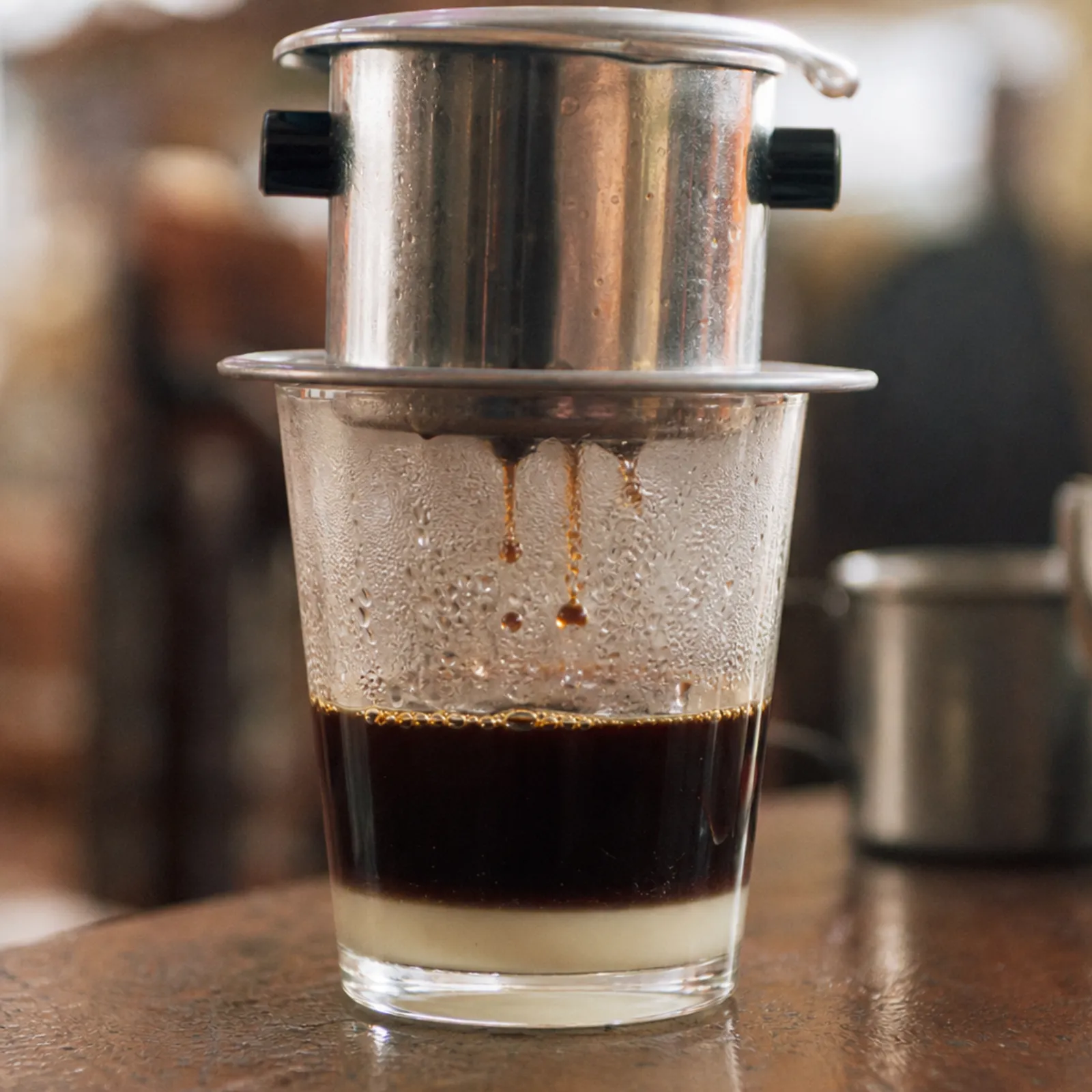
AI-generated: macro of coffee dripping from a phin into a glass with a layer of condensed milkAI image
The drip is the show. Resist the urge to stir early.

What to order: Vietnam's coffee drinks

Walk into any café and you will meet the same core cast. Learn these and you can order anywhere in the country.

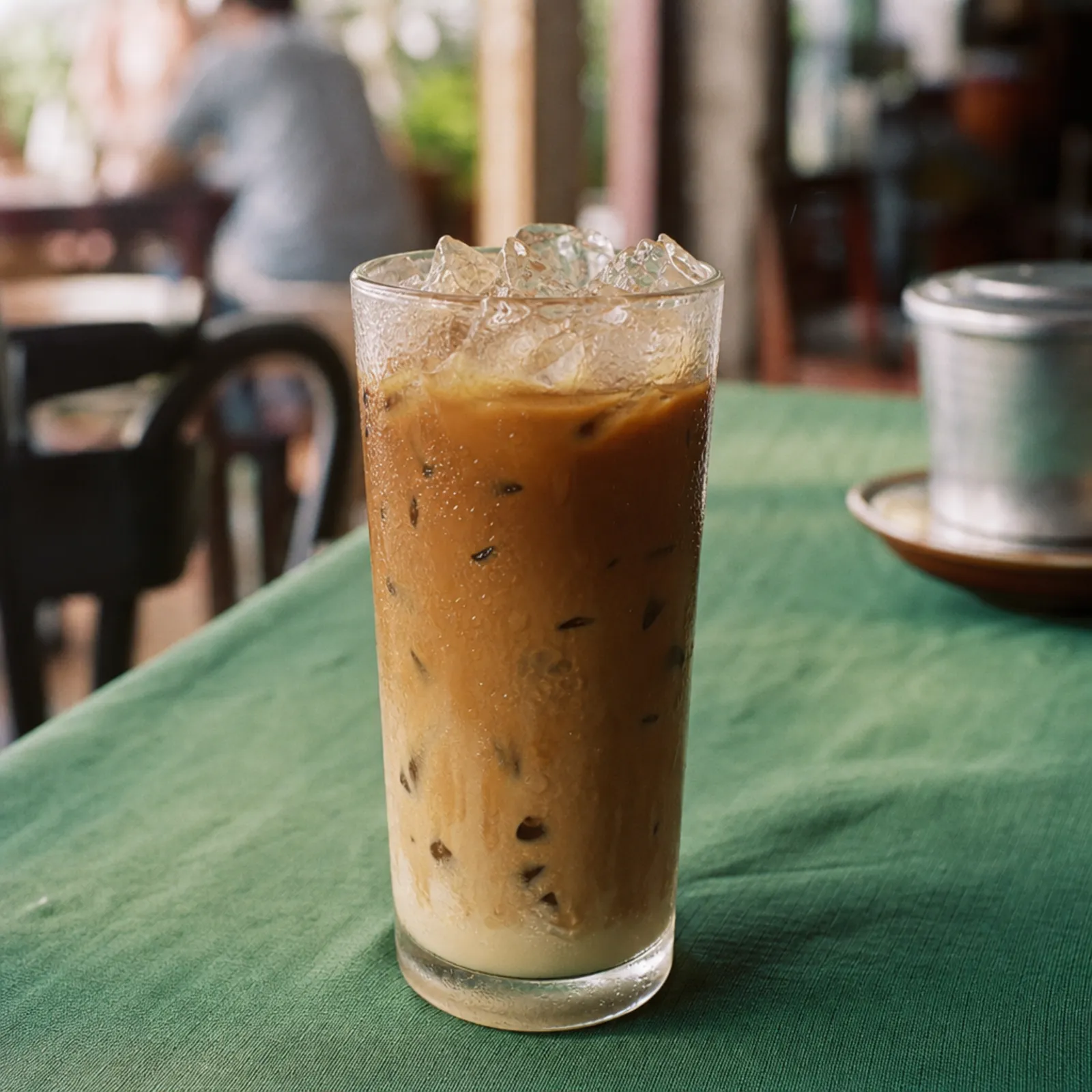
AI-generated: cà phê sữa đá in a tall glass with ice and condensation on a green tableclothAI image
Cà phê sữa đá: the icon.
  • Cà phê sữa đá: phin coffee over ice with sweetened condensed milk. The default order, and the one most visitors fall for. 1–2 tablespoons of condensed milk go into the glass first.
  • Cà phê đen đá: black iced coffee. Strong and bracing, usually with sugar.
  • Bạc xỉu: lots of milk, a little coffee. It comes from Sài Gòn and the name is borrowed from Cantonese. The gentlest entry point.
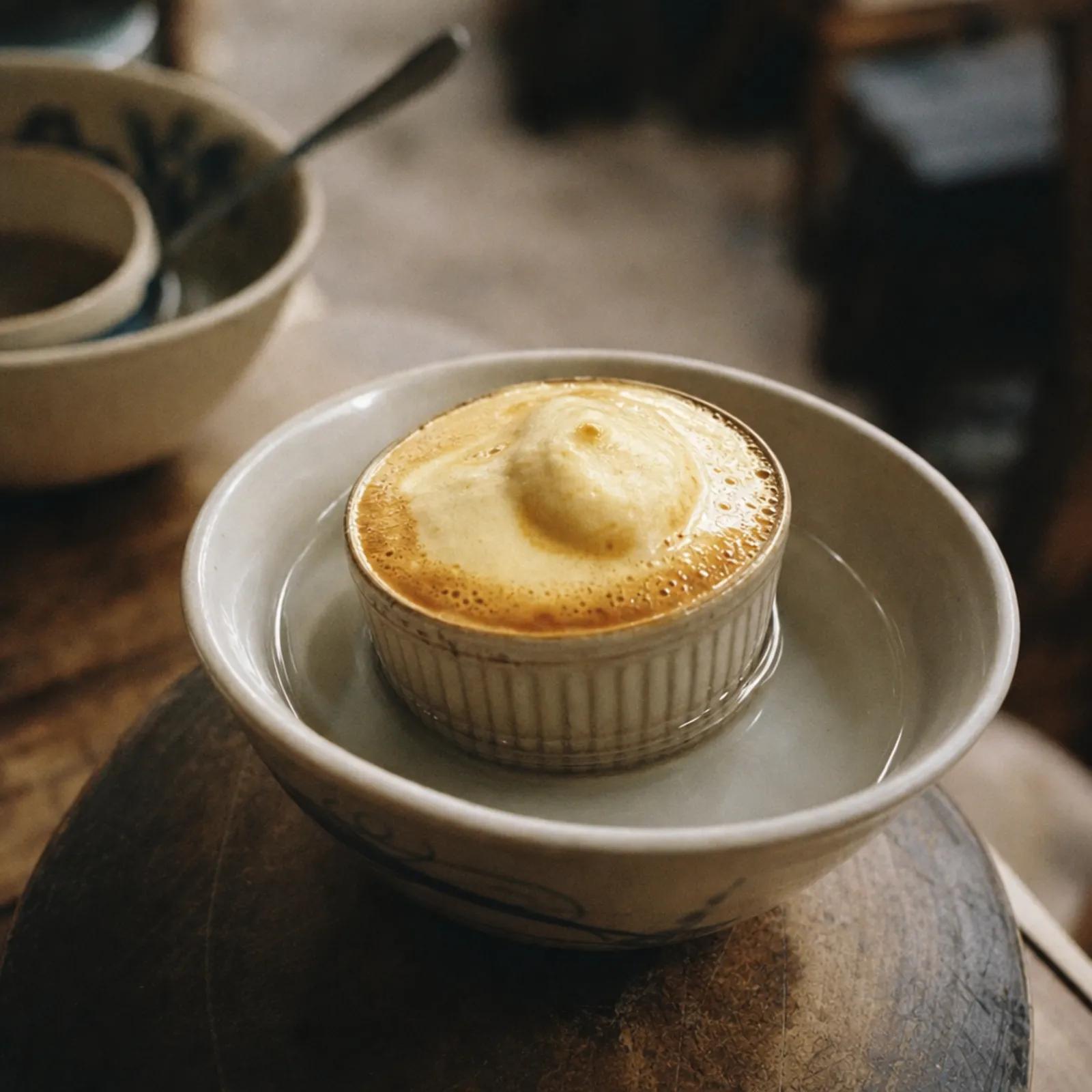
  • Cà phê trứng (egg coffee): a custard-like cloud of egg yolk and condensed milk on hot coffee. Recipe in Egg Coffee Recipe.
  • Cà phê muối (salt coffee): from Huế, popular since around the 2010s. A salty-sweet cream on top of the coffee.
  • Cà phê cốt dừa (coconut coffee): coconut slush with coffee, popularised by Cộng Cà Phê, founded in Hà Nội in 2007.
AI-generated: egg coffee in a small cup standing in a hot-water bowl, with a creamy foam crownAI image
Egg coffee is served warm, in a cup that sits in hot water.

Bringing Vietnam into your kitchen

You do not need a barista course. You need three things: a phin, a robusta-heavy dark roast, and condensed milk. A hand grinder helps if you buy whole beans. Brand notes are in Best Vietnamese Coffee Brands, and the full “Vietnam at home” setup, from home café corner to gift ideas, is in Vietnamese Coffee at Home.

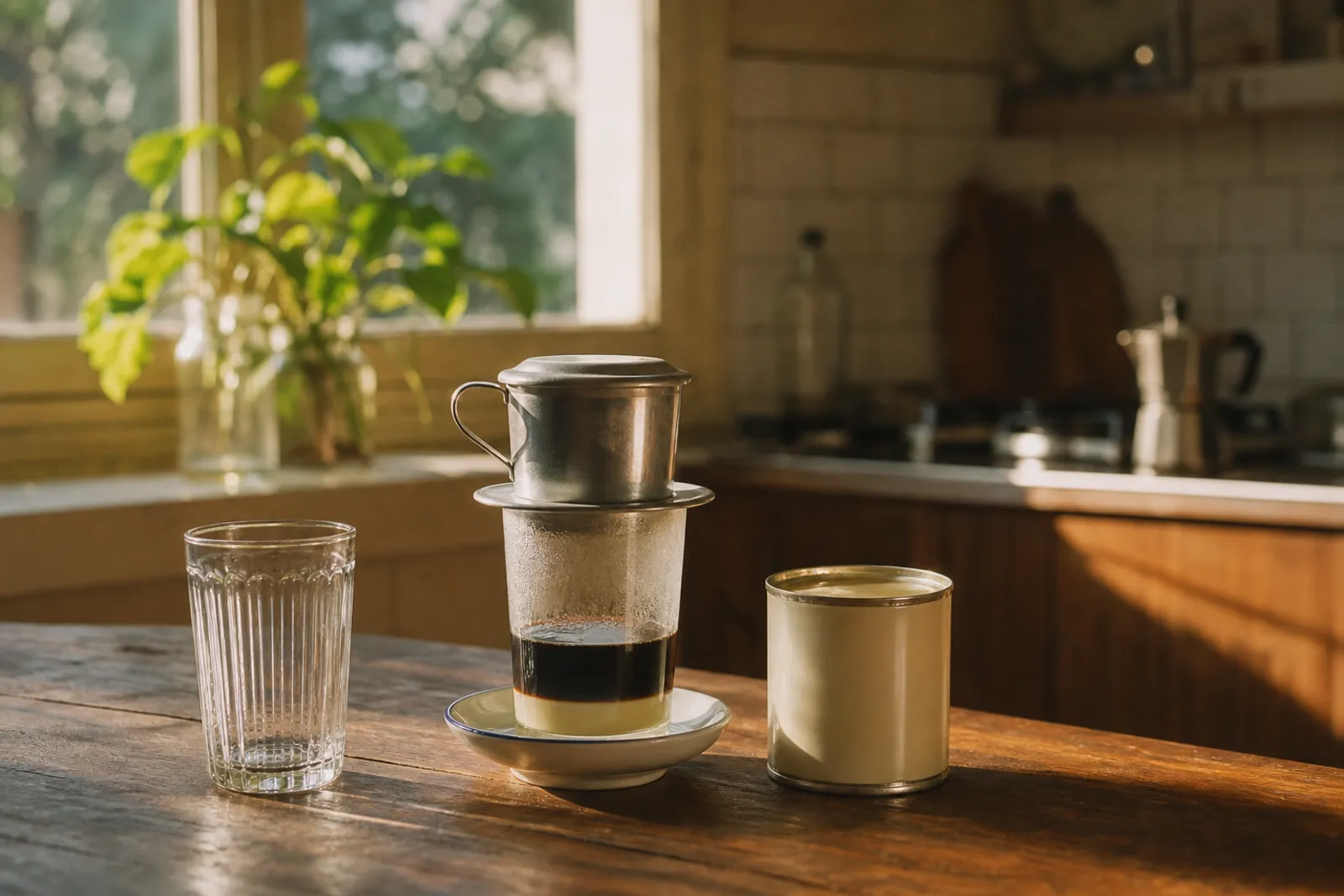
AI-generated: cosy European kitchen in morning sun with a phin set, a condensed milk tin and a glassAI image

The starter trio

This page contains affiliate links. As an Amazon Associate we earn from qualifying purchases. The price for you stays the same.

Start here

Phin-Filter Edelstahl (klassisch, 8 oz)

A classic stainless phin in the standard single-cup size covers almost every recipe on this site.

Pros
  • Simple, durable steel construction
  • Fits a normal drinking glass
  • Works for hot and iced coffee
Cons
  • Quality varies by maker, so check the insert fits snugly
  • Needs a few brews to dial in the grind
View on Amazon
Beans

Vietnam Robusta ganze Bohne

A Vietnamese robusta gives you the right chocolatey base. Buy whole and grind medium just before brewing if you can.

Pros
  • Authentic robusta character
  • Fresher than pre-ground
Cons
  • Needs a grinder
  • Roast style differs between sellers
View on Amazon
Sweetness

Gezuckerte Kondensmilch

Sweetened condensed milk is half of the flavour of a ca phe sua da. One can lasts a surprising number of cups.

Pros
  • Cheap and shelf-stable
  • Makes the drink taste like Vietnam
Cons
  • Very sweet, so adjust to taste
  • Brands taste slightly different
View on Amazon

Frequently asked questions

What is Vietnamese coffee made of?

Traditionally it is dark-roasted coffee, mostly robusta, brewed through a phin and sweetened with condensed milk. The classic iced version is cà phê sữa đá.

Is Vietnamese coffee stronger than espresso?

It is strong in flavour and in caffeine, because robusta contains roughly twice the caffeine of arabica (about 2.2–2.7 % against 1.2–1.5 %). Per serving it depends on how much you use, but a phin brew is concentrated.

Why is Vietnamese coffee so strong and bitter?

Robusta beans, a dark (sometimes buttery) roast and a slow brew all push the cup towards bold, bitter chocolate notes. Condensed milk is there to balance it.

What kind of beans does Vietnam use?

Around 95 % of the harvest is robusta. Arabica grows in cooler areas such as Cầu Đất near Đà Lạt, Sơn La and Khe Sanh.

What is a phin filter and how do you use it?

A phin is a small stainless-steel drip filter with a plate, chamber, insert and lid. Add about 20 g of medium-ground coffee, press the insert on lightly, bloom with 20 ml of 90–96 °C water for 30 seconds, top up and let it drip for 4–5 minutes.

Can you make Vietnamese coffee without a phin?

Yes. Use a dark-roasted robusta, brew it strong in a French press, moka pot or similar, and add condensed milk. You will miss the slow drip, but the flavour profile is close. Details are in our how-to guide.

What is egg coffee and is it safe?

Egg coffee (cà phê trứng) is hot coffee topped with whipped egg yolk and condensed milk, invented in Hà Nội in 1946. The yolk is not cooked, so use pasteurised eggs.

What is cà phê sữa đá?

Iced coffee with sweetened condensed milk: 1–2 tablespoons of milk go in the glass first, then phin coffee, then ice.

Continue the journey

Keep exploring

As an Amazon Associate we earn from qualifying purchases.