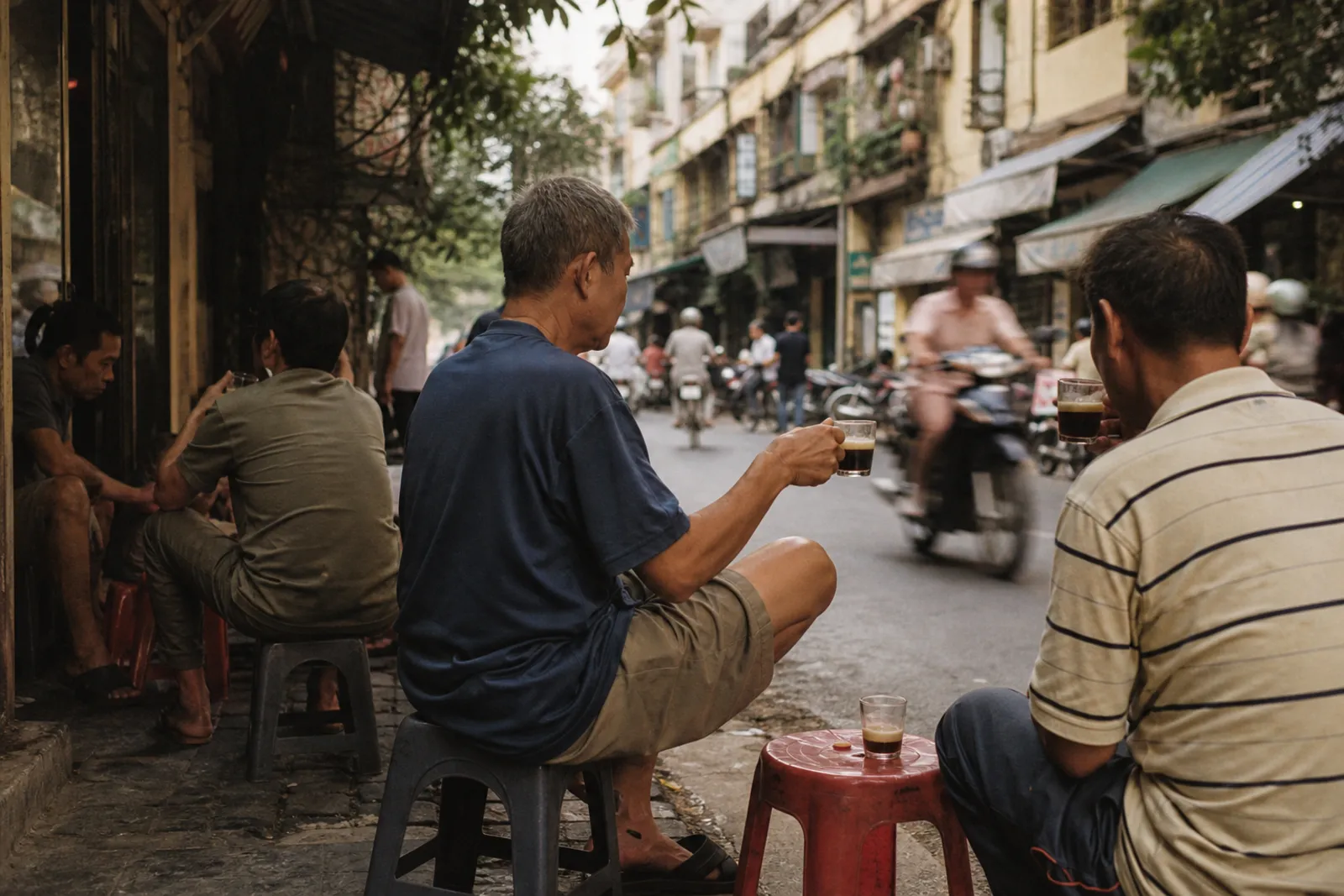
 AI image
Culture
Vietnamese Coffee Culture: Stools, Sidewalks and Slow Drips
How a French import became the pulse of Vietnamese street life, and how to order without looking lost.
Key takeaways
- Coffee came to Vietnam with French missionaries in 1857, was industrialised in the colonial era and exploded after the Đổi Mới reforms of 1986.
- Vietnamese coffee culture is a pavement culture: low stools, slow drinks, long conversations.
- Egg coffee (Hà Nội, 1946), bạc xỉu (Sài Gòn), salt coffee (Huế) and coconut coffee are regional inventions.
- Learn five phrases and you can order anywhere: cà phê sữa đá, ít đường, không đường, nóng, đá.
A short, honest history of coffee in Vietnam
A lot of Vietnamese coffee culture writing hands you a tidy origin myth. The truth is messier, and sources disagree on details, so we stay with what is solid.
- 1857
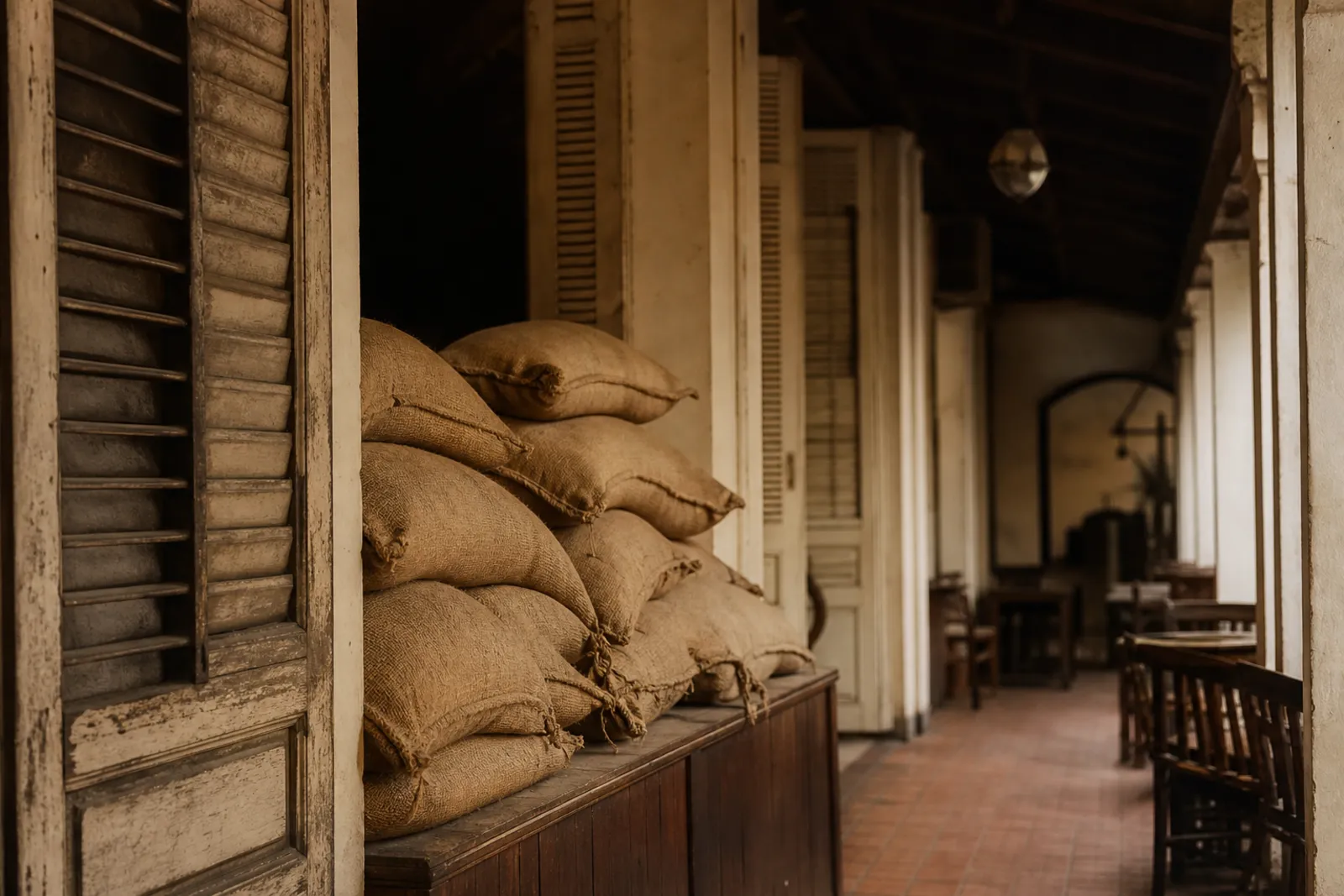
French missionaries plant coffee in the north
Catholic missionaries introduce the plant. Several northern places are named in different accounts; we only say “in the north”.
- Early 1900s
French plantation era
Colonial plantations spread. From the 1920s, growing moves into the highlands (Tây Nguyên).
- 1946
Egg coffee at the Métropole
Nguyễn Văn Giảng, a bartender at Hotel Métropole in Hà Nội, whips egg yolk with condensed milk because milk is scarce. His family still runs Café Giảng.
- 1986
Đổi Mới
Economic reforms release a coffee boom.
- 1990s
A coffee superpower
Vietnam becomes the world's second-largest coffee producer and the largest of robusta.
- 1996
Trung Nguyên
Đặng Lê Nguyên Vũ founds Trung Nguyên in Buôn Ma Thuột. The G7 instant range follows in 2003.
- 2007
Cộng Cà Phê
Opens in Hà Nội and popularises coconut coffee (cà phê cốt dừa).
 AI image
Why the pavement is the café
In Hà Nội's old quarter, the café often has no door. A few low plastic stools, a table the height of your knee, a kettle going somewhere behind a wall. You sit, you order, you stay.
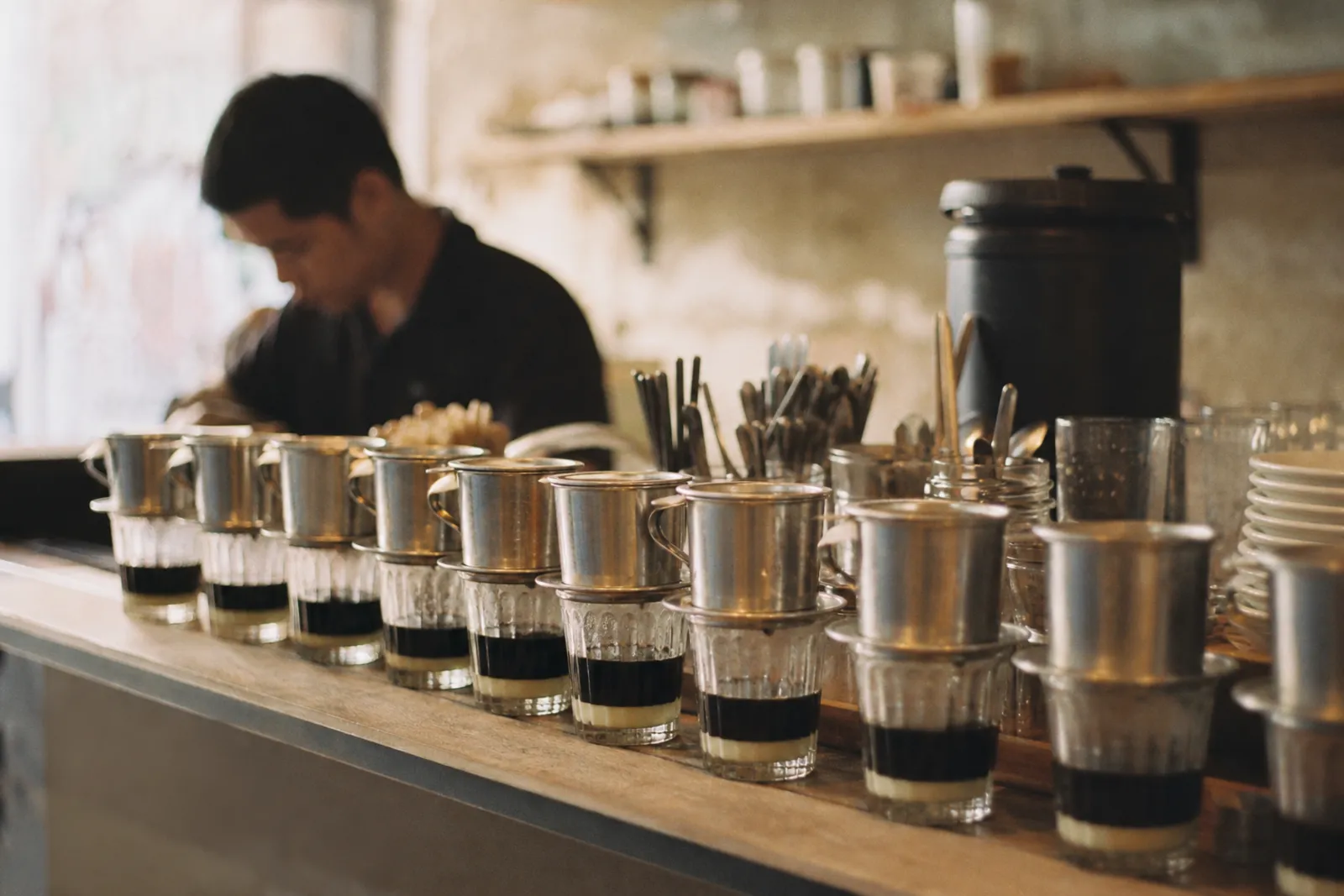
The phin helps. A phin coffee takes minutes to drip, and it comes with the expectation that you will wait. Nobody hurries you out the moment the glass is empty. Many Vietnamese cafés are places to meet friends, work, read or watch the street.
Our brewing guide shows you how to reproduce the sua da that Sài Gòn mornings run on.
 AI image
Regional inventions: who made what
- Cà phê trứng (egg coffee): Hà Nội, 1946. Recipe in Egg Coffee Recipe.
- Bạc xỉu: Sài Gòn, lots of milk, a little coffee. The name is borrowed from Cantonese.
- Cà phê muối (salt coffee): Huế, from about the 2010s.
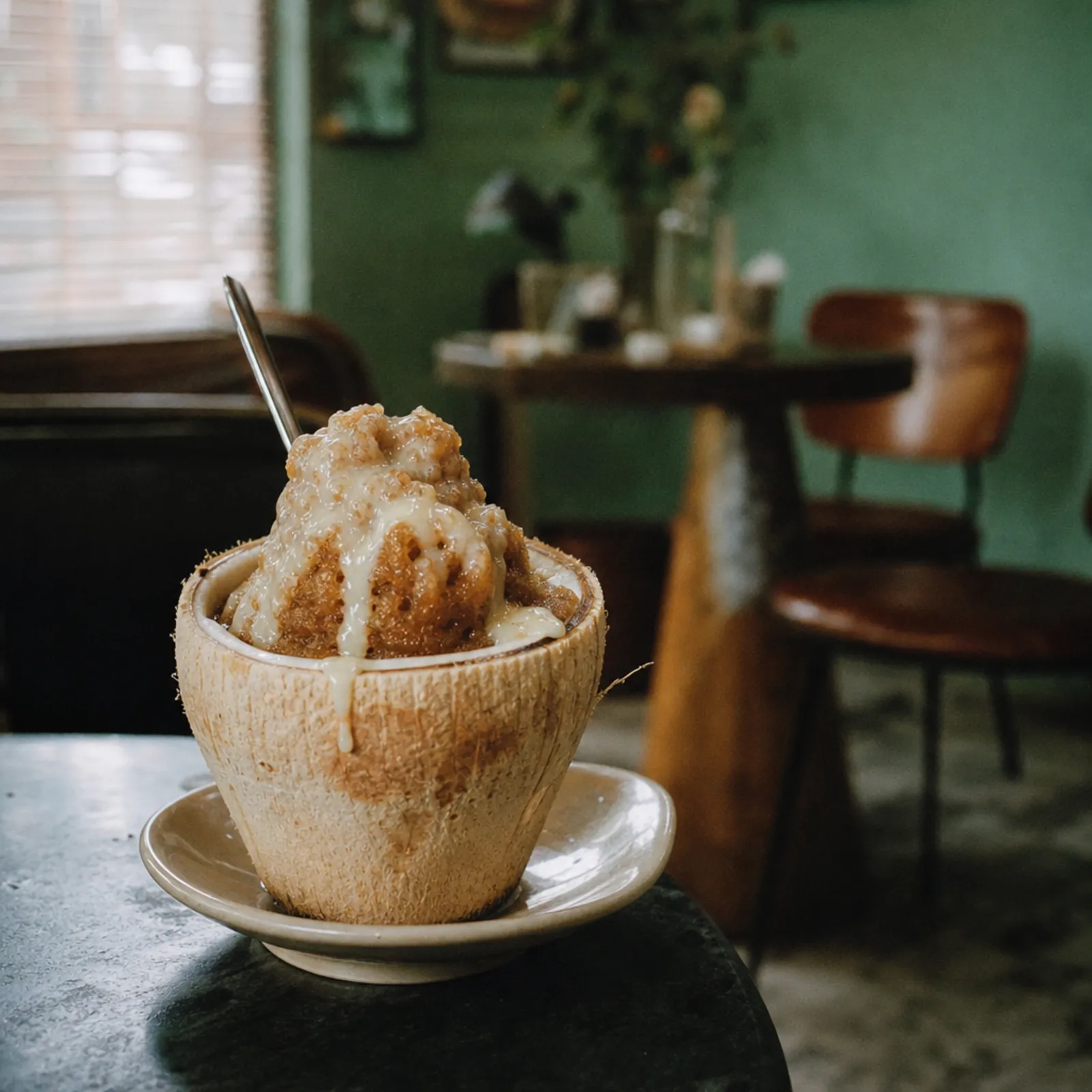
- Cà phê cốt dừa (coconut coffee): popularised by Cộng Cà Phê.
- Cà phê sữa đá: the national default, with sweet condensed milk.
 AI image
How to order in Vietnamese (with audio)
Tap the speaker icons to hear each phrase. Vietnamese is tonal, so the marks above the letters change the meaning; do not worry about perfection. A smile and a point will get you through, and any attempt is appreciated.
Say it in Vietnamese
Want to go further with the language? VietLingo has structured lessons. For the full overview of the coffee world, head back to the Vietnamese coffee guide, or explore where it all grows in Robusta vs Arabica.
Frequently asked questions
When did coffee come to Vietnam?
In 1857, brought by French Catholic missionaries to the north.
Why do Vietnamese people drink coffee on the pavement?
Low stools, slow phin coffee and long conversations make street cafés the social centre of daily life, especially in Hà Nội.
Who invented egg coffee?
Nguyễn Văn Giảng, a bartender at Hà Nội's Hotel Métropole, in 1946, when milk was scarce.
What is bạc xỉu?
A milky coffee from Sài Gòn: lots of milk, a little coffee. The name comes from Cantonese.
How do you order iced milk coffee in Vietnamese?
Say “Cho tôi một ly cà phê sữa đá.” It means “I'd like a glass of iced milk coffee.”
What does “ít đường” mean?
Less sugar. “Không đường” means no sugar.
What is salt coffee?
Cà phê muối, from Huế, popular since around the 2010s: coffee with a salty-sweet cream on top.
Is weasel coffee worth trying?
We recommend skipping it. Production often involves caged animals, which is an animal-welfare problem.
Continue the journey
Keep exploring
As an Amazon Associate we earn from qualifying purchases.