 AI image
Origins
Vietnamese Coffee: Robusta vs Arabica in the Highlands
The world's biggest robusta producer, with a small, serious arabica sideline. Here is where each grows and why it matters in the glass.
Key takeaways
- About 95 % of Vietnam's coffee is robusta; arabica is a small share grown in cooler places: Cầu Đất (Đà Lạt), Sơn La and Khe Sanh.
- Robusta carries roughly twice the caffeine of arabica: about 2.2–2.7 % against 1.2–1.5 %.
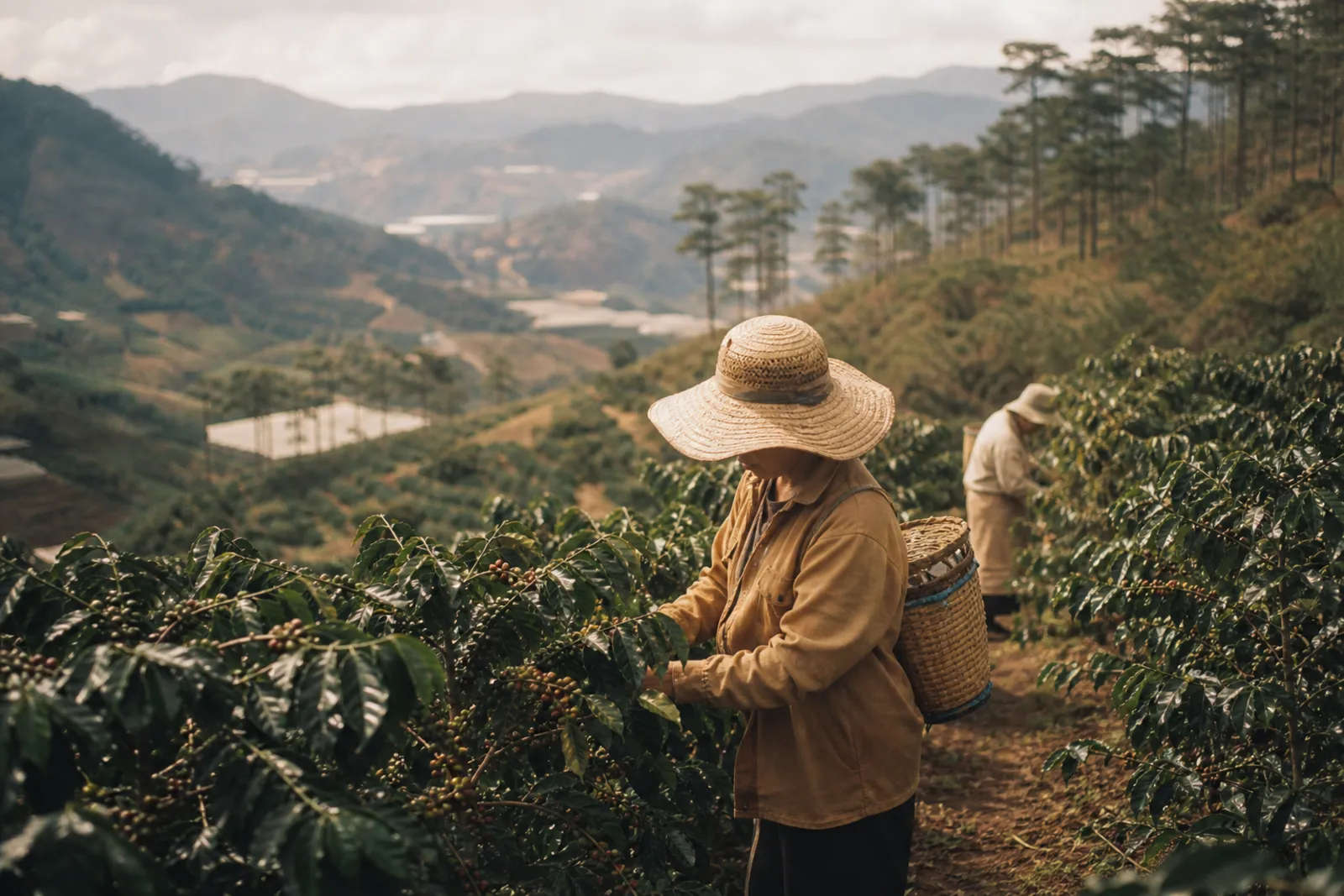
- Most coffee is grown in Tây Nguyên, led by Đắk Lắk and its capital Buôn Ma Thuột. Robusta is harvested from about October or November to January.
- Robusta is not worse coffee. It is a different coffee: heavy, chocolatey, low in acidity, ideal with condensed milk.
Robusta vs arabica: the two species
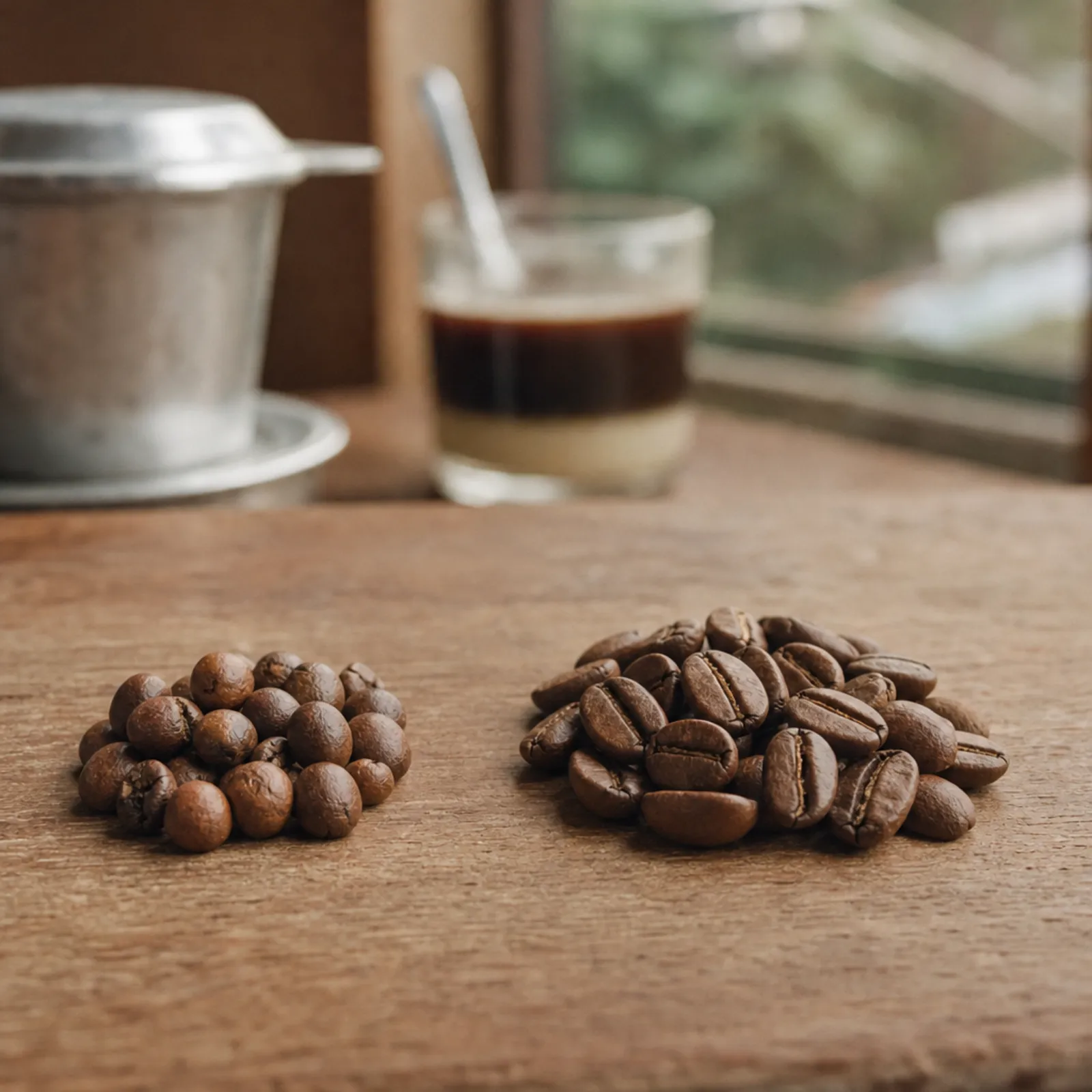
Search for Vietnamese coffee robusta vs arabica and you will meet a lot of lazy rankings that put arabica on a pedestal. In Vietnam the story is the opposite. Around 95 % of the harvest is robusta, the country is the largest robusta producer on Earth, and its entire coffee culture is built on the strengths of that bean.
The short comparison:
Comparison
| Product | Robusta | Arabica |
|---|---|---|
| Share of Vietnam's harvest | About 95 % | Small share |
| Caffeine | About 2.2–2.7 % | About 1.2–1.5 % |
| Typical flavour | Cocoa, toasted grain, bitter chocolate; low acidity | Fruitier, more acidic, often floral or sweet |
| Where in Vietnam | Tây Nguyên: Đắk Lắk, Gia Lai, Đắk Nông, Lâm Đồng | Cầu Đất (Đà Lạt), Sơn La, Khe Sanh |
| Best use | Phin coffee with condensed milk | Black, lighter-roast coffee |
No prices shown, they change daily on Amazon.
- robusta share of Vietnam's harvest ~95 %
- robusta share of Vietnam's harvest
- caffeine in robusta 2.2–2.7 %
- caffeine in robusta
- caffeine in arabica 1.2–1.5 %
- caffeine in arabica
- robusta producer in the world #1
- robusta producer in the world
 AI image
Where Vietnamese coffee grows
1. Buôn Ma Thuột, Đắk Lắk
The self-styled coffee capital of Vietnam and the heart of Tây Nguyên. Đắk Lắk is the leading province for robusta. Trung Nguyên was founded here in 1996.
2. Gia Lai
A major highland province for robusta, on the same red-soil plateau as Đắk Lắk and Đắk Nông.
3. Lâm Đồng
A highland province that grows both robusta and arabica. Its capital Đà Lạt is cooler and green, with pine forest around the hills.
4. Cầu Đất, Đà Lạt
Cool hills near Đà Lạt where arabica grows between pine woods. This is where a lot of Vietnam's arabica comes from.
5. Sơn La
In the north-west, arabica country in the mountains. Coffee here has a different feel from the highland robusta belt.
6. Khe Sanh, Quảng Trị
A central-Vietnam highland district known for arabica, far from the robusta heartland.
 AI image
From flower to cup: a robusta year
 AI image
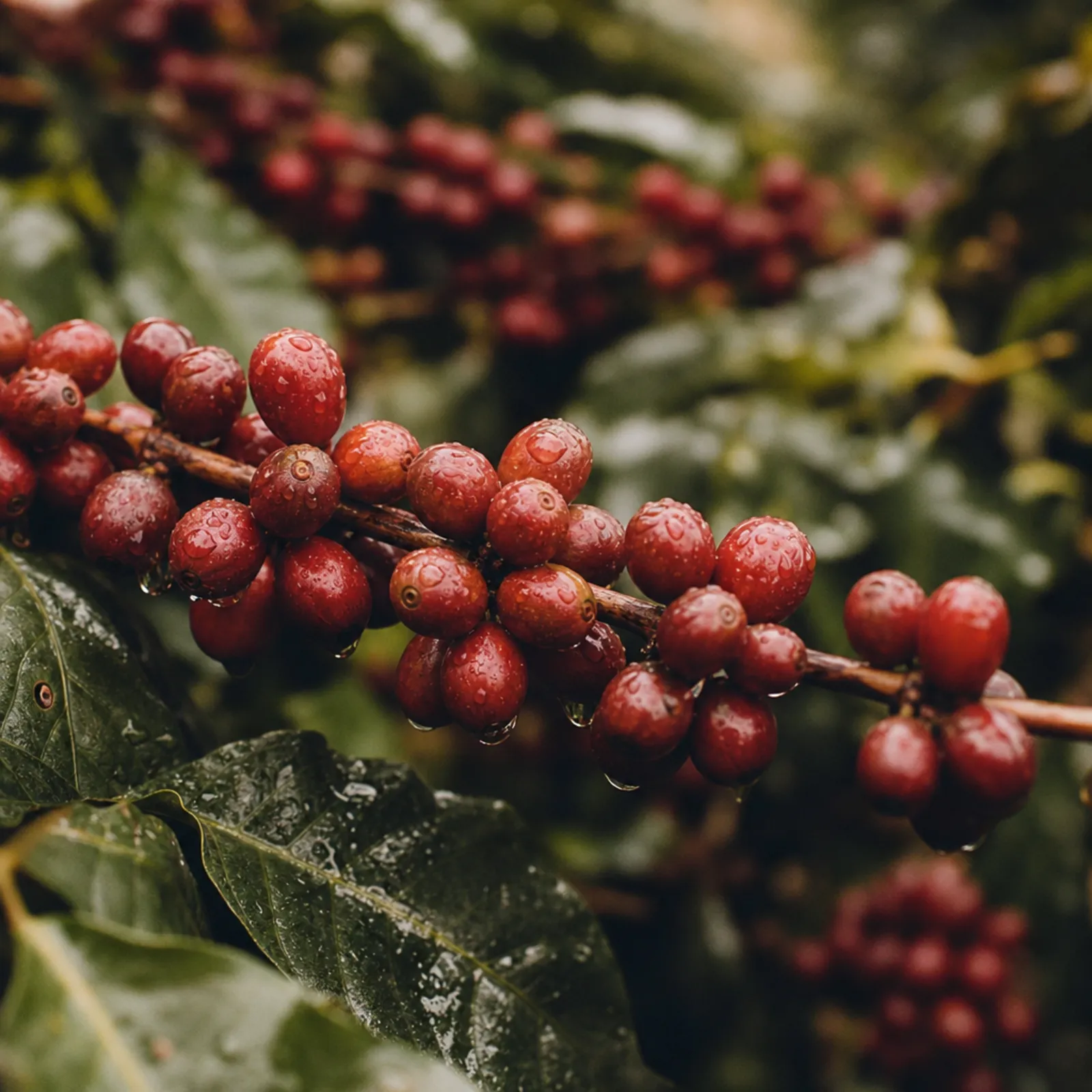
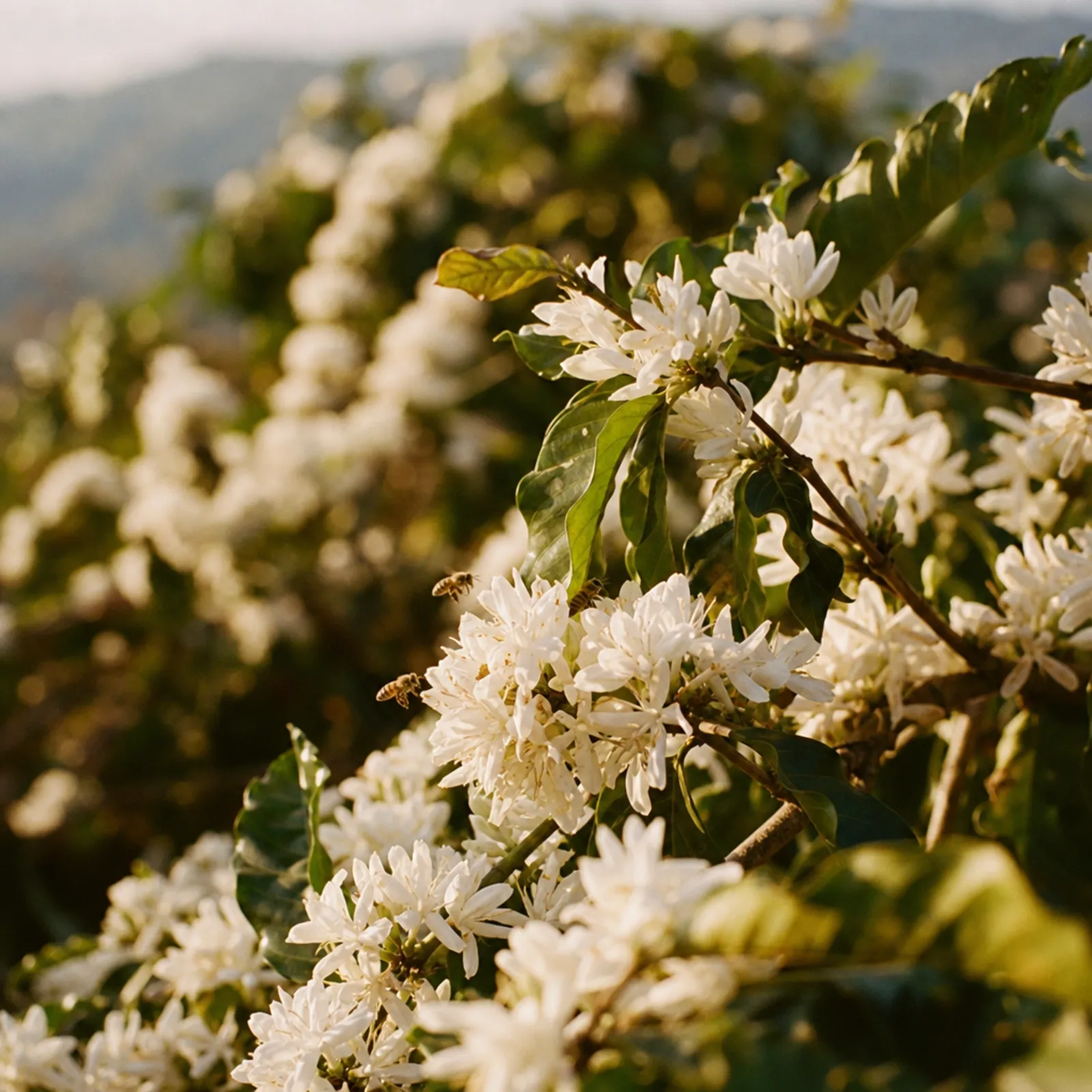
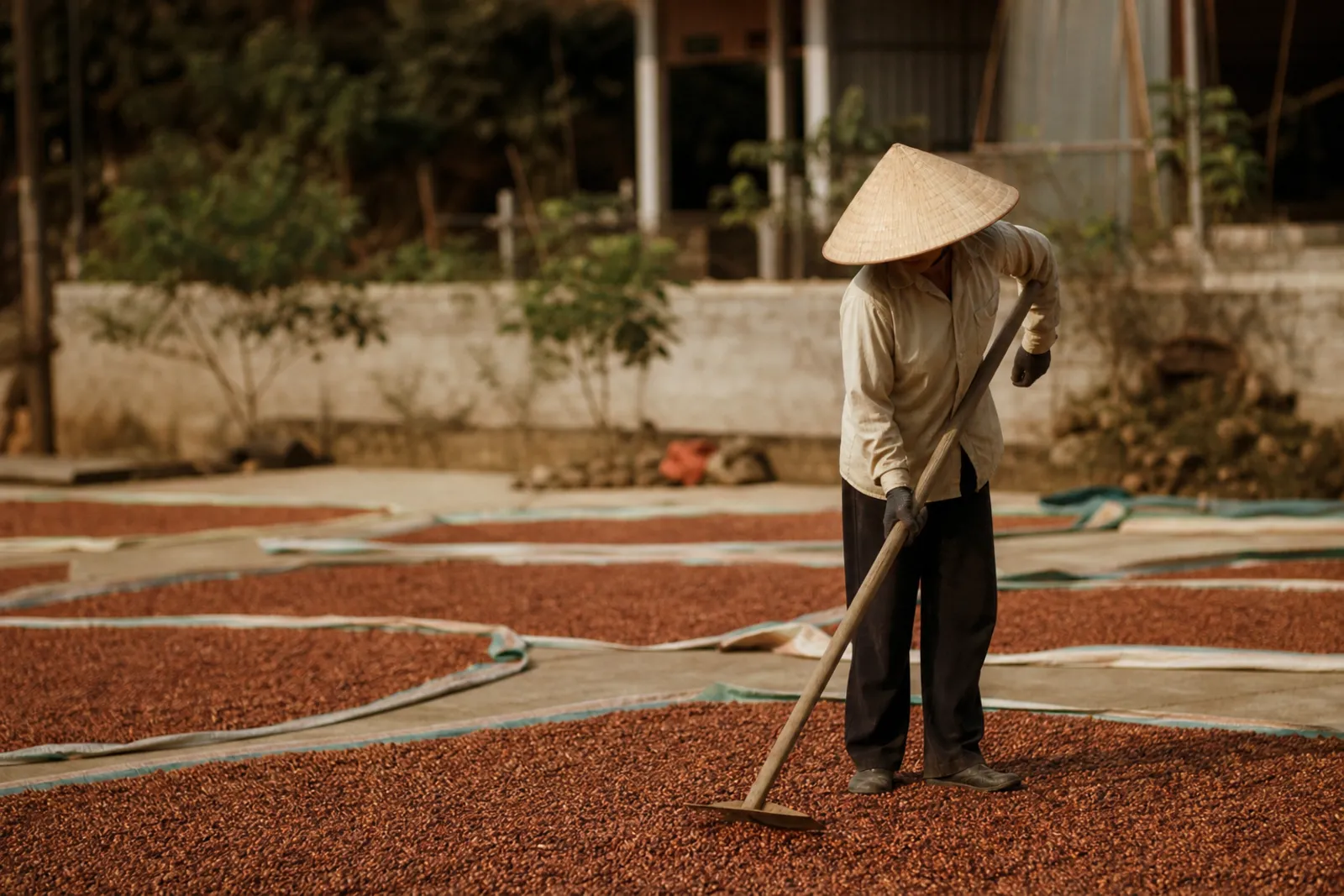
A coffee year in the highlands is a slow reveal. White blossoms cover the plants, then green cherries form, then they turn red. The robusta harvest runs from about October or November through January, with pickers working through the rows and the cherries going out to dry on big tarps in sunny yards.
Then it is roasting. Vietnam's tradition is dark, sometimes with butter, sugar and flavourings (rang bơ), which pushes the profile further into chocolate and caramel. Culi is the word for peaberry, the single round bean that some roasters sell on its own.
 AI image
Which one should you drink?
Here is the honest answer: it depends what you are making.
- For cà phê sữa đá or any phin coffee with condensed milk: choose robusta, or a robusta-heavy blend. The bitter chocolate edge is the whole point, and the sweet milk balances it.
- For black coffee with no sugar: a Vietnamese arabica, or a gentler blend, is less harsh.
- For caffeine: robusta has roughly double. If you are sensitive, a small cup goes a long way.
When you shop, the brands guide (Best Vietnamese Coffee Brands) helps you read the pack, and the brewing guide covers the method. For the bigger story, go back to the Vietnamese coffee overview.
Frequently asked questions
Does Vietnam grow robusta or arabica?
Mostly robusta: about 95 % of the harvest. Arabica is grown mainly in Cầu Đất near Đà Lạt, Sơn La and Khe Sanh.
Is Vietnamese coffee stronger than other coffee?
It tastes strong because it is robusta, dark-roasted and brewed concentrated. Robusta has roughly twice the caffeine of arabica (about 2.2–2.7 % against 1.2–1.5 %).
Which Vietnamese provinces grow coffee?
Mainly the Central Highlands (Tây Nguyên): Đắk Lắk, Lâm Đồng, Gia Lai and Đắk Nông. Buôn Ma Thuột in Đắk Lắk is the coffee capital.
When is the robusta harvest in Vietnam?
Roughly October or November through January.
What does culi mean?
Culi is peaberry, a single small round bean that develops instead of the usual two in a cherry.
Why is Vietnamese coffee so chocolatey?
Robusta beans, a dark roast and sometimes butter and sugar in the roasting give the cocoa and caramel notes.
Is robusta or arabica better?
Neither is universally better. Robusta suits phin coffee with condensed milk, while arabica suits lighter, black coffee.
Where does Vietnam rank among coffee producers?
Second in the world overall, behind Brazil, and first for robusta.
Continue the journey
Keep exploring
As an Amazon Associate we earn from qualifying purchases.