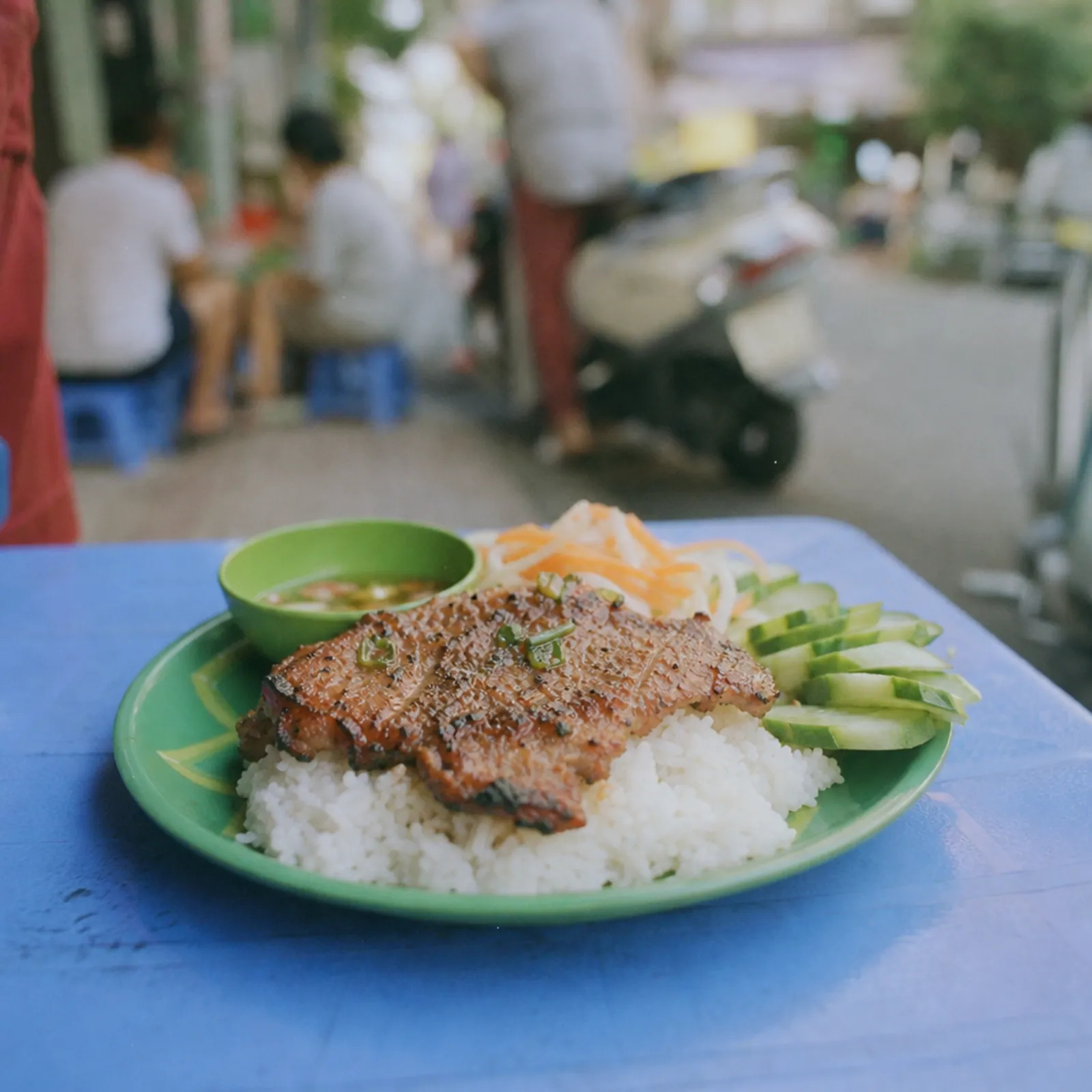
Reading the rice by eye and by touch helps more than any ratio. Before cooking, look at the bag. Broken rice is a mix: some pieces are half a kernel, some are quarter pieces, and a little fine dust settles at the bottom. A very uniform, tiny grain tends to cook to paste, while a mix with some larger pieces keeps a little bite. Rub a pinch between your fingers. It should feel dry and slightly gritty, not powdery.
Then watch the cooked rice. Good cơm tấm looks moist and slightly clumped, with the grains lying close together, yet it still breaks apart when you press it with a spoon. That clumping is the point, because it holds the dressing instead of letting it run to the edge of the plate. If the surface looks glossy and wet after resting, it needs a little more time with the lid on. If it looks dull and cracked, it was cooked with too little water. The starch in the broken grains releases faster than in whole kernels, which is why the same cooker setting that suits long-grain rice can turn broken rice soft. Treat the first batch as a calibration and note what you would change.