Duftreis Jasmin (5 kg)
The everyday bag. If you buy only one, buy this.
- Fits most Vietnamese dishes
- Easy to cook
- Pleasant aroma
- Labels are loose; check the grain
- Quality varies
AI imageYour kitchen
You do not need a Vietnamese kitchen. You need the right grain, the right tool and a few bowls that feel right in the hand.
Cooking Vietnamese rice at home does not require rare ingredients. It requires choosing the right grain for each dish and treating it with the right method. Three bags cover almost everything.
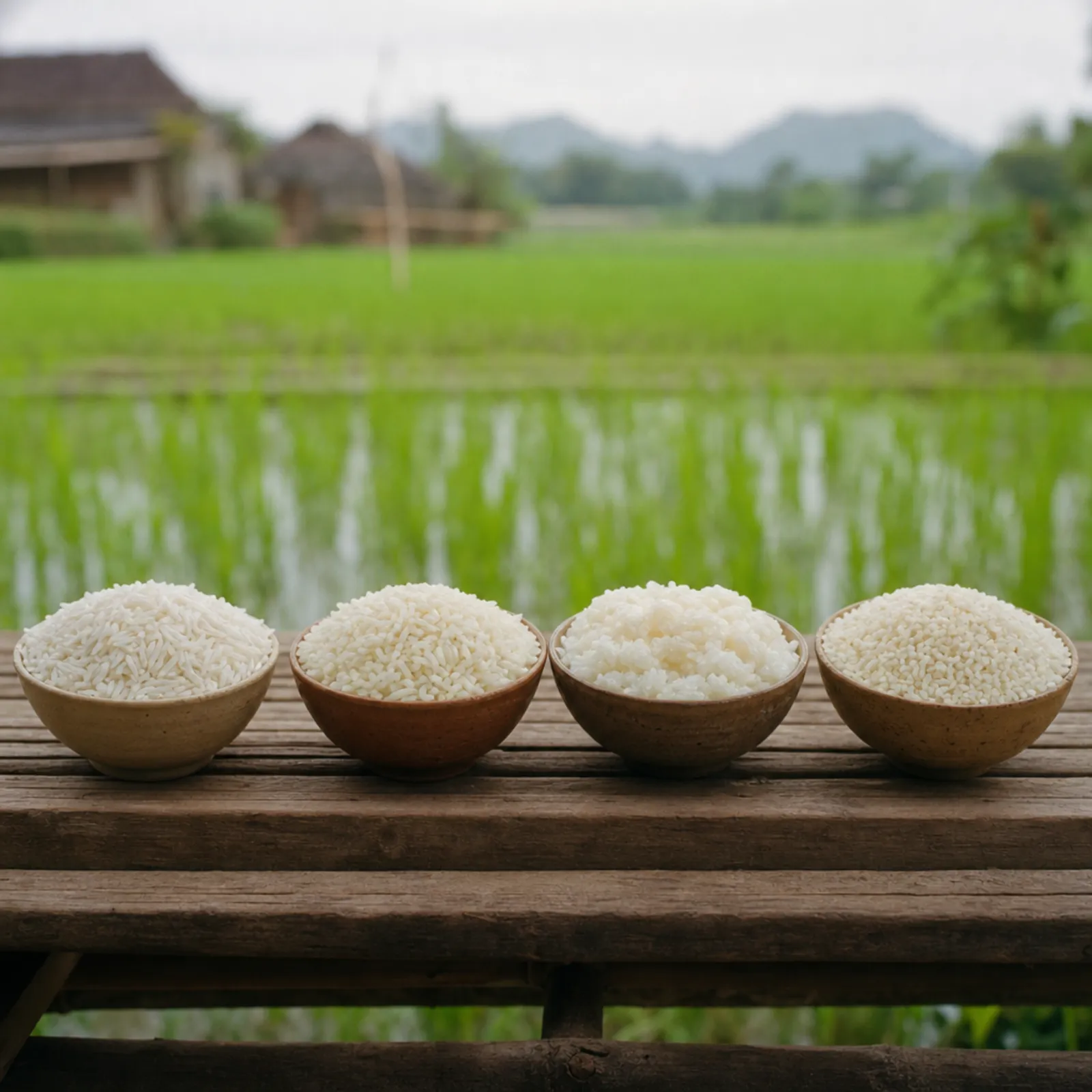
A fragrant long-grain rice for daily meals, fried rice and porridge. Look for long slim grains and a clean aroma. Glutinous rice for xôi and bánh chưng. Look for short, plump, opaque grains and a bag that says glutinous or sticky. Broken rice for cơm tấm. Look for broken long-grain rice, and avoid broken basmati.
Our guide to Vietnamese rice varieties explains how to read a bag and spot weak claims. Buy small quantities at first, taste what you like, and store the rice in a dry, sealed container.
Where to shop. A well-stocked Asian grocer is the best place to start because the staff know the products and the turnover is high, which means fresher rice. Look for bags with clear labels and intact packaging. Ask which brands sell fastest, and ask whether they have recently restocked. Supermarkets can be convenient for basic long-grain rice but may not stock glutinous or broken rice. Online shops are useful for hard-to-find items; read the description carefully and check the grain type before you order.
Do not chase a name. A bag marketed as a premium variety is not always better than a good everyday bag from a shop you trust. Compare grain length, aroma and the amount of broken pieces, and rely on your own cooking results.
AI imageThis page contains affiliate links. As an Amazon Associate we earn from qualifying purchases. The price for you stays the same.
The everyday bag. If you buy only one, buy this.
The only grain that makes true xôi and bánh chưng.
The base of cơm tấm and quick to cook.
Two tools do the heavy lifting. A rice cooker gives you consistent plain rice while you cook everything else. You do not need the most expensive one; our rice cooker buying guide sorts the features that matter from those that merely cost more. A steamer basket is the right tool for sticky rice, as shown in the xôi recipe.
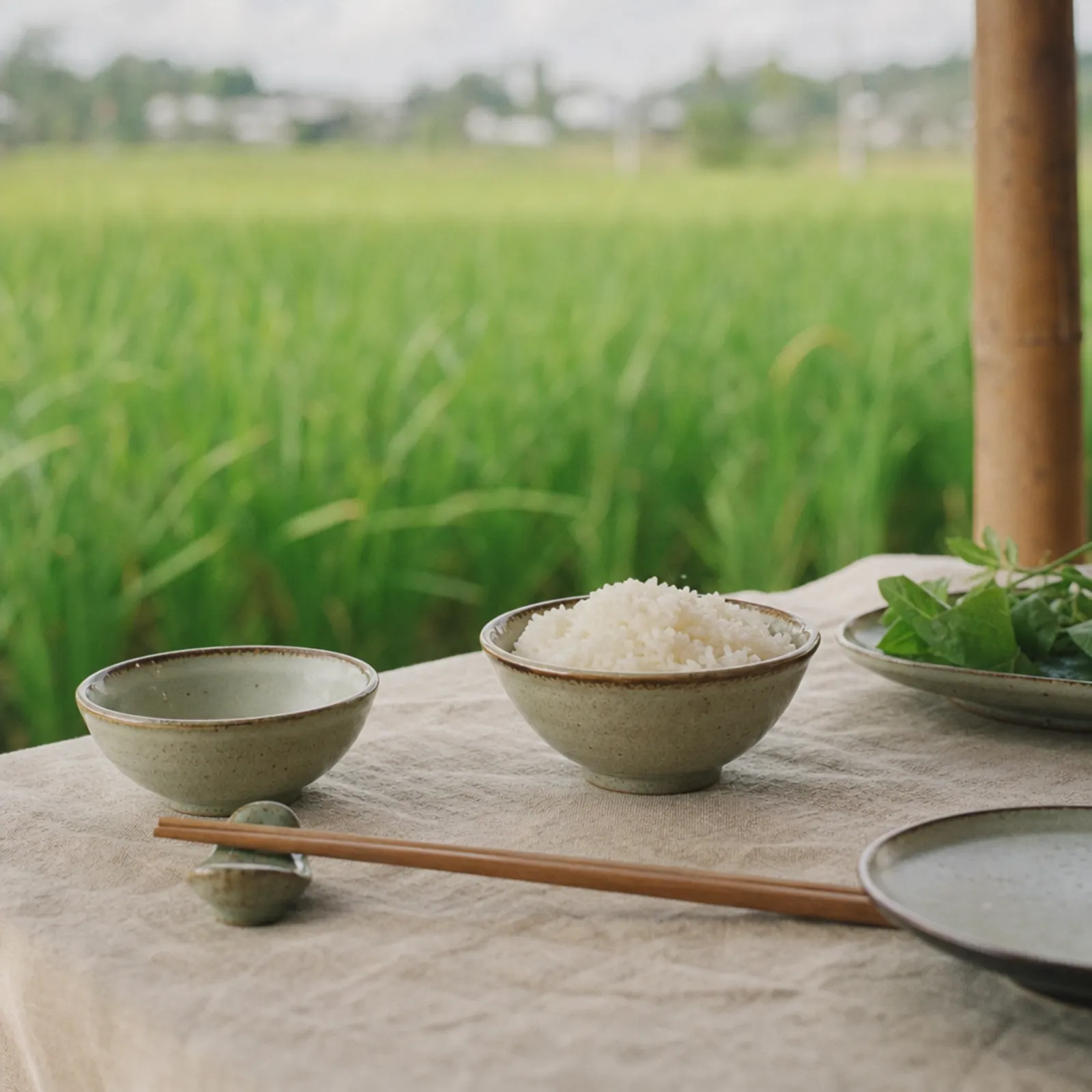
Then the table. This part is easy to underestimate. Vietnamese rice is eaten from a small bowl held in one hand, with chopsticks and often a spoon for soup. A big dinner plate with a pile of rice feels like a different meal. Small ceramic bowls and a set of wooden chopsticks cost little and change the experience.
A rice cooker pays for itself in consistency. You press a button, walk away, and come back to rice that is ready. It also frees a burner. If you cook rice a few times a week, it is a good investment; if you cook it twice a month, a pot with a tight lid works. Our rice cooker buying guide helps you decide.
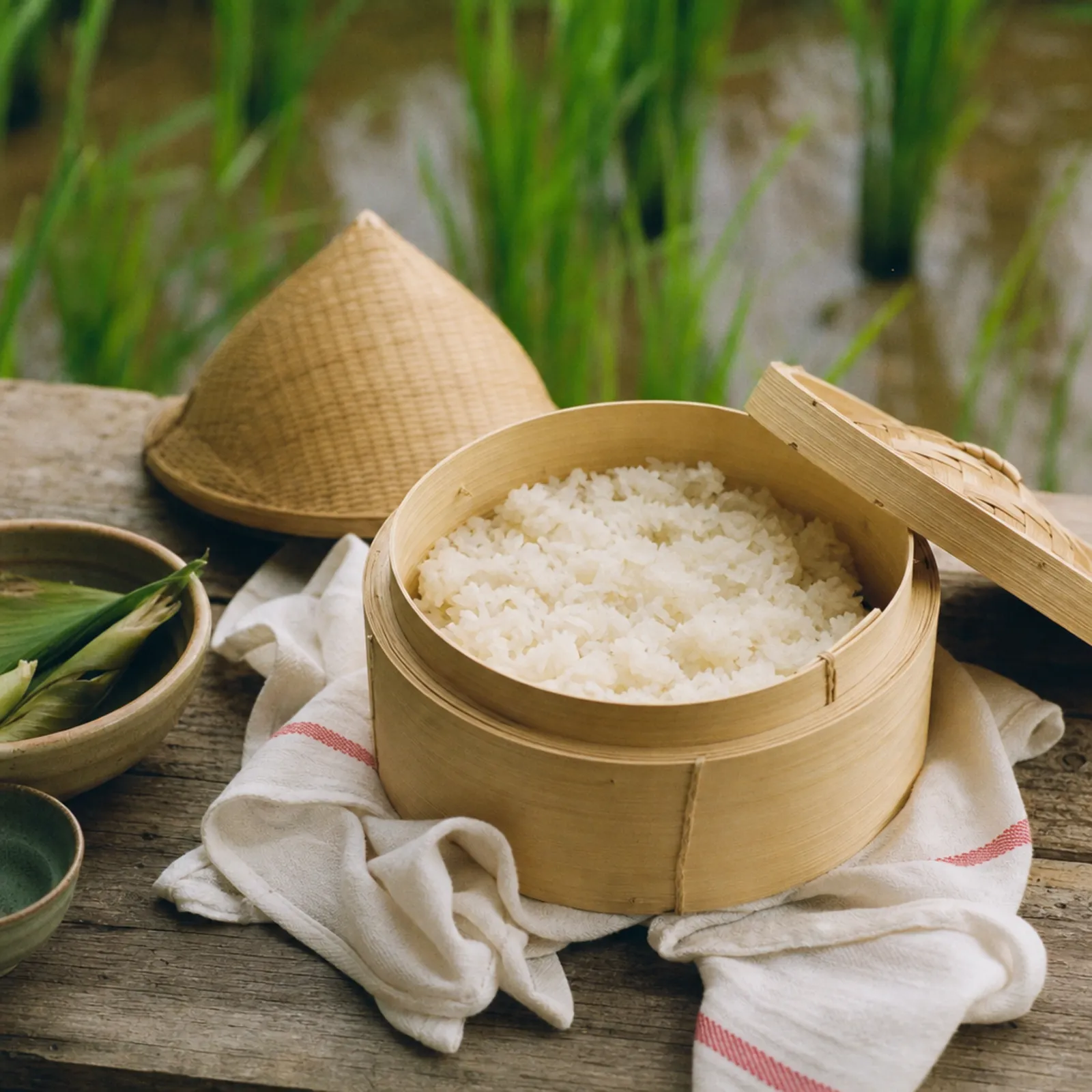
A steamer basket suits sticky rice and has a second life for vegetables, fish and dumplings. Bamboo is traditional; metal is more durable. Pick a diameter that fits your pot, line it with a cloth or parchment, and dry it well after washing so it does not mould.
Do not forget small items: a rice paddle that will not scratch the non-stick pot, a fine sieve or bowl for rinsing, a lidded container for storing rice, and a few small dishes for dipping sauces. None are expensive, and together they make cooking smoother.
AI imageThis page contains affiliate links. As an Amazon Associate we earn from qualifying purchases. The price for you stays the same.
A simple small cooker handles plain rice reliably for one or two people.
A basket steamer is how sticky rice is meant to be cooked.
Small ceramic bowls that sit comfortably in one hand.
A wooden chopstick set is inexpensive and comfortable for rice.
Serving is half the experience. Warm the bowls with hot water before you fill them. Serve rice last, so it is hot, and put shared dishes in the centre. Provide small plates or bowls for sauces. If you are cooking for guests unfamiliar with the style, explain briefly: take a little of a dish, eat it with rice, and refill the bowl as you like. That rhythm is what makes the meal feel Vietnamese.
AI imagePlenty of readers are not learning Vietnamese rice from scratch. They grew up with it, left the country, or were born abroad to parents who cooked it every day. For the Viet Kiều, the overseas Vietnamese, rice is the taste that makes a rented kitchen feel like home. It is also the dish that is hardest to get right when you cannot ask a grandmother over the phone, or when the ingredients are not exactly the ones you remember.
There is no shame in using substitutes. A cooker instead of a pot on a gas ring. A different brand of fish sauce. A grain bought at a local Asian grocer instead of from the family's village. Diaspora kitchens adapt and always have. The result is still yours.
AI imageRebuilding cơm tấm. Start with broken long-grain rice from an Asian grocer. If you cannot find any, pulse ordinary long-grain rice briefly in a food processor and stop early. Marinate pork with lemongrass, garlic and fish sauce, grill it, and serve with cucumber and a sweet-salty dressing. The full method is in our cơm tấm recipe.
Rebuilding bánh chưng. This is the harder project, because it is about people as much as ingredients. You need glutinous rice, leaves for wrapping, string and a very large pot, plus time and several pairs of hands. Many families abroad make it once a year, together, before Tết, and the work is the point. Where the usual leaves are hard to find, local shops or Asian grocers may stock suitable ones; ask the staff. Our rice culture and Tết guide explains what the cake means, and the xôi recipe shows how glutinous rice behaves, which is the groundwork for the cake.
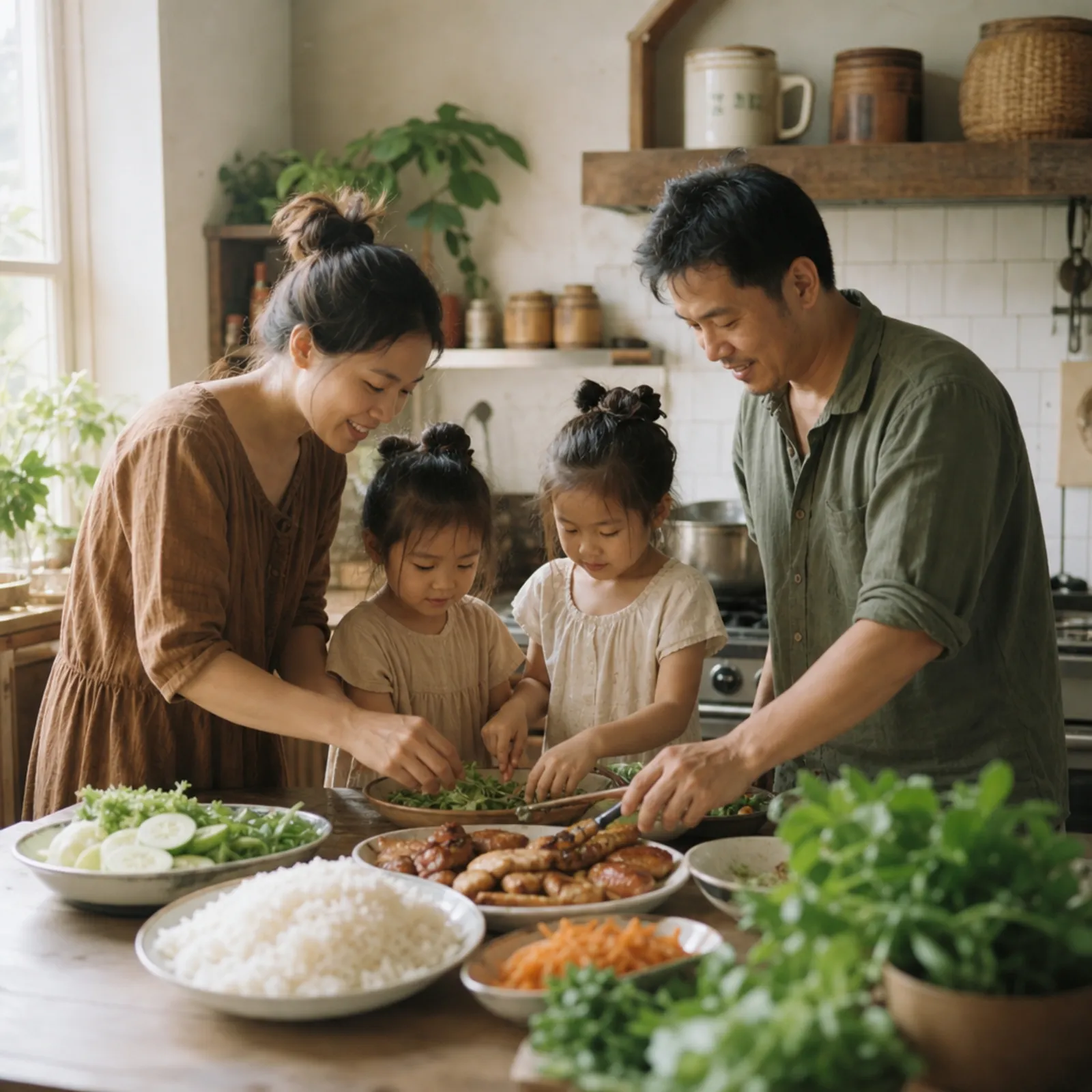
Teaching it forward. If you are a parent or a grandparent, cook with children rather than for them. Let them rinse the rice, measure the lines in the cooker, and call the dish by its Vietnamese name. The words travel with the food: cơm, xôi, chén cơm.
Writing it down. The recipes your family never wrote down are the ones that vanish. Cook with a notebook open once, and write what your relatives say: how it should smell, how it should look, when it is done. That record is worth more than any ratio.
A few practical notes for rebuilding dishes abroad. Keep a short list of substitutions you trust and share it with relatives. Collect the names of ingredients in Vietnamese and in the local language, so you can ask in shops. Learn which Asian grocers in your area stock leaves, glutinous rice, fish sauce and fresh herbs. Plan big holiday dishes a week or two in advance, because some ingredients take time to find. And remember that the first attempt will rarely taste like your memory; the second usually gets closer, and the fifth might surprise you.
Pick one dish and one bag. If you want an easy win, cook plain fragrant rice and serve it with something simple, a fried egg with soy sauce, grilled meat, or a fish-sauce dressing, in small bowls. If you want a project, try xôi.
Shopping is simpler than it looks. Visit an Asian grocer, look at the grain, check the packaging, and ask the staff which rice sells fastest; they know. If you buy online, use the criteria in our guide to rice varieties rather than the star ratings.
Finally, if you want rice paper, noodles and flour in the same pantry, read our rice paper guide. Start small, keep notes, and let the kitchen fill up slowly.
Last, a word on patience. Rice looks simple and punishes inattention. The first pot might be too wet, the second too dry, and the third will be just right. Keep the same cup, the same cooker and the same rinse, and change only one variable at a time. A small notebook beside the cooker, with the rice, the water and the result, is the cheapest upgrade you can make and the one that will teach you the most.
A simple weekly rhythm can help. One day, cook a pot of plain rice and a strong dish. Another day, fry the leftovers into cơm chiên. Another day, make a pot of cháo. At the weekend, try cơm tấm or xôi. Within a month, you will have a feel for how the grains behave, and you will have built the habits that make rice a natural part of the kitchen. From there, it is a short step to rice paper, noodles and the wider Vietnamese pantry.
If you want the big picture again, return to the complete Vietnamese rice guide. It is the map for everything on this page.
This page contains affiliate links. As an Amazon Associate we earn from qualifying purchases. The price for you stays the same.
A cooker with bowls and a paddle in one set is a neat way to start.
A pack of rice paper adds fresh rolls to your repertoire in an evening.
At an Asian grocer you trust. Look at the grain, check the packaging and harvest information, and be cautious of bags that rely on a famous name alone.
Three types cover most dishes: fragrant long-grain rice for daily meals, glutinous rice for xôi and bánh chưng, and broken long-grain rice for cơm tấm.
It is not required, but it gives consistent rice and frees your hands. A simple one is enough for plain rice.
A steamer basket is the best tool. You can improvise with a lined colander over a pot with a lid.
No, do not assume so. Both countries grow fragrant long-grain rice, and 'jasmine' is used as a style description. Check the origin on the packaging.
Roughly, by pulsing ordinary long-grain rice briefly in a food processor to crack it. The texture is close but not identical to real broken rice.
Follow your cooker or package instructions. The lines inside the pot are calibrated for the machine.
Cook together, use the Vietnamese names, and write down what the older family members say about smell, look and timing.
As an Amazon Associate we earn from qualifying purchases.