AI-generated: stacked rice paper sheets and a roll filled with fresh herbsAI image

Buying guide

Rice Paper Guide: Bánh Tráng, Noodles and Beyond

Rice does not stop at the grain. Ground, steamed and dried, it becomes sheets, noodles and flour. Here is how to buy and use them.

9 min readUpdated October 27, 2026

Chapters

Key takeaways

  • Rice paper (bánh tráng) is made from rice batter steamed into thin sheets and dried, traditionally on bamboo racks.
  • Not all sheets are alike. Thinner sheets are for fresh rolls, sturdier ones for frying or grilling. Read the packaging and buy for the dish.
  • Soak briefly in warm or cool water. The sheet keeps softening on the plate, so do not over-soak.
  • Rice noodles come from the same grain: bún are round vermicelli, phở noodles are flat. Fresh and dried behave differently.
  • Rice flour is the base for many cakes and batters. Do not confuse it with glutinous rice flour.

Rice paper guide: what bánh tráng is

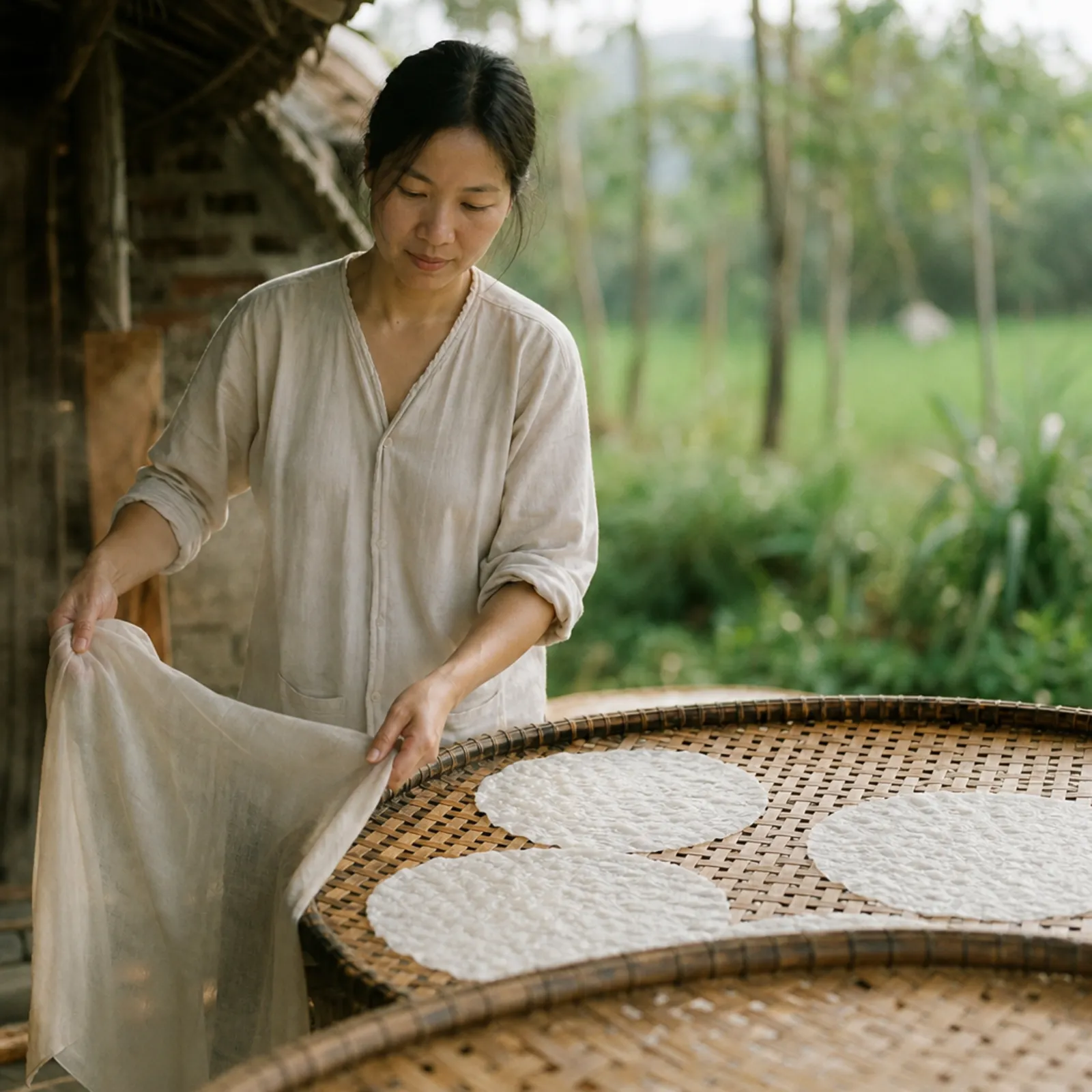
This rice paper guide starts with a simple fact: rice paper is rice, not paper. Rice is soaked and ground into a thin batter. The batter is spread over a cloth stretched above steaming water, steamed for a moment into a translucent sheet, then lifted and laid out to dry. Traditionally the sheets dry on bamboo racks in the sun, which is why you sometimes see round grid marks pressed into the surface.

Vietnamese call it bánh tráng, and it does a lot of work. It wraps fresh summer rolls, encloses fried spring rolls, sits under grilled skewers, and appears in street snacks and salads. It is thin, light and shelf-stable, so it travels well, which is one reason it became so widespread.

If you want to understand where the rice itself comes from, read our farming guide and the complete Vietnamese rice guide.

Say it in Vietnamese

Bánh trángbahn chahng · Rice paper.
Búnboon · Round rice vermicelli.
Phởfuh · Flat rice noodles and the soup built on them.

The family of rice-paper dishes is bigger than most people think. Fresh rolls, often called summer rolls abroad, wrap herbs, noodles and a little protein in a softened sheet and are eaten with a dipping sauce. Fried rolls use a similar filling in a sheet that crisps in oil. Grilled rice paper, a street snack, is toasted over charcoal with toppings. Sheets also appear torn into salads, layered into snacks, and wrapped around grilled meats at the table, where diners assemble their own roll with herbs and sauce.

That table-side style is worth trying at home. Put out a plate of herbs, a stack of rice paper, a bowl of warm water, some grilled meat or tofu, vermicelli and a dipping sauce, and let everyone roll their own. It is a relaxed, social way to eat, and it makes a good first project with rice paper.

AI-generated: rice paper being steamed and lifted onto a bamboo rack by a woman with a clothAI image
Steamed, lifted and dried. Simple, quick and fiddly at once.

How to choose rice paper

The shelf in an Asian shop can hold a dozen packets that look identical. The differences matter. Use the criteria below, then pick for the dish you plan to make.

Where to buy: Asian grocers usually carry the widest choice, often with several brands and thicknesses side by side. Compare them there if you can. Online, read product descriptions carefully for the intended use, sheet size and ingredient list, and be sceptical of listings that give no detail at all. For a first purchase, one standard pack of round sheets is plenty; you will quickly learn whether you want thinner, thicker or larger sheets next time.

Storage is easy but important. Keep the packet closed, in a dry cupboard, away from heat and humidity. If the sheets pick up moisture they stick together, and if they are squeezed they crack. Lay the packet flat rather than stuffing it into a drawer.

Reading the packaging in practice. Look for the diameter, the number of sheets, and any suggested use. Check the ingredient list: rice and water is the simplest; added tapioca makes sheets more elastic and chewy, which some people prefer for fresh rolls and others find too stretchy. Salt is common. If a pack lists a long chain of additives, ask yourself why. And look at the sheets themselves if the packaging has a window: they should be thin, even and uncracked.

Do not buy in huge bulk until you know which type you like. Sheets are cheap enough to experiment with, and a single failed batch of rolls teaches you more than a review.

Comparison

CriterionWhat to look forWhy it matters
ThicknessThinner for fresh rolls; sturdier for frying and grillingThin sheets soften quickly and feel delicate. Thick ones resist tearing.
Shape and sizeRound sheets for rolls; square sheets for foldingChoose a size that fits the filling you plan to use.
IngredientsRice and water, sometimes tapioca starch and saltTapioca makes sheets chewier and more elastic. Read the list.
ConditionIntact sheets, few cracks, sealed packetCracked or damp sheets tear while rolling.
Intended dishRead the packaging for fresh, fried or bothThe right sheet for fresh rolls may be wrong for frying.

No prices shown, they change daily on Amazon.

A few honest cautions. Rice paper is a processed food, and the sheets are mostly starch. They are light, and they are not a nutritional superfood. Some consumer-testing organisations have also looked at rice products for contaminants, which is a good reminder to buy from reputable sellers and to vary your grains and carbohydrates. This is not a reason to avoid rice paper, only to treat it as one part of a varied diet.

Rice paper worth considering

This page contains affiliate links. As an Amazon Associate we earn from qualifying purchases. The price for you stays the same.

Our pick

Reispapier Bánh Tráng

A pack of round rice paper sheets is the all-round buy. It handles fresh summer rolls and, with practice, fried ones.

Pros
  • Versatile for several dishes
  • Keeps for a long time in a dry cupboard
  • Light and easy to store
Cons
  • Quality and thickness differ between brands, so check the packaging
  • Sheets crack if stored badly
View on Amazon

Soaking and rolling without tears

Rice paper is hard until you add water, and then it turns into a sticky, clinging sheet. The art is stopping at the right moment.

Fill a wide plate or shallow dish with warm or cool water. Dip a sheet quickly, lift it, and lay it flat on a damp board or plate. It will still feel slightly stiff. That is correct: the sheet continues to soften while you add the filling. If you soak until it feels perfectly limp in the water, it becomes unmanageable on the plate.

Place herbs, noodles and your filling on the lower third. Fold the sides in, roll tightly and press. Fresh rolls go with a dipping sauce; fried rolls need a drier filling or the sheets burst in the oil.

One trick for beginners: use a damp cloth under the sheet. It keeps the paper from sticking to the board and gives you something to grip as you roll.

How to soak and roll a rice paper sheet

Total time: 10 min

  1. Prepare the filling

    Slice herbs, vegetables and protein before you wet any paper. Everything must be within reach.

  2. Dip quickly

    Pass the sheet through warm or cool water. It should still feel firm when you lift it.

  3. Lay it flat

    Place it on a damp board or cloth and let it finish softening for a moment.

  4. Fill and fold

    Add the filling near the edge nearest you, fold in the sides, roll tight.

  5. Serve

    Serve at once with a dipping sauce, or cover with a damp cloth so they do not dry out.

Troubleshooting. If the sheet tears while rolling, you probably soaked it too long or overfilled it. If it sticks to the board, add a damp cloth underneath. If the roll is too loose, tighten as you go and tuck the edges. If the rolls dry out and harden, cover them with a damp cloth or serve them immediately. If the sheet is still hard, give it a few seconds more in the water, but not so long that it goes limp.

For fried rolls, the rules shift. Use a filling that is not wet, seal the edge with a dab of water or a little starch paste, and fry in hot oil until golden. Do not crowd the pan, or the rolls stick together and tear. Drain on paper and serve hot with a dipping sauce.

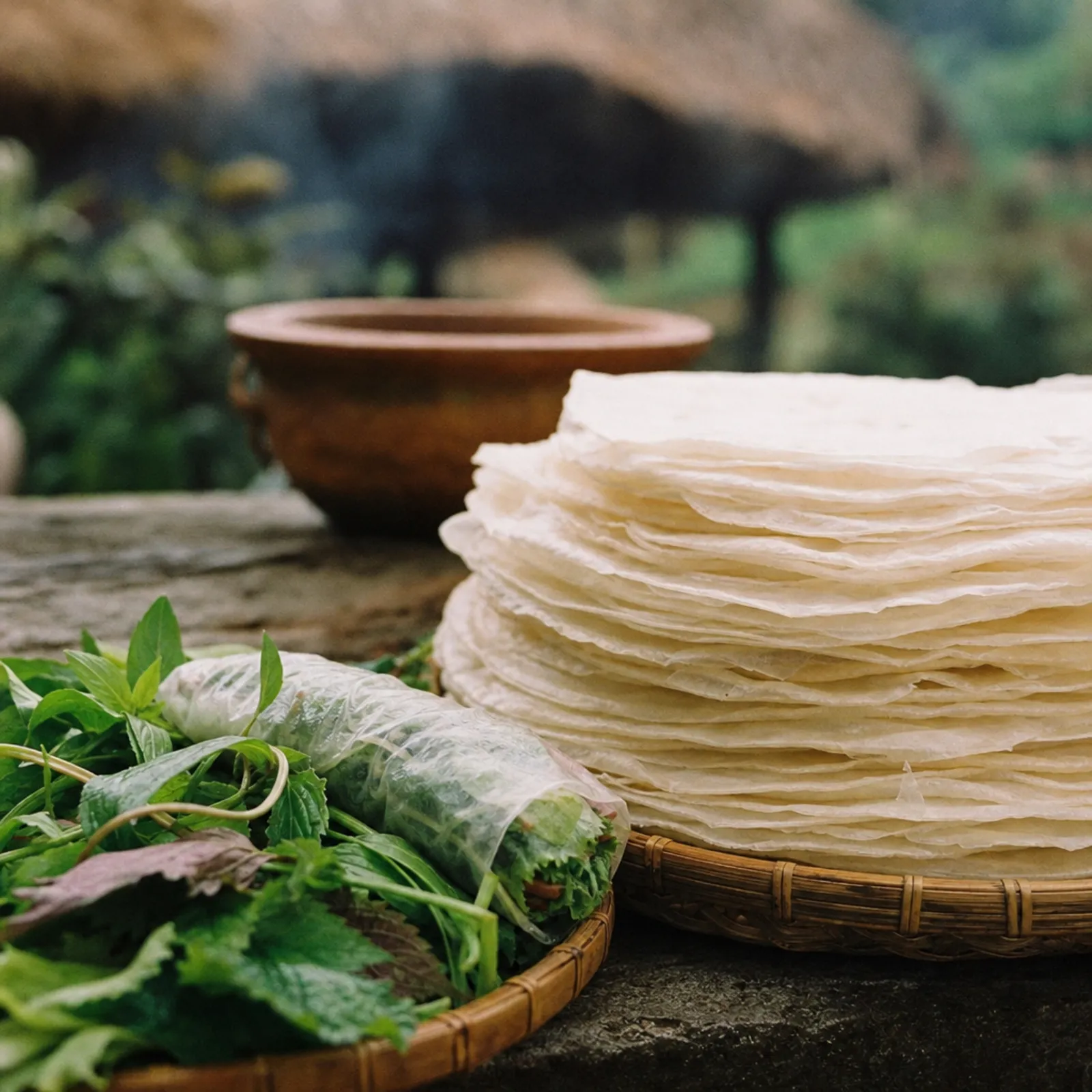
AI-generated: a stack of rice paper sheets next to a finished roll with fresh herbsAI image
A good roll shows its herbs through the paper.

Quick dipping sauces make or break the roll. A simple one combines fish sauce, sugar, lime juice, garlic and chilli with water. A nutty one blends peanut butter or ground peanuts with a savoury base. Choose a sauce that suits the filling: bright and sharp for shrimp and herbs, rich and nutty for grilled meat.

Noodles and flour: the rest of the rice family

Rice paper is one member of a larger family. The same grain, processed differently, becomes noodles, flour and even rice wine.

Bún are round rice vermicelli, served cold in noodle salads or warm in soups. Phở noodles are flat and wider, the base of the famous soup. Both come fresh or dried. Fresh noodles are softer and need only a quick dip in hot water; dried ones need soaking or boiling, so check the packet. Do not assume the times of one brand apply to another.

Rice flour is ground rice, the base for batters, cakes and dumplings. Be careful: glutinous rice flour, made from sticky rice, behaves very differently from ordinary rice flour. A recipe that asks for one will not work with the other.

Rice wine is, in the end, another life of the same grain, fermented rather than steamed. We mention it for completeness; it is a topic for another guide.

Once you start thinking about rice as a raw material, the Vietnamese pantry makes sense. And if you want to rebuild that pantry abroad, our guide to Vietnamese rice at home gives a practical list.

For cooking, treat noodles with care. Dried vermicelli generally needs soaking or a short cook, then a rinse in cool water to stop the cooking and remove surface starch. Fresh noodles often need only a dip in hot water. Both vary by brand and thickness, so check the packaging rather than trust a universal time. The goal is noodles that are tender but still separate, never mushy.

Phở noodles go into the bowl hot and meet the broth, which finishes the job. Bún are often served cold or at room temperature in salads, topped with herbs, grilled meat and a sauce. These two textures, hot and soft against cool and springy, are a good example of how the same grain gives very different meals.

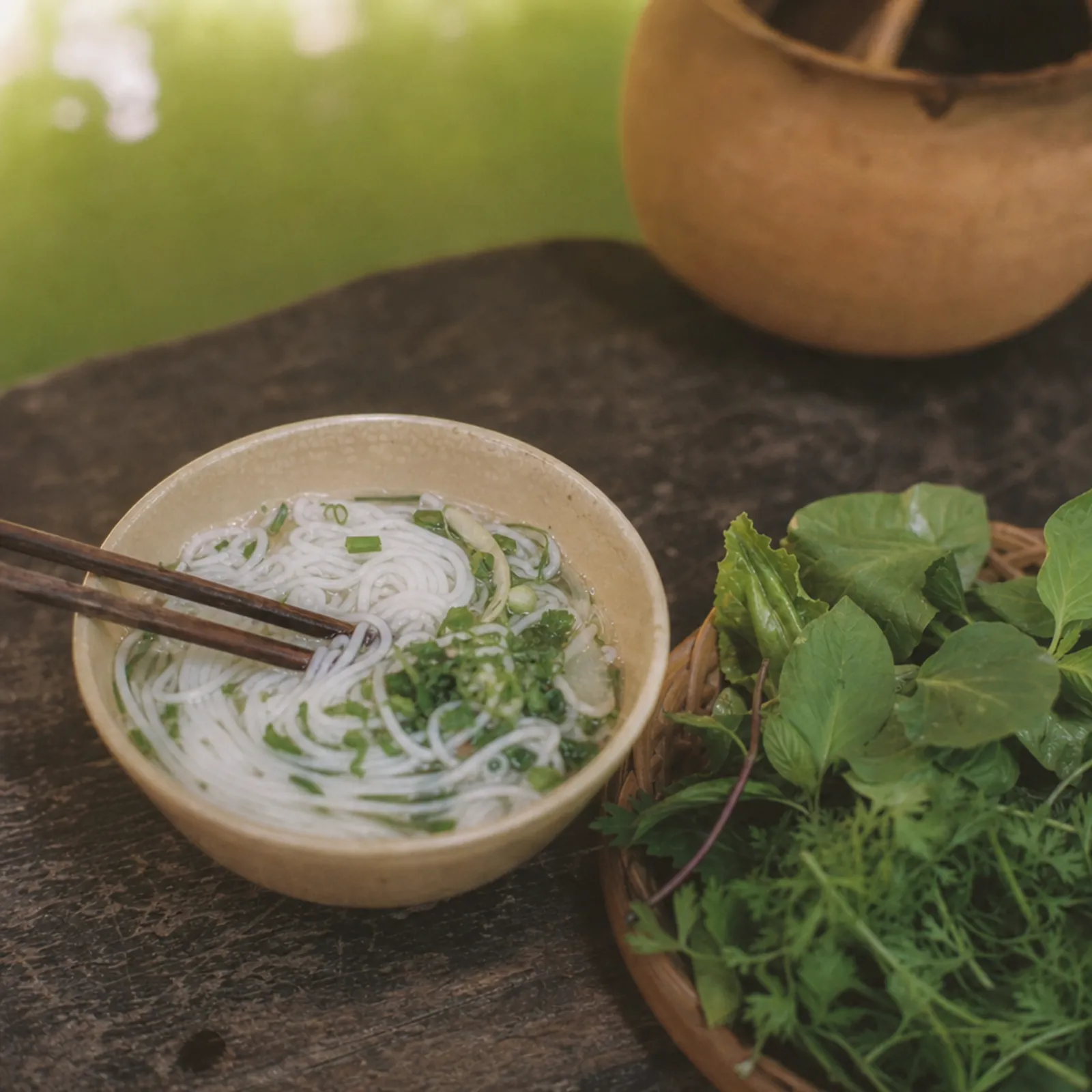
AI-generated: rice noodles in a small bowl with fresh herbs and limeAI image
Same grain, another form.

What about rice flour in practice? Rice flour batters give fried food a light, crisp crust. Steamed rice cakes made from rice flour are soft and slightly chewy. These recipes need the right flour, and the packaging should say whether it is rice flour or glutinous rice flour. If you are unsure, do not guess; the substitution rarely works. When you are shopping, take a photo of the label of the flour you need and compare it in the shop.

Frequently asked questions

What is rice paper made of?

Rice, water and often a little salt or tapioca starch. The batter is steamed into thin sheets and dried.

How do you soak rice paper without it tearing?

Dip it quickly in warm or cool water and lay it flat while it is still slightly stiff. It keeps softening as you fill it.

Which rice paper is best for fresh rolls?

A thin, round sheet is the usual choice. Check the packaging to see whether it is meant for fresh rolls, frying or both.

Can I fry rice paper rolls?

Yes, with a sturdier sheet and a drier filling. Rolls with wet filling burst in the oil.

What is the difference between bún and phở noodles?

Bún are round rice vermicelli. Phở noodles are flat and wider. Both are made from rice.

Is rice flour the same as glutinous rice flour?

No. Glutinous rice flour is made from sticky rice and behaves very differently. Use the one your recipe names.

How do I store rice paper?

In a dry, cool place in a sealed packet. Humidity makes sheets stick; rough handling makes them crack.

Continue the journey

Keep exploring

As an Amazon Associate we earn from qualifying purchases.