 AI image
The table
Vietnamese Rice Culture: A Question, a Table, a Calendar
In Vietnamese, to eat a meal is to eat rice. Follow the bowl from the daily table to the New Year feast.
Key takeaways
- In Vietnamese, the word for a meal is the word for rice: cơm. 'Ăn cơm chưa?' ('Have you eaten rice yet?') is a common conversation opener among family and friends that expresses care.
- At the table rice is the centre. Shared dishes are there to accompany it, and everyone eats from their own small bowl.
- Basic etiquette: invite elders to start, hold your bowl, and never stand your chopsticks upright in rice.
- Rice is also ritual. At Tết, glutinous rice becomes bánh chưng, the leaf-wrapped cakes tied to the New Year table.
- Understanding rice makes sense of a lot of Vietnamese food, language and family life.
Have you eaten rice yet? Language and care
To understand Vietnamese rice culture, start with a sentence. Ăn cơm chưa? Literally: have you eaten rice yet? Neighbours ask it. Relatives ask it on the phone. Friends use it to open a conversation. It is not a request for a menu report. It means: are you looked after? Are you well?
The vocabulary says the same thing. Cơm is cooked rice, and it is also the word for a meal. To eat a meal is ăn cơm, literally to eat rice. A bowl of rice is a chén cơm, and the bowl itself, small and held in one hand, is part of the picture.
If you read the complete guide to Vietnamese rice, you saw where the grain comes from. This page is about what it means once it arrives.
This is more than a linguistic quirk. It shows how food and care are fused. In a culture where rice has been the daily bread for generations, to ask someone if they have eaten is to ask whether the basic needs are met. If the answer is no, the next sentence is usually an invitation. A guest who arrives at mealtime will almost certainly be asked to sit and eat, and refusing too firmly can feel like rejecting the household's care.
If you visit Vietnam or a Vietnamese home abroad, the best answer to ăn cơm chưa? is a warm, simple one. Say that you have, or that you haven't, and accept a bowl if it is offered. You do not need to prepare a speech.
Say it in Vietnamese
How the Vietnamese table works
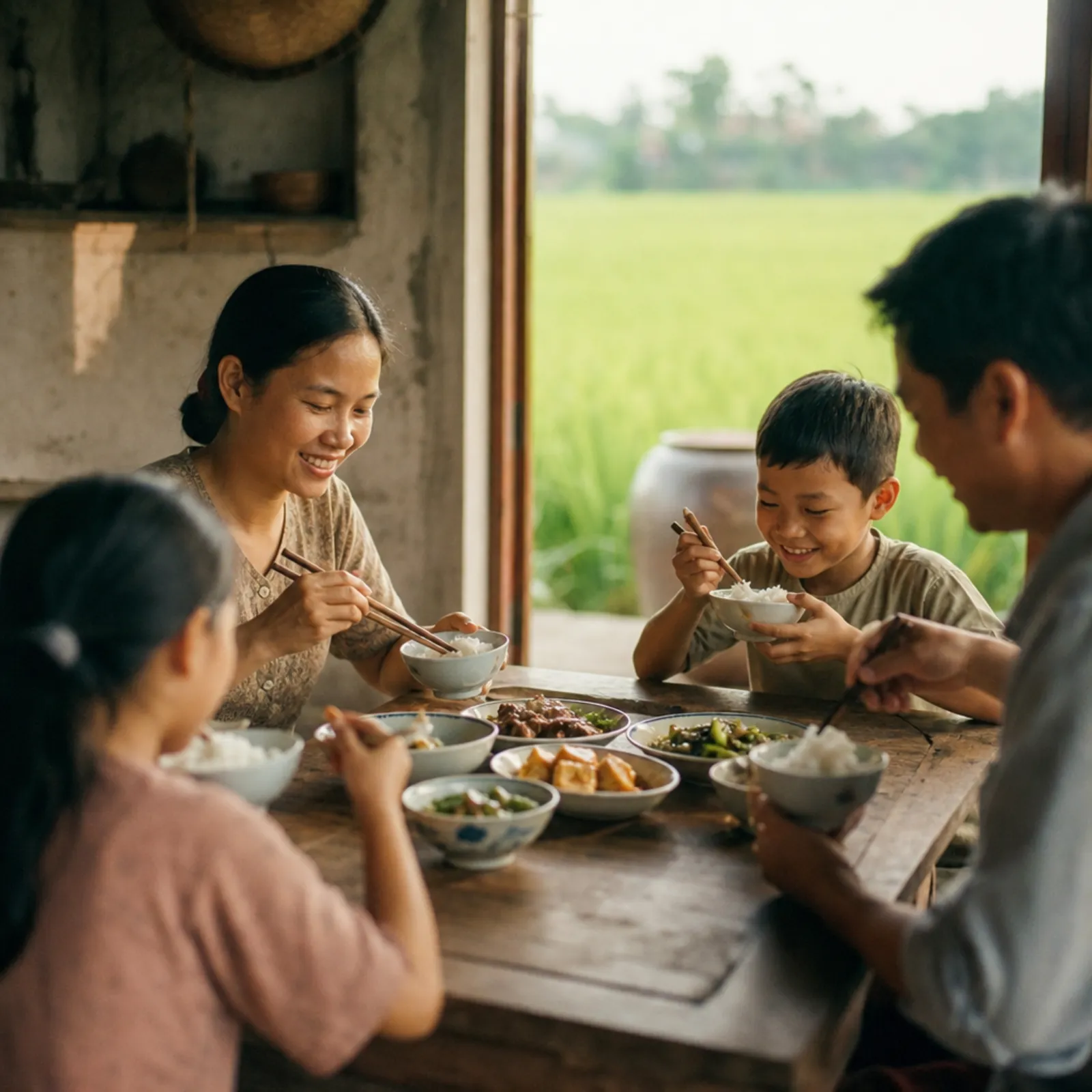
Picture a family meal. A pot of rice sits near whoever is serving. Each person has a small bowl. In the centre of the table are the shared dishes: a soup, a plate of greens, grilled or braised fish or meat, a bowl of fish sauce for dipping. The dishes go from the middle to your bowl, not onto a big plate of your own.
That structure is the clue. The side dishes are there to help the rice go down, in the sense that you take a little of something savoury, and eat it with a good portion of rice. This is why Vietnamese food is often salty, sharp and strongly seasoned: it is built to flavour plain rice, not to be eaten alone.
A few manners follow from this. The oldest person is typically invited first, and you say a short invitation before you start. You hold your bowl up in one hand rather than leaning over a flat plate. You refill when it is empty. Many families have a habit of offering the best piece to guests or elders, and putting food into someone else's bowl is a sign of care, not intrusion.
 AI image
Rice also has a place beyond the dining table. In many Vietnamese homes, the family altar receives offerings of food, and a bowl of rice is often among them. On death anniversaries and holidays, families prepare special dishes for ancestors, and rice is central to those. The respect for the grain is not abstract: it is practical gratitude for something that kept families alive.
Children are taught early not to waste rice. Leaving grains in the bowl is seen as careless, and finishing the bowl is a small act of respect for the work that went into it. This habit extends to leftover rice, which is reused as fried rice or porridge rather than thrown out.
Say it in Vietnamese
The same logic explains why rice is cooked plain. If you want to cook it the way a Vietnamese home does, our rice cooker buying guide covers the tool, and the bring-it-home guide covers building a table abroad.
Rice and Tết: the New Year table
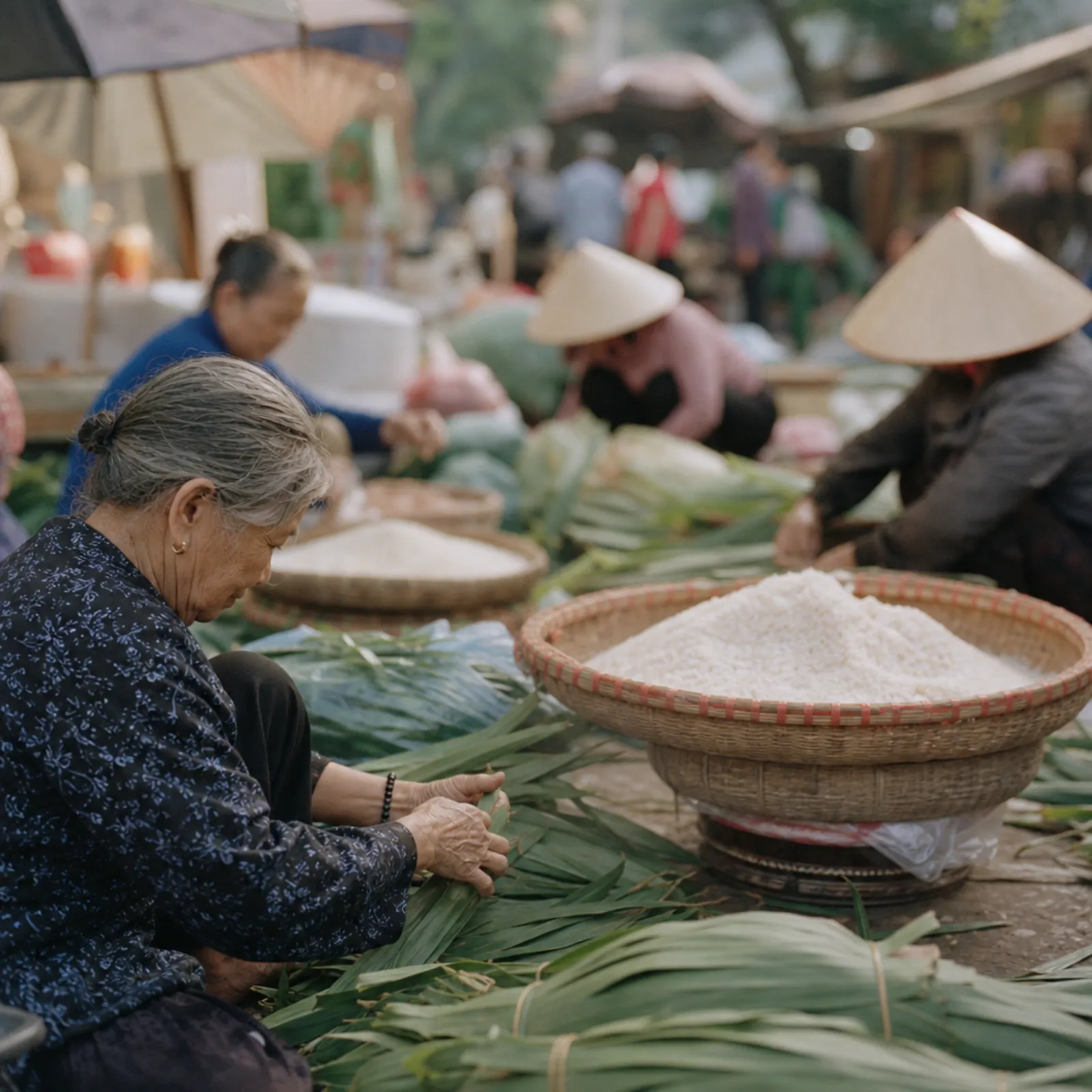
Tết, the Vietnamese New Year, is the biggest holiday of the calendar, and rice is built into it. Families clean their homes, travel to be together, and in many homes set out food on the family altar for the ancestors. In the days before, markets fill with leaves, rice and the ingredients for the season's special dishes.
 AI image
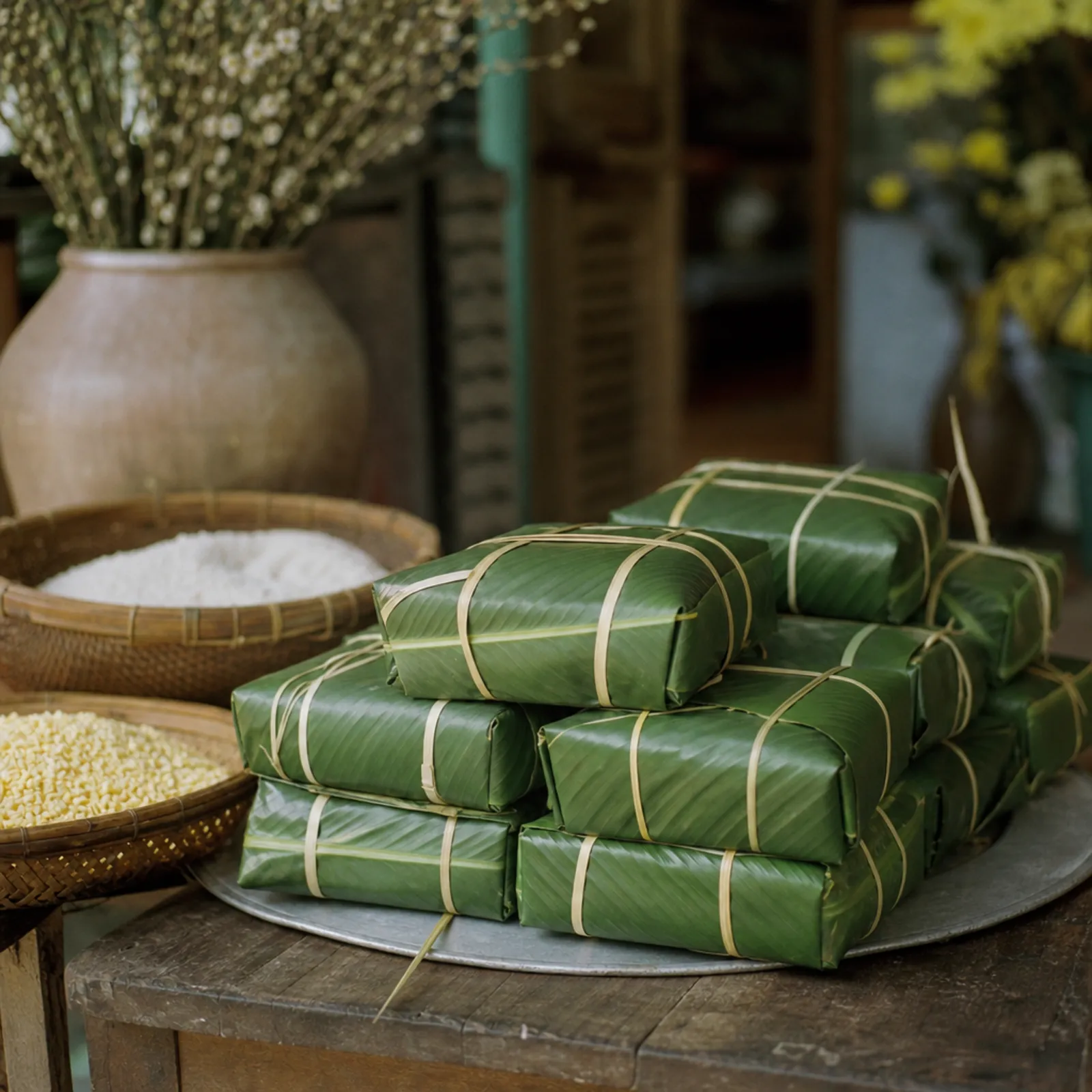
The signature dish is bánh chưng: glutinous rice filled and wrapped in leaves, tied tightly and cooked for a long time. The finished cake is firm and dense, cut into slices and eaten over several days. In many families, making it together is a ritual in itself. Relatives gather, wash leaves, divide tasks and talk while the packages simmer.
Bánh chưng depends entirely on glutinous rice, gạo nếp, the same grain used for steamed xôi. If you want to see how that rice behaves, our sticky rice and xôi recipe explains the soaking and steaming. And to learn what distinguishes it from everyday rice, see the guide to Vietnamese rice varieties.
Making bánh chưng is a collective event in many families. Someone washes and prepares the leaves. Someone soaks the glutinous rice. Someone prepares the filling. The package is wrapped, tied tightly and put into a very large pot, and then it simmers for a long time, so people take turns watching the fire. The hours are filled with conversation, stories and the smell of the leaves. Even families who now buy their cakes remember or miss this ritual, and many Vietnamese abroad try to recreate it at least once.
When the cakes come out, they are pressed, cooled and cut. Slices are served with pickles, which cut through the richness, and the cake keeps for days, which is useful in a holiday when many people avoid cooking. In some families the cakes are also offered on the altar.
Say it in Vietnamese
Tết is also the time when other rice-based foods appear: sticky rice dishes, sweets, and rice wine. The principle is the same: the grain that sustained the family all year is celebrated at the start of the new one. If you are curious about the kitchen side, our xôi recipe is the easiest way to get a feel for glutinous rice before taking on a full cake.
 AI image
Rice as everyday ritual
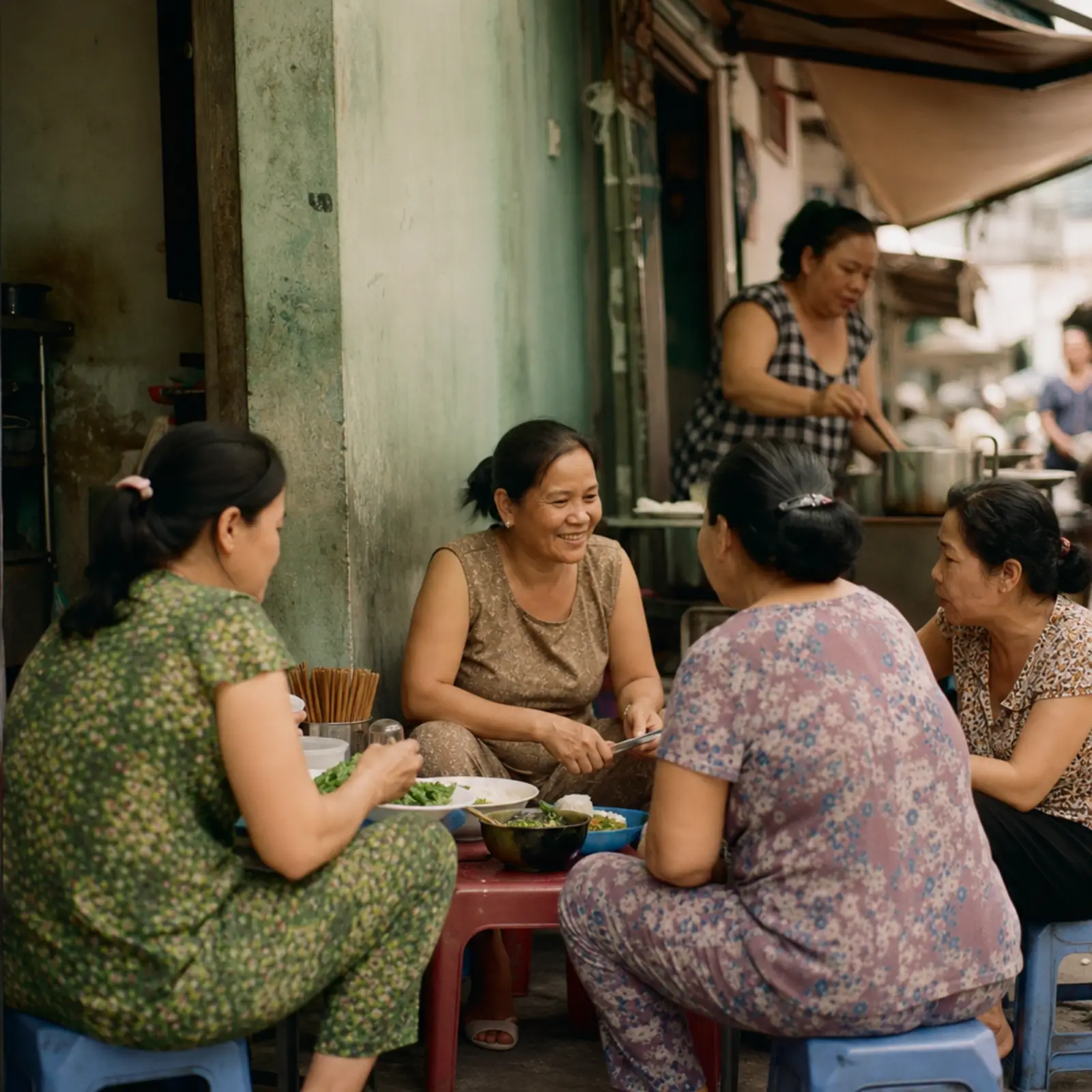
Outside Tết, rice quietly organises the day. Breakfast may be xôi from a cart, or a bowl of porridge, cháo. Lunch is a plate at a street kitchen, cơm tấm if you are in Sài Gòn. Dinner is the family bowl. Rice paper wraps snacks, noodles appear in soups, and fried rice, cơm chiên, rescues yesterday's leftovers.
It is easy to romanticise this. The reality is practical: rice is cheap, filling and endlessly adaptable, and a culture that depends on it for centuries builds rules and rituals around it. Thrift shows up in small habits. Nothing is thrown away if it can be used: broken grains become a famous plate, as our cơm tấm recipe shows, yesterday's rice becomes tomorrow's fried rice.
If you take one thing from this page, let it be this: when a Vietnamese person asks whether you have eaten, they are asking about you, not about your lunch.
There is a modern side as well. Younger Vietnamese eat out more, order delivery, and mix traditional meals with foods from elsewhere. Yet the structure holds. Even a quick lunch usually includes rice, and the family dinner remains an anchor, especially on weekends and holidays. Vietnamese communities abroad keep the pattern alive in small ways: a rice cooker bought in the first week in a new country, a habit of cooking a pot every evening, a nostalgia for a particular bag of rice. For these families, rice is a thread back home.
For outsiders, the lesson is simple. If you want to understand Vietnamese food, begin with rice. Learn the words, learn the manners, and eat a meal the way it is meant to be eaten, with a small bowl in your hand.
Say it in Vietnamese
Frequently asked questions
What does 'Ăn cơm chưa?' mean?
Literally 'Have you eaten rice yet?' Among family and friends it is a common conversation opener that expresses care, checking that someone is well and looked after.
Why is the word for meal the same as the word for rice in Vietnamese?
Because rice is the centre of the meal. Cơm means cooked rice and also a meal, and other dishes are seen as what accompanies the rice.
What are Vietnamese table manners for rice?
Invite the eldest to start, hold your bowl, refill when it is empty, and never stand your chopsticks upright in the rice.
Why shouldn't you stick chopsticks upright in a rice bowl?
Upright chopsticks recall incense sticks at the altar and offerings for the dead, and at ordinary meals they are considered rude.
What is bánh chưng?
A cake of glutinous rice, wrapped in leaves and cooked for a long time. It is a signature dish of the Vietnamese New Year, Tết.
What rice is used for bánh chưng?
Glutinous rice, gạo nếp, the same grain used for xôi.
Do Vietnamese people eat rice at every meal?
Rice is central at most meals, though breakfast may be xôi, porridge or noodles. The idea of rice as the base of the meal is deeply rooted.
Continue the journey
Keep exploring
As an Amazon Associate we earn from qualifying purchases.