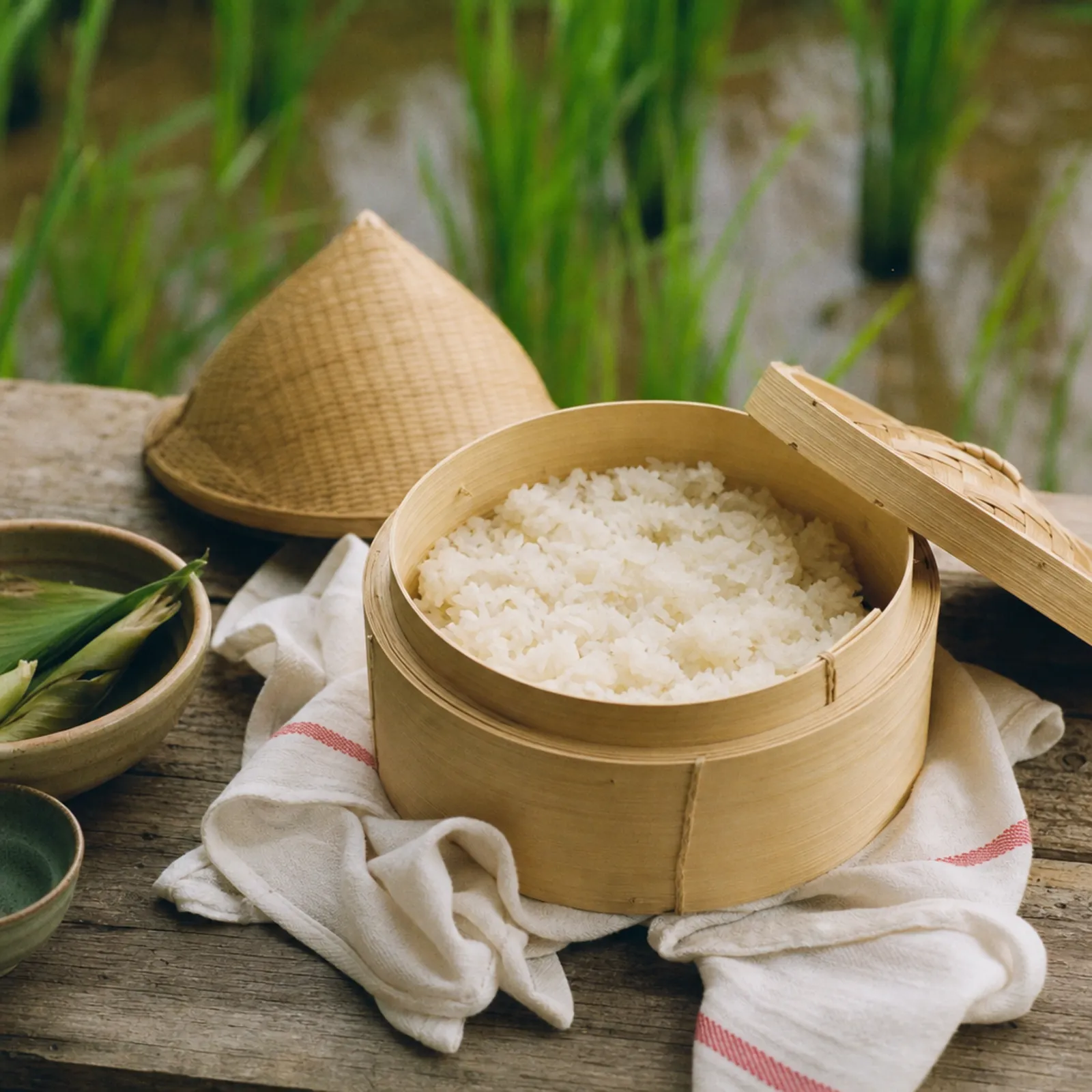
AI-generated: a bowl of sticky rice with shallot oil and steam risingAI image

Recipe

Sticky Rice Xoi Recipe: Steamed Xôi, Step by Step

Soak overnight, steam gently, finish with fried shallot oil. Xôi is the humblest breakfast and one of the best.

7 min readUpdated October 27, 2026

Chapters

Key takeaways

  • Xôi is steamed glutinous rice, sold as breakfast or snack, savoury or sweet.
  • Use rice labelled glutinous or sticky (gạo nếp). Long-grain rice will never turn into xôi.
  • As a rule of thumb: 250 g rice, soaked for 6 to 8 hours (overnight works well), drained, then steamed for roughly 30 to 40 minutes with a turn in between.
  • Keep water thin at the bottom of the pot. The rice sits above it in the steam, never in it.
  • No steamer? A colander over a pot with a lid and a cloth works.

Sticky rice xoi recipe: what you are making

A proper sticky rice xoi recipe is the opposite of a bowl of rice. You are not trying to keep the grains separate. You want them plump, shiny, tender and just clinging together, with a faint nutty sweetness from the rice itself.

Xôi is sold from baskets and carts on mornings across Vietnam. A scoop goes into a paper wrapper or a bowl with toppings: fried shallots, mung bean paste, peanuts and sesame, or sweet coconut. People eat it standing, on a motorbike seat, on the way to work. It is breakfast, snack and offering. The same glutinous rice, gạo nếp, forms the heart of bánh chưng at Tết, which we cover in our rice culture and Tết guide.

For background on the grain, see our Vietnamese rice varieties guide. For the big picture, start with the complete Vietnamese rice guide.
Say it in Vietnamese

Xôisoy · Steamed sticky rice.
Gạo nếpgow nep · Glutinous rice.

Toppings are where xôi becomes personal. A savoury version might come with fried shallots and their oil, roasted peanuts crushed with sesame and a pinch of salt, or a layer of mung bean paste. A sweet version might carry grated coconut and sugar. Some versions are coloured with natural ingredients, and some are shaped into small packets wrapped in leaves. Which you choose depends on the time of day, the occasion and who is eating.

For a first attempt, keep it simple: plain xôi with fried shallot oil and a handful of peanuts and sesame. Once you know how the rice behaves, you can improvise.

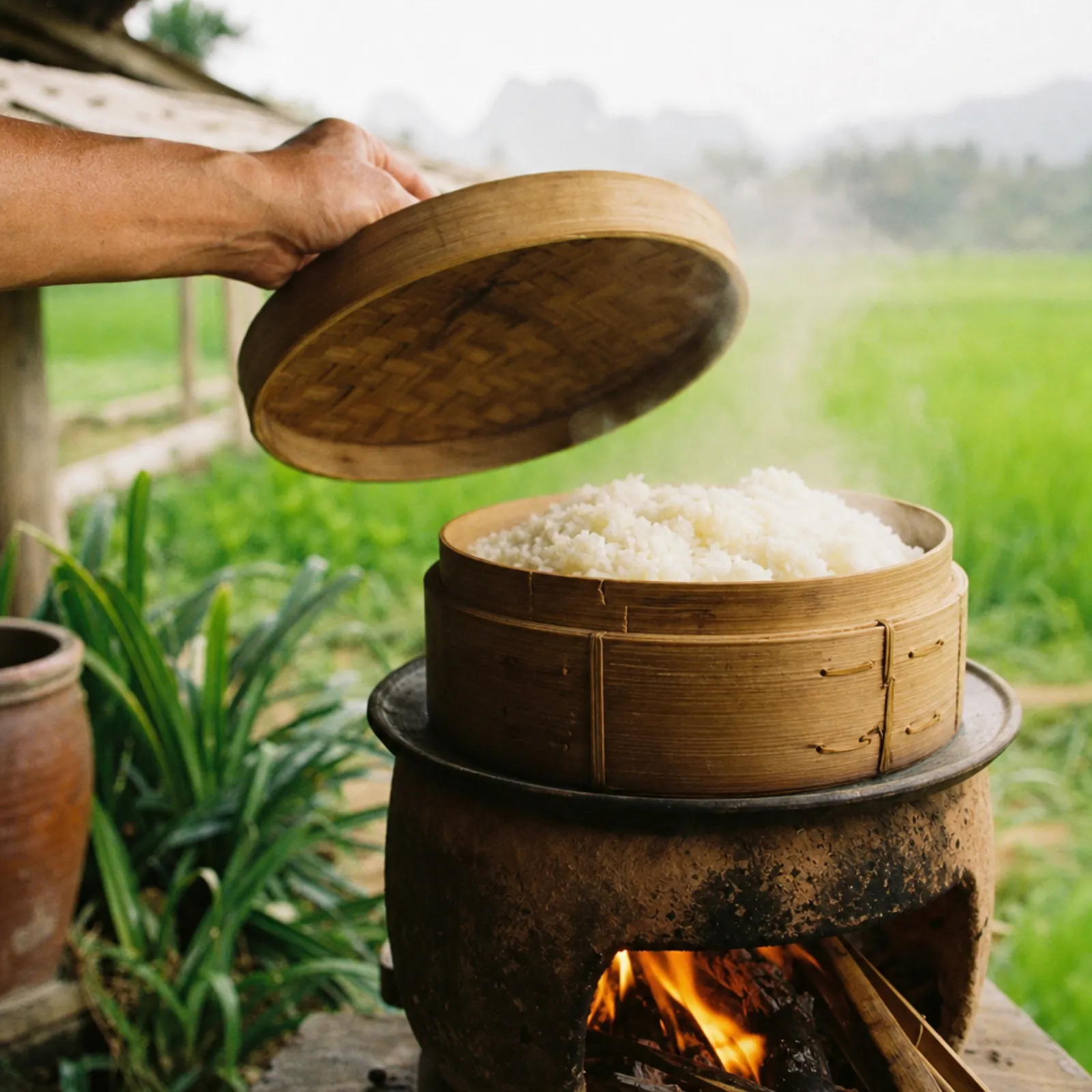
AI-generated: a steamer basket of sticky rice over a pot with a wooden lidAI image
The steam does the cooking. The rice never touches the water.

Choosing and soaking the rice

Buy rice that says glutinous, sticky or sweet rice on the bag. The grains should look short, plump and opaque white. Thai and Vietnamese glutinous rice both work. Do not substitute sushi rice; it is sticky in a different way and will not give you xôi.

Soaking is not optional. Dry glutinous rice steams unevenly: some grains turn tender while others stay chalky. As a rule of thumb, soak for 6 to 8 hours, which in practice means overnight. Use cool water, enough to cover the rice generously, because the grains drink a lot. Drain well before steaming.

One caution. Timings for soaking and steaming vary with the age of the rice and the pot. Treat the numbers here as a starting point and let the texture decide. Taste a grain at the end of steaming. It should be tender all the way through with no hard core.

Once the rice is soaked and drained, resist the urge to rush. Set up the steamer, check the water, and have the lid and cloth ready. Steaming is mostly waiting, and the best use of that time is to prepare the toppings: slice the shallots, roast the peanuts, crush the sesame. Everything should be ready to spoon over the rice the moment it comes out of the steam, because xôi is at its best hot, shiny and just soft enough to hold its shape in a spoon. Cold, it stiffens, and a stiff bowl of xôi is the most common reason people say they do not like it.

A note on water quality and quantity. Use plenty of cool water for soaking: the grains absorb it and swell, and rice that lacks water at this stage will not steam through. Cover the rice with a generous layer of water, and add more if the level drops. Then drain thoroughly. Rice that goes into the steamer dripping wet will turn soggy at the bottom.

If you are in a hurry, warm water speeds soaking a little, but it also changes the texture slightly. Cool water over a longer time gives the most reliable result.

Why does glutinous rice behave so differently? The answer is starch. Ordinary rice contains two kinds, amylose and amylopectin. Glutinous rice is almost all amylopectin, a branched starch that swells, turns translucent and binds the grains together as it cooks. That is why the grains cling, and why the cooked rice looks glossy rather than fluffy. It also explains the soak: amylopectin needs water inside the kernel before it can gelatinise evenly. A grain that is dry in the centre stays white and chalky while its outside softens.

You can judge the rice before and after steaming with your eyes. Dry grains should be opaque, bright white and fairly uniform. After a proper soak they look slightly swollen and a little less white, and when you press one between your fingers it crumbles with no hard core. Cooked, the rice turns from opaque to a soft translucent glow. Chalky white spots in the finished pot are the clearest warning that the soak was too short, or that the rice was piled too thickly in the steamer. The fix is simple: sprinkle a few spoonfuls of hot water over the rice, close the lid and steam again for a few minutes.

The recipe

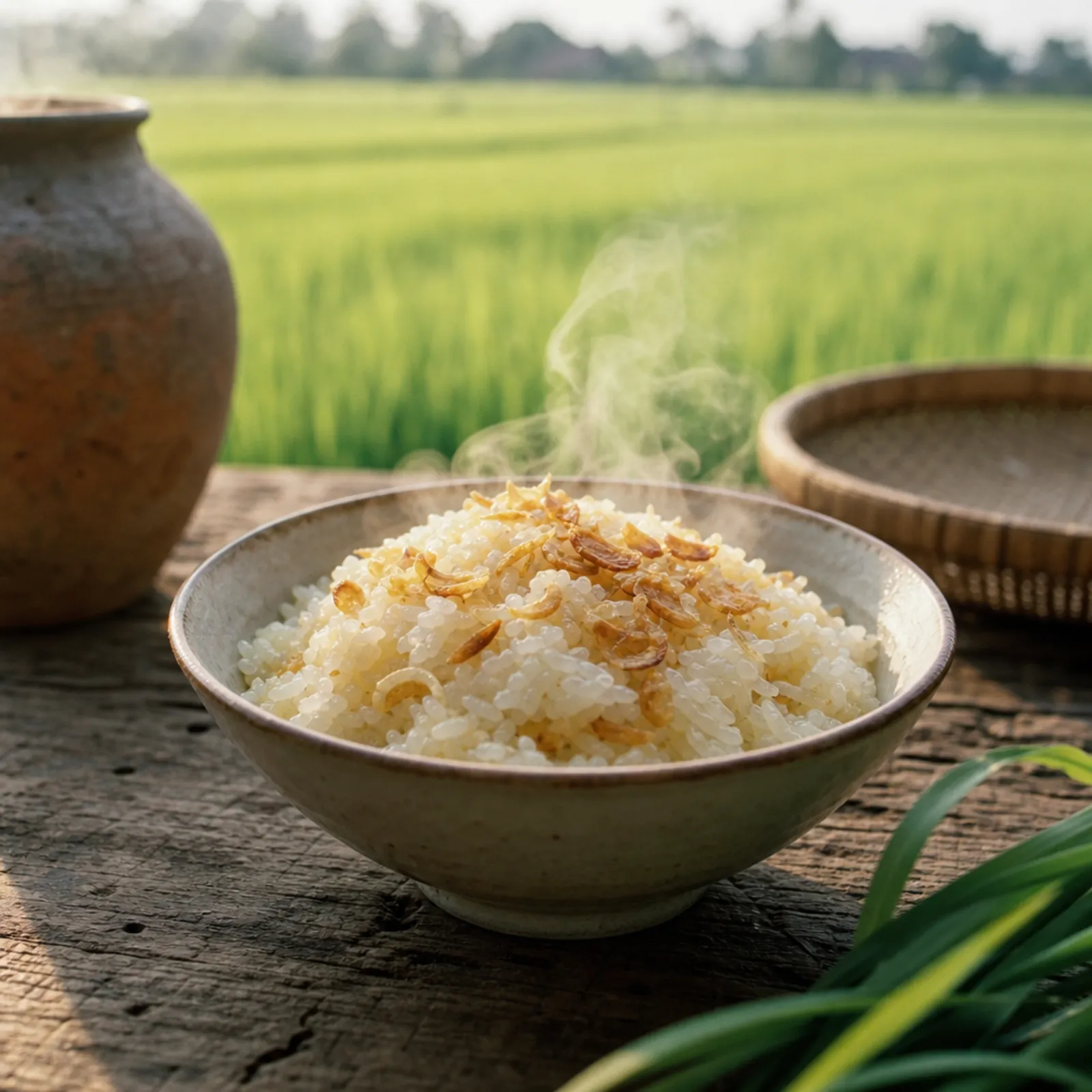
AI-generated: xôi in a bowl with shallot oil and steamAI image

Xôi (steamed sticky rice) with fried shallot oil

Prep: 360 minTotal: 400 minYield: 2 to 3 servings (plus overnight soaking)

Ingredients

  • 250 g glutinous rice (gạo nếp) (View on Amazon)
  • Water for soaking
  • 1/2 tsp salt
  • A steamer: bamboo basket or steel steamer insert (View on Amazon)
  • A clean cloth or parchment to line the steamer
  • 3 tbsp neutral oil
  • 3 shallots, thinly sliced
  • Optional toppings: roasted peanuts and sesame, mung bean paste, or coconut

Instructions

  1. Rinse the rice until the water runs mostly clear. Cover generously with cool water and soak for 6 to 8 hours, or overnight.
  2. Drain the rice well. Line the steamer with a damp cloth or parchment so the grains do not slip through.
  3. Pour a thin layer of water into the pot, enough to make steam but not touch the basket. Bring it to a boil.
  4. Spread the rice in the steamer, make a small hole in the middle for steam to rise, and cover with the lid.
  5. Steam for roughly 30 to 40 minutes, turning the rice over once halfway through. Check the water level and top it up with boiling water if needed.
  6. Taste a few grains. If the centre is still firm, steam a little longer. Sprinkle in the salt and mix gently.
  7. Fry the shallots slowly in the oil until golden and crisp. Spoon the oil and shallots over the hot rice.
  8. Serve at once with your chosen toppings, in bowls or wrapped in a leaf or paper.

Why the hole in the middle? It lets steam rise through the rice instead of finding its own way around the edges, which gives more even cooking. Why turn the rice halfway? The grains nearest the bottom get the most steam, and turning them helps everything cook at the same pace. Why the cloth? It keeps grains from falling through the holes of the steamer and from sticking to the bottom.

When the rice is done, it should look glossy and slightly translucent, feel tender all the way through, and cling together without being gluey. If you pinch a grain between your fingers, it should squash easily. If it is still chalky in the middle, steam a little longer with the lid on.

Steamer options

This page contains affiliate links. As an Amazon Associate we earn from qualifying purchases. The price for you stays the same.

Our pick

Dämpfeinsatz für Klebreis

A basket steamer is the tool this dish was built for. It turns xôi from a chore into a routine.

Pros
  • Even steam around the rice
  • Stacks over an ordinary pot
  • Simple and long-lasting if cared for
Cons
  • Needs a pot of the right diameter
  • Bamboo must be dried well after washing
  • Takes shelf space
View on Amazon

No steamer? And common mistakes

You can improvise. Put a metal colander over a pot, line it with a cloth, add the soaked rice, and cover with a snug lid or a plate. Keep the water below the colander, and watch the level. It is not as elegant as a basket, but it makes edible xôi.

You can also cook glutinous rice in a rice cooker. Many cookers have a sweet-rice or sticky-rice programme, and the result can be good, but it is a different texture: closer to cooked rice than to true steamed xôi. Our rice cooker buying guide explains the programmes you may meet.

The usual mistakes are quick to list. Skipping the soak leaves hard centres. Letting the rice touch the water makes it soggy. Lifting the lid constantly lets steam escape. Using the wrong rice makes a different dish. And if you want to continue the sticky-rice theme at the New Year table, our rice culture and Tết guide shows where it ends up.

Serving ideas beyond breakfast. Xôi works as a side for grilled meat and braised dishes. Sweet xôi makes a simple dessert with fresh fruit. Leftover xôi can be pressed into a flat cake and pan-fried until crisp on the outside and soft within. Keep leftover xôi covered, since it hardens quickly when exposed to air, and warm it briefly in the steamer to bring it back.

Storage: let the rice cool, wrap it, and refrigerate. Re-steam for a few minutes before serving. It will not be quite as good as fresh, but it will do. Glutinous rice dries out and hardens faster than ordinary rice, so do not leave it uncovered.

AI-generated: a bamboo steamer insert for sticky rice with a kitchen clothAI image
A lined steamer keeps the rice from falling through.

Frequently asked questions

How do you cook sticky rice without a steamer?

Soak it, then steam it in a colander lined with a cloth over a pot with a lid. Keep the water below the colander. A rice cooker with a sticky-rice programme is another option, with a slightly different texture.

Do you have to soak sticky rice and for how long?

Yes. As a rule of thumb, soak for 6 to 8 hours, which is easiest overnight. Unsoaked rice steams unevenly and can stay hard in the centre.

What is the difference between glutinous rice and sticky rice?

They are the same. The rice contains no gluten; glutinous refers to its sticky texture. In Vietnamese it is gạo nếp.

How long do you steam sticky rice?

Roughly 30 to 40 minutes, turning once; larger batches take longer. Timings vary with the rice and the pot, so taste a grain to check.

Can I use sushi rice instead?

No. Sushi rice is sticky in a different way and will not give the texture of xôi. Use glutinous rice.

What do you eat with xôi?

Savoury versions come with fried shallots, peanuts and sesame or mung bean. Sweet versions use coconut or sugar.

Can I make xôi in a rice cooker?

You can, especially if the cooker has a sweet-rice programme. The result is softer and less distinct than steamed xôi but quick to make.

Continue the journey

Keep exploring

As an Amazon Associate we earn from qualifying purchases.