 AI image
The field
Vietnamese Rice Farming: Life in the Mekong Delta
Flat land, brown water and a calendar set by the river. This is where most of Vietnam's rice is grown.
Key takeaways
- The Mekong Delta produces roughly half of Vietnam's rice and over 90 % of its exports (official figures, varying by year).
- Wet-rice farming means flooded fields: seedlings go into wet soil and water management is the central skill of the farmer.
- In the north, rice is grown on terraces cut into mountain slopes. The volume is smaller, the labour per grain is higher.
- After the cut, wet paddy has to be dried fast, then milled. Drying and milling shape how the rice cooks.
- Salt water pushing into the delta is a serious problem, and part of the reason varieties like ST25 matter.
Vietnamese rice farming starts with water
Vietnamese rice farming is, above all, a business of managing water. Rice in Vietnam is mostly grown as wet rice: the seedlings stand in a flooded field, and the water protects them, feeds them and decides the schedule of the entire year. Land and water cannot be separated.
The centre of it all is the Mekong Delta in the far south, where the great river splits into many arms before reaching the sea. Official figures put the delta's share at roughly half of the country's rice production and over 90 % of its rice exports, though the exact numbers move from year to year. Whatever the precise percentage, the delta is the rice basket of Vietnam, and anyone who has bought Vietnamese rice abroad has very likely eaten something grown there.
If you want the bigger picture of the grain itself, start with our complete guide to Vietnamese rice. This page stays in the field.
It helps to picture the scale. Travel through the delta and you see an agricultural landscape that is horizontal in the extreme: rice fields lined with palm trees, long straight canals, small houses on stilts or raised plots, boats loaded with sacks. The land is so flat that a gentle change in water level makes a visible difference. Farmers talk about water the way others talk about the weather, because in practice it is the same thing.
Rice is not the only crop. Orchards, fish ponds and vegetable plots share the delta. But rice is the backbone, and many rural households plan their year around its calendar.
- of Vietnam's rice production comes from the Mekong Delta (varies by year) ~50 %
- of Vietnam's rice production comes from the Mekong Delta (varies by year)
- of rice exports come from the delta (varies by year) 90 %+
- of rice exports come from the delta (varies by year)
- rice exported by Vietnam in 2025 ~8.06 Mt
- rice exported by Vietnam in 2025
1. Mekong Delta
A flat, river-cut landscape of paddies, canals and orchards. Roads follow dikes, boats are still ordinary transport, and the rhythm of the field follows the water.
2. Mù Cang Chải terraces
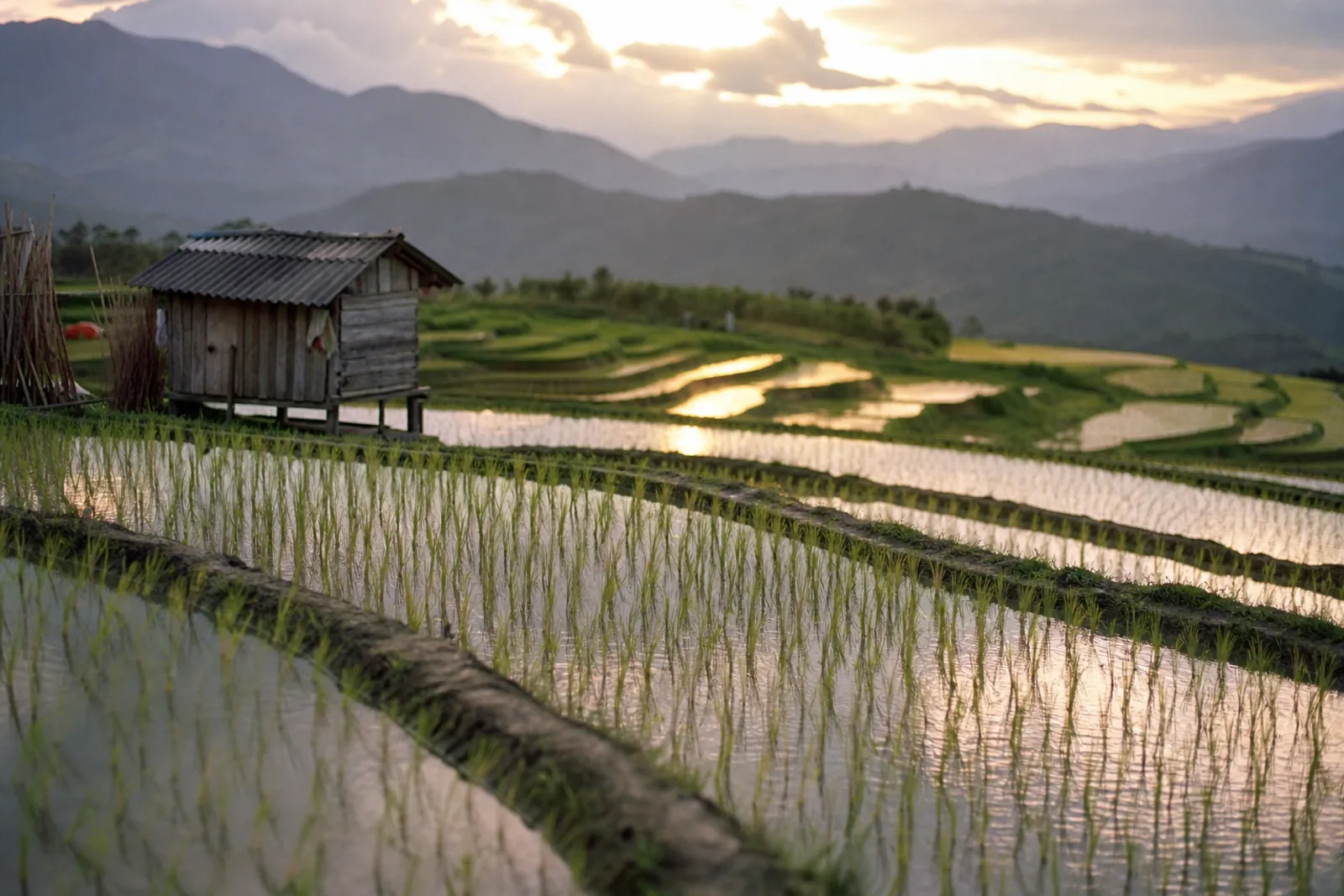
In the northern mountains, farmers shape the slopes into steps that hold water. It is a different kind of farming, built by hand over generations, and visitors come for the view.
 AI image
From seedling to flooded field
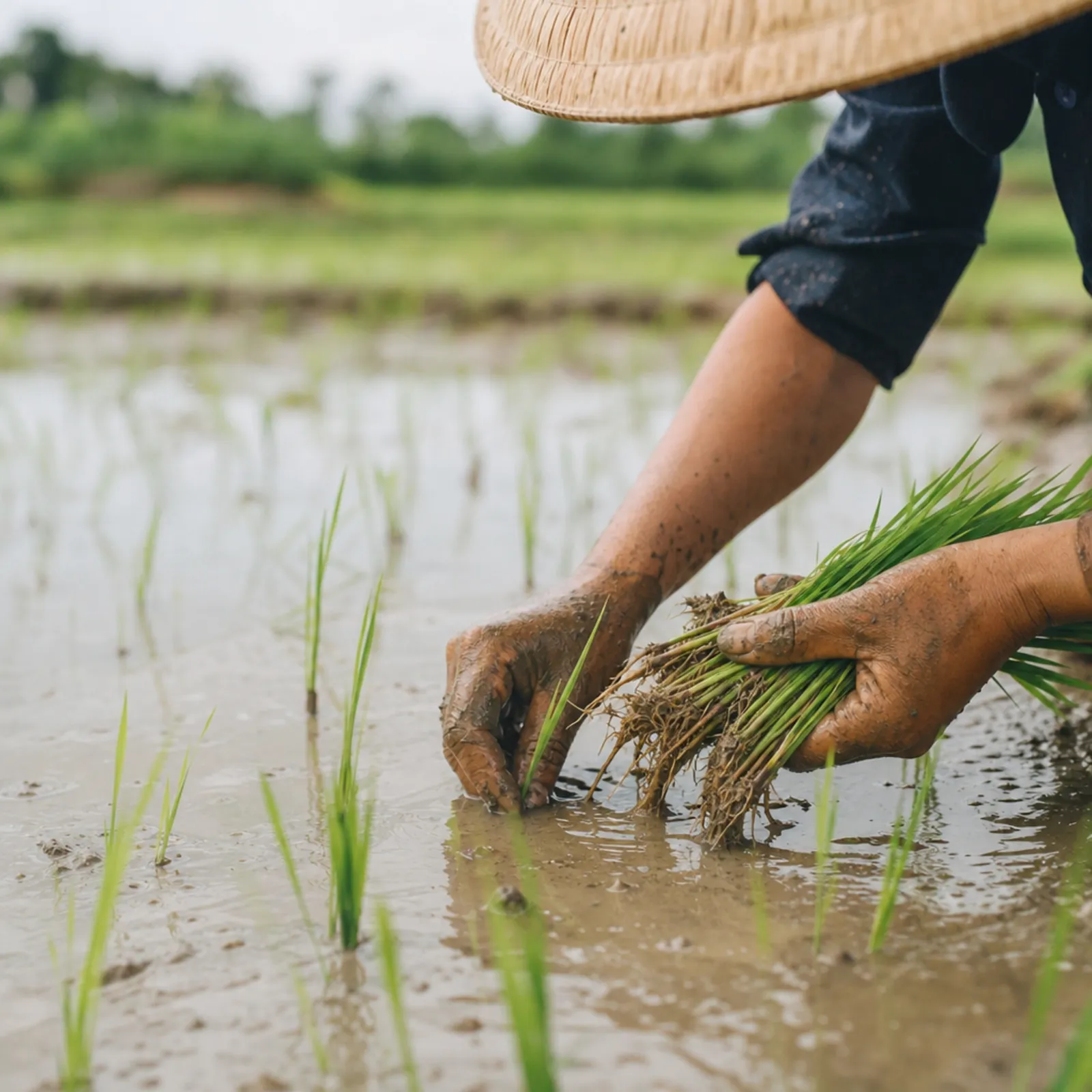
A rice crop starts small. Seeds are sown and the young plants are raised until they are ready to be moved. In many fields the seedlings are transplanted by hand: people bend from the waist, push a few green shoots at a time into the soft mud, and move backwards in rows. It is slow, tiring work, and it is the image most people carry of rice farming. In other places seed is scattered directly onto the field, or machines do the planting. Practice varies by region, by farm size and by money.
What does not change is the water. The field has to hold it, drain it at the right moment, and take it back in. In the delta this involves canals and sluices, and neighbours who coordinate. A farmer with perfect seed and bad timing still loses the crop.
Variety matters at this stage. Different rice varieties mature at different speeds, cope with different amounts of water, and end up as different grains in the bowl. A fragrant variety asks for different handling than a high-yield commodity grain. Farmers pick based on what the market will pay, what the land allows, and what they have grown before. That is why you can eat Vietnamese rice that is soft and plain one day and sweetly aromatic the next, even though both came from the same delta.
 AI image
Over the season the rice grows from thin green blades into a thick, bright stand. Then the colour shifts. The field turns from green to gold as the grain fills. Farmers watch the weather closely at this stage: wind, storms and floods can flatten a crop that looked perfect the week before.
Harvest, drying and the mill
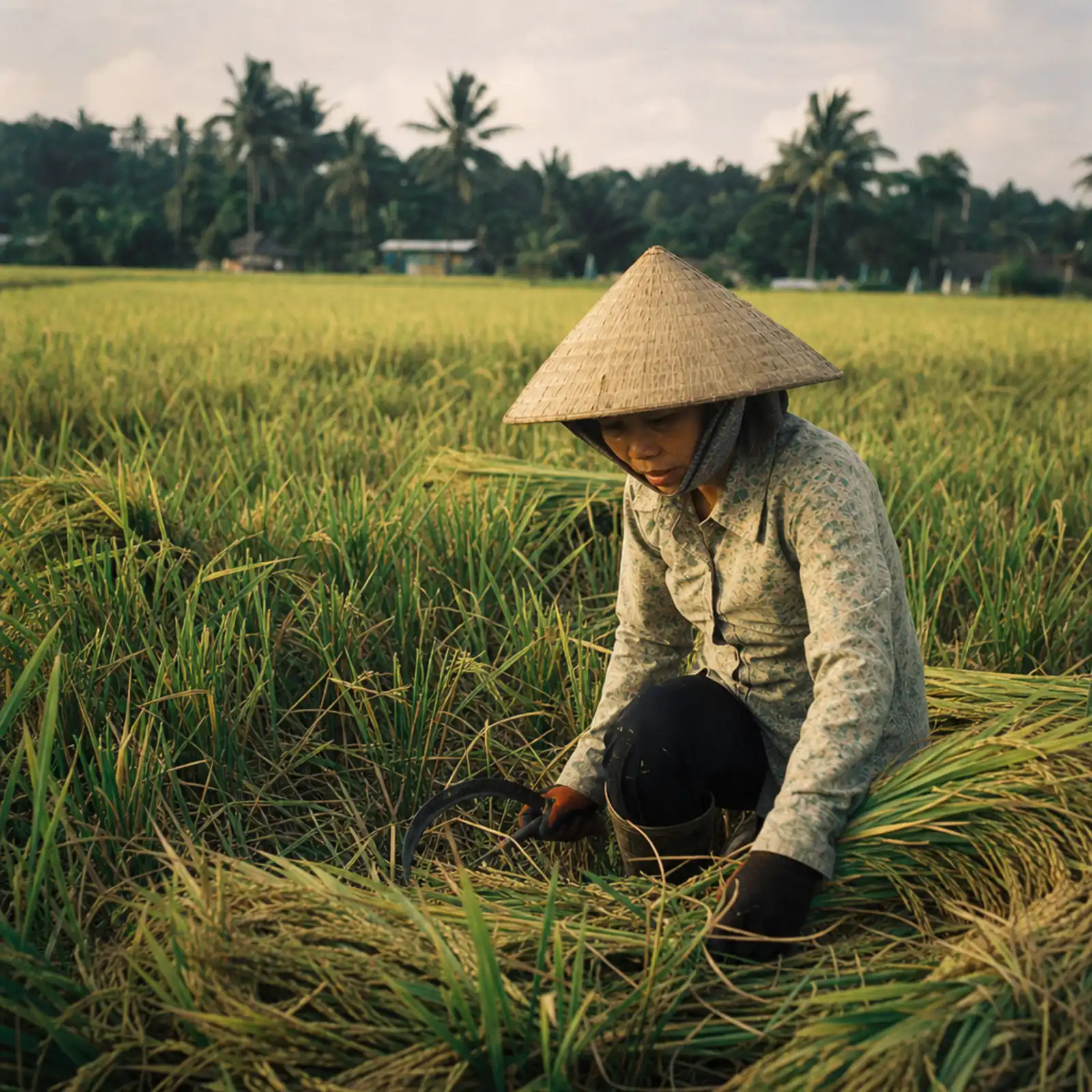
Harvest is the loud part of the year. In many fields farmers still cut by hand with a sickle, tie the stalks into bundles and carry them to be threshed. In bigger flat fields machines handle it. Either way, the freshly cut grain is wet, and wet rice goes bad quickly. So drying starts at once.
A harvest scene is also a social scene. Families help neighbours. Traders arrive to buy paddy directly from the field or the yard. Children run through piles of straw. In many places the harvest sets the tempo of the village for weeks, and the sound of machinery or the sight of drying grain on the road tells you what time of year it is without a calendar.
 AI image
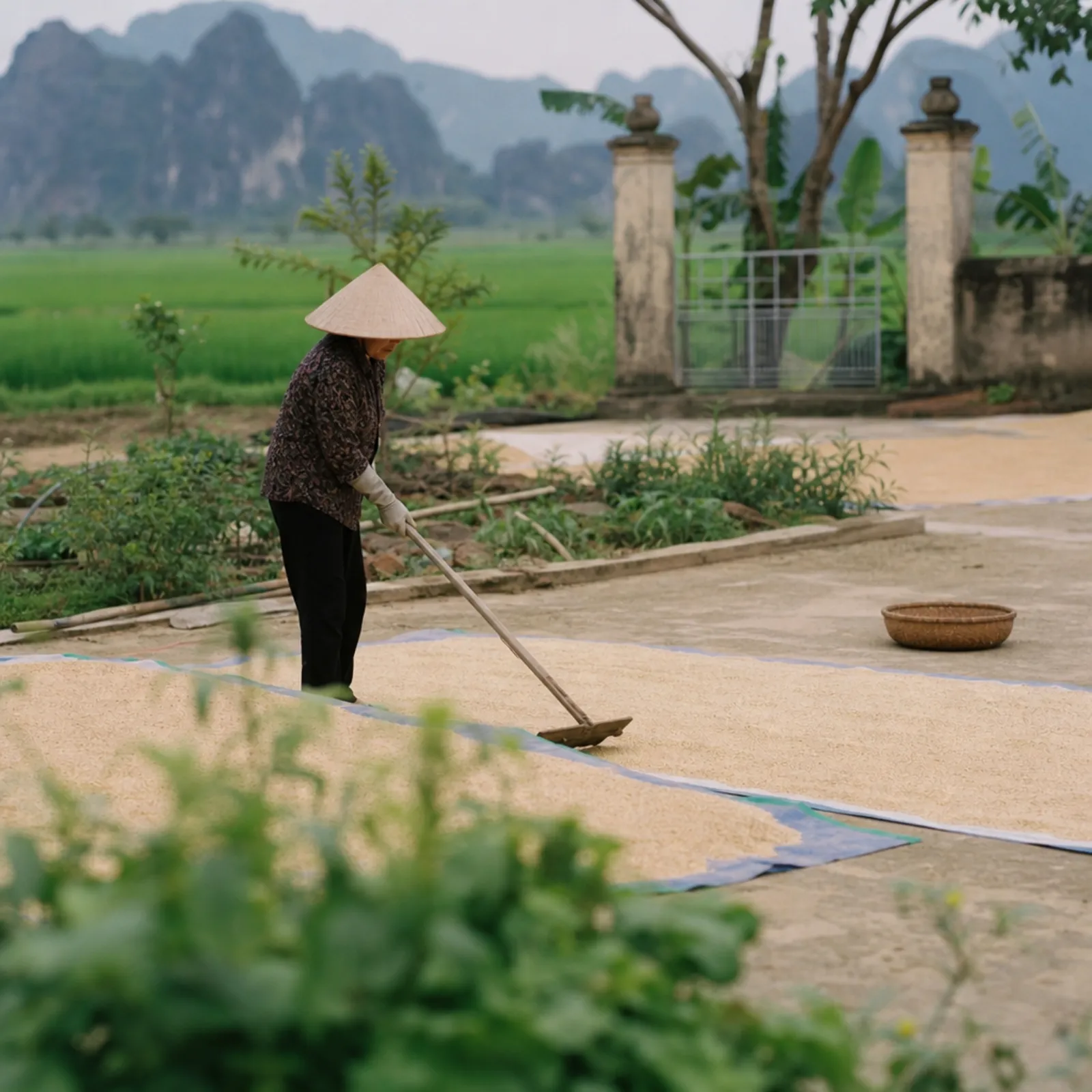
Look at any rural road at harvest time and you will see yards, courtyards and even road edges covered in grain, spread on tarps, raked now and then by someone in a conical hat so it dries evenly. This is not decoration. A sudden rainstorm sends everyone running to cover the rice. How well the paddy is dried affects how it mills and how it tastes on the plate.
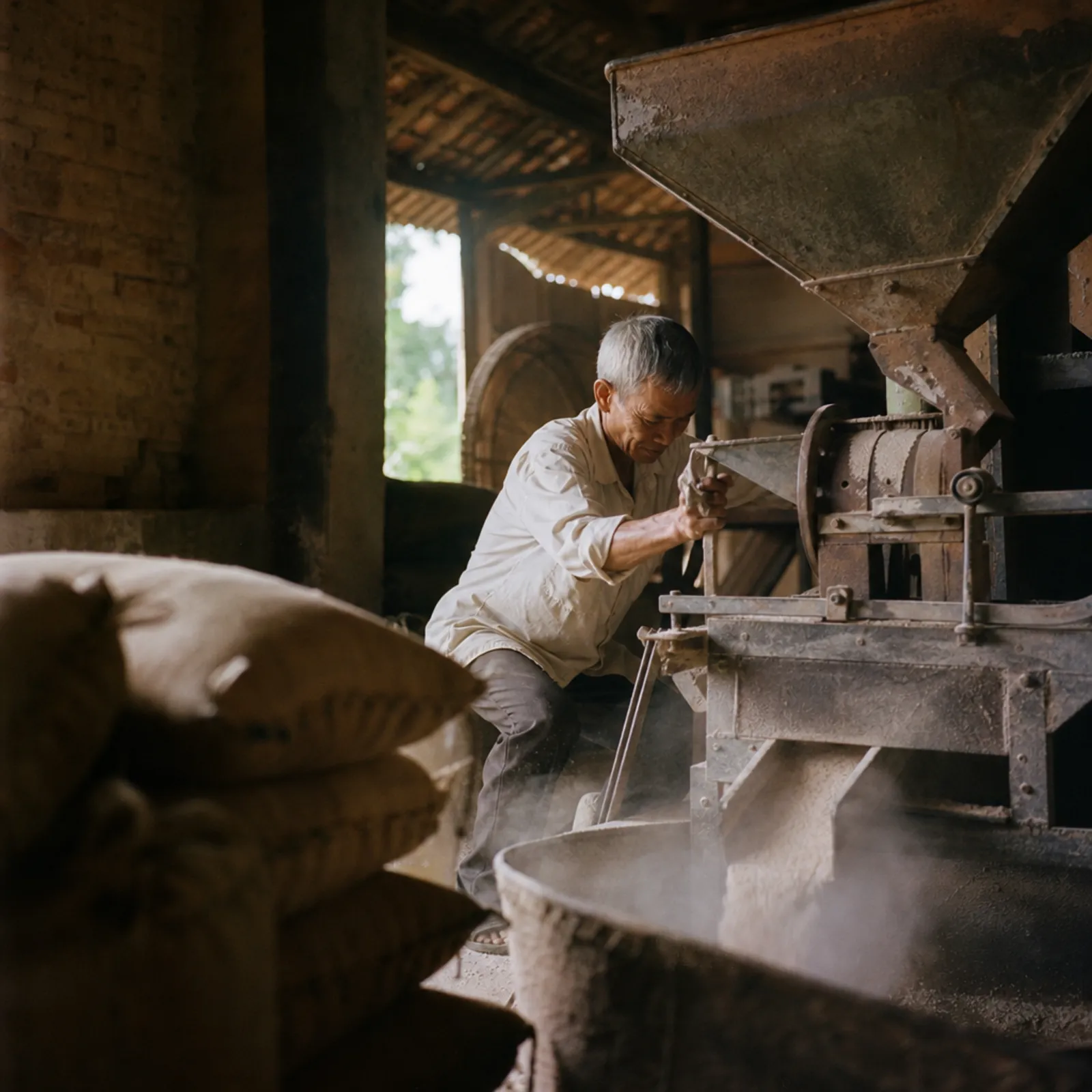
Next stop is the mill. The husk comes off, leaving brown rice; further milling polishes off the bran and gives white rice. Some grains break. They are sorted and sold on, and in the south this by-product became a whole dish: read the cơm tấm recipe to see how.
 AI image
There is a second side to drying that is easy to overlook: storage. Dry rice keeps; damp rice does not. A sack of paddy that was not dried properly can turn musty and lose both flavour and value. That is why drying is one of the steps where experience beats equipment, and why experienced farmers can tell whether a handful of grains is ready by biting one or rattling it in their palm.
 AI image
Buffalo, hands and machines
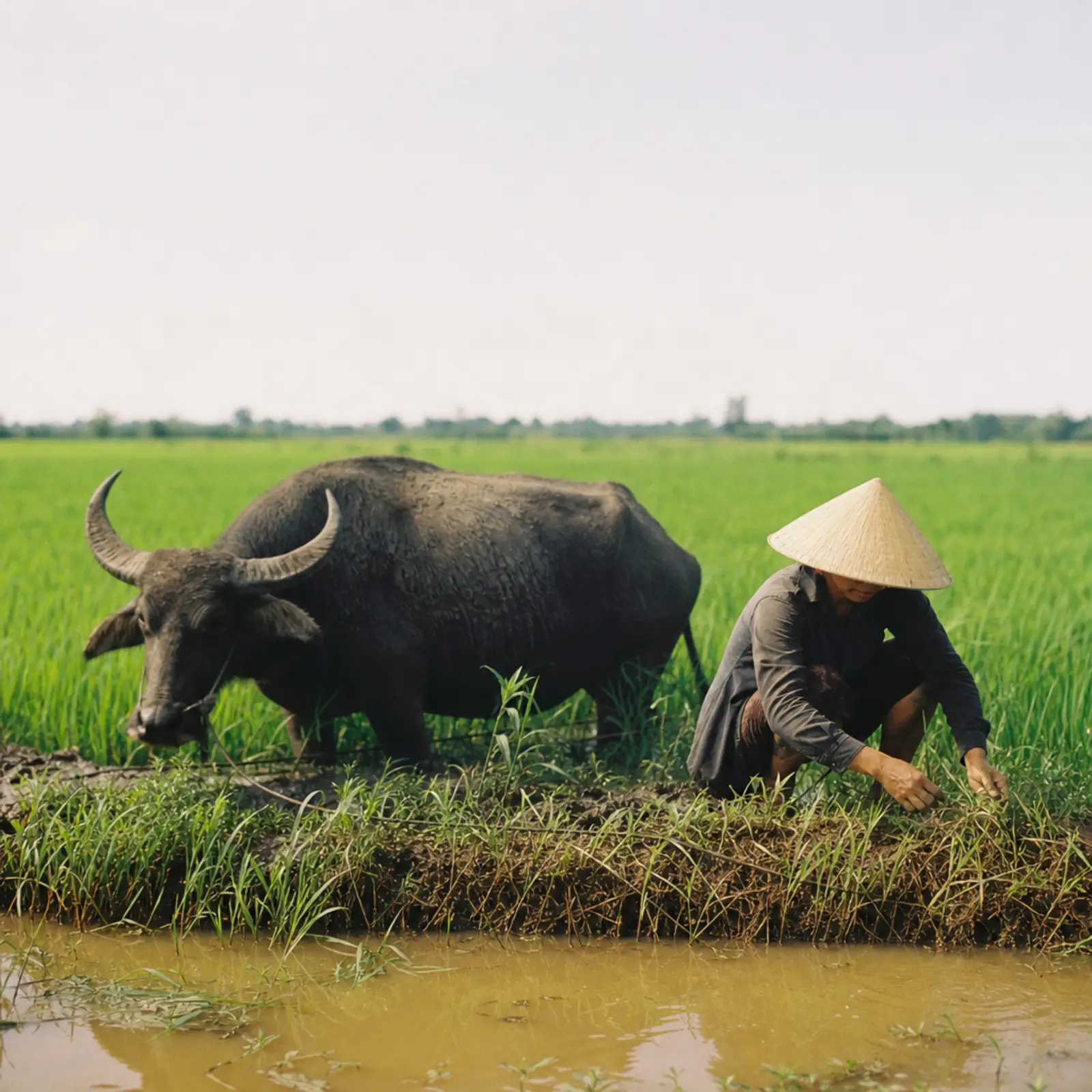
Ask anyone to picture a Vietnamese paddy and a water buffalo wanders into the image. For generations the animal pulled ploughs through flooded soil, and it remains a symbol of the countryside. In many parts of the delta, however, tractors and small machines have taken over the heavy work. The buffalo is more often a quiet presence at the edge of the field than a working animal.
The change is real. Labour is moving to the cities, farms are being consolidated, and a lot of the old manual work is now mechanised. Terraces in the north tell a different story: slopes are too steep and plots too small for most machines, so people and animals still carry much of the work. That is part of why northern terrace rice is rarely cheap and rarely a mass export.
Rice farming is also a story of change in work and income. Younger people often leave for the cities, which means fewer hands in the fields and more reliance on machinery. Small plots are being combined into larger ones, and cooperatives help farmers share equipment and negotiate with buyers. Whether you see this as progress or loss depends on where you stand, but it is the reality behind the grain you buy.
Salt water, climate and new varieties
The delta is not just flat, it is low, and that makes it vulnerable. In dry periods salt water from the sea can push up the river channels and into the fields. Rice tolerates little salt, so a farmer who cannot get fresh water in time can lose a crop. Sea-level rise, drought, water extraction and upstream dams all contribute; how much each one weighs is disputed among researchers.
Breeders and farmers respond in two ways: better water control, and varieties that cope better with tougher conditions. ST25, the fragrant variety bred in Sóc Trăng by Hồ Quang Cua and his team, is the best-known result. In 2019 it won the title of World's Best Rice at a rice conference in Manila. If you want to know what this rice tastes like and how to avoid fakes, read our guide to Vietnamese rice varieties.
The story does not end at harvest. After drying and milling, the grain enters shops and kitchens, and the journey continues in our rice culture and Tết guide, where rice stops being a crop and becomes a custom.
Why does any of this matter to someone cooking dinner abroad? Because the rice on your plate is the end of a long chain that starts with a farmer watching the water. When a bag of rice is cheap, a lot of that chain was squeezed. When a bag is expensive, it does not automatically mean the farmer saw the difference. What you can do is buy from sellers who tell you where the rice came from, and eat it with attention. It is a small thing, and it is the honest way to treat a crop that costs so much work.
Frequently asked questions
Where is most Vietnamese rice grown?
In the Mekong Delta in the south. Official figures put its share at roughly half of national rice production and over 90 % of exports, varying by year.
How is rice grown in Vietnam?
Mostly as wet rice. Seedlings are planted in flooded fields, the water is managed through the season, and the crop is harvested when the grain turns gold, by hand with sickles or by machine.
Why are there rice terraces in northern Vietnam?
Terraces turn steep slopes into level steps that can hold water, which rice needs. They let farmers grow rice in mountain areas where flat land is scarce.
Do Vietnamese farmers still use water buffalo?
Some do, especially on small plots. In many parts of the Mekong Delta, machines have replaced the buffalo for the heavy work, though the animal remains a symbol of the countryside.
Why is salt water a problem for rice?
Rice tolerates little salt. In dry periods sea water can move up the delta's river channels into the fields, damaging crops. Several factors contribute, and researchers disagree on how much each one weighs. Varieties that cope better with such conditions are therefore valued.
Why is rice dried after harvest?
Freshly cut grain is wet and spoils quickly. Drying lets it keep and affects how it mills and cooks.
What is paddy?
Paddy is rice still in its husk, as it comes from the field. The husk is removed at the mill to give brown rice, and further milling gives white rice.
Continue the journey
Keep exploring
As an Amazon Associate we earn from qualifying purchases.